Norma Manders
FirestarterNorma Manders is Irv Manders’s wife and a hardworking presence at their farm in Hastings Glen. When Andy McGee and Charlie arrive under assumed names, she offers them food and a welcome; when their refuge is attacked, she tends Irv and stands between him and Andy. Her relationship with Charlie changes from wary hospitality to protective affection, and later to a hard question about whether keeping the girl hidden can keep her safe.
Identity and First Encounter
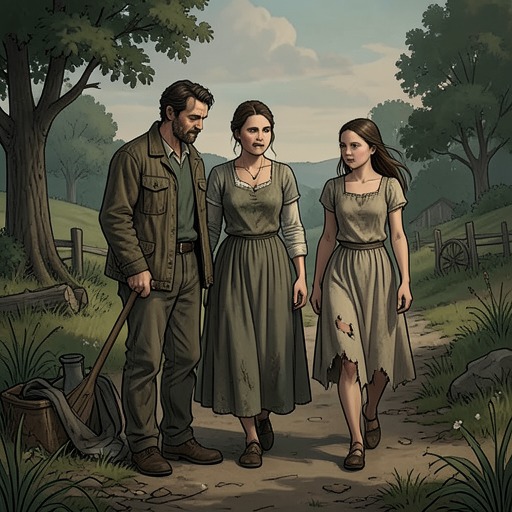
Norma is about forty-five, with a direct face and hands reddened and chapped by work. Her first appearance is at the back door of the farmhouse, where she shades her eyes and calls to Irv. She does not know that the visitors are Andy and Charlie: Irv introduces the child as Roberta, while Andy gives the name Frank Burton. Norma welcomes them inside, though Andy notices that she gives Irv a puzzled look. The small exchange establishes both her hospitality and her awareness that her husband has brought home a story he has not yet explained.
The farm’s kitchen, with its woodstove and long table, becomes a place of temporary shelter. Norma offers to prepare chicken and salad and asks Charlie whether she likes milk. Charlie is distracted by the surroundings and the chickens, and briefly answers to the false name Roberta. When Charlie then insists that this is not her name and fears that Irv has betrayed her, Norma steps forward and puts an arm around her shoulders. She does not yet understand the whole danger, but her first response to the child’s distress is physical reassurance rather than interrogation.
Hospitality Under Strain
Irv tells Norma that Andy has had trouble, while making clear that he does not want to discuss it immediately. Norma accepts this without pressing him, leaving the family’s guests room to eat and settle. Her welcome is not simple ignorance: she has seen that the visitors’ names and circumstances do not quite fit, but she allows Irv to decide when to explain. The contrast between Charlie’s open curiosity about the chickens and the adults’ guarded conversation makes the farmhouse feel briefly ordinary, even as the danger remains unspoken.
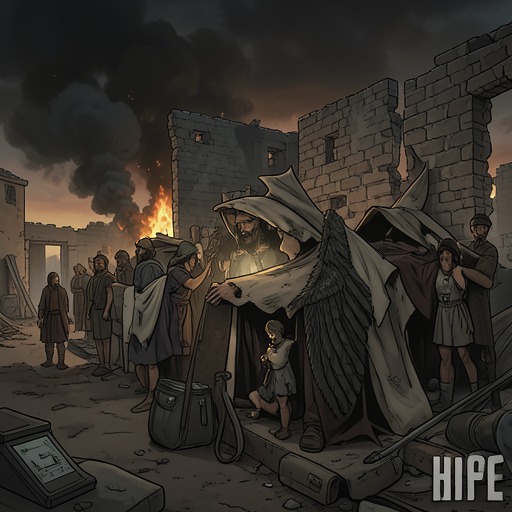
That fragile interval ends when Shop agents attack the farm. Irv is shot in the arm, and Norma tears a strip from her dress to bind his wound as the house catches fire. When Andy approaches, she flinches backward and places herself over her injured husband. In the crisis, her immediate duty is to Irv; she sees the deaths and the burning home, not only the rescue Andy and Charlie need. She calls Charlie a monster and tells Andy to take her away. The word exposes the fear and anger of the moment, but it does not become Norma’s settled judgment of the girl.
The Cost of Shelter
Norma soon apologizes for calling Charlie a monster. She recalls having watched the child feed the chickens and pet the cow, and sets that ordinary tenderness beside the fact that her home is burning and people have died. Her apology does not erase the harm or make the danger disappear; it shows her trying to hold two truths at once: Charlie is a child she has cared for, and the events around her have brought terrible consequences to the farm.
Even so, Norma helps the fugitives leave. Irv explains a route east by woods roads toward Vermont, including the turn onto Route 152 and the uncertain, swampy road that might take the Willys Jeep toward Highway 22. Norma agrees to the plan. Before Charlie goes, she tells her that she saved her father’s life and that this is what she should remember. Charlie answers in a flat voice that makes Norma look bewildered and afraid, then manages a hesitant smile. The exchange shows the limits of reassurance: Norma offers Charlie a reason to see herself as a rescuer, but cannot make the child feel certain of it.
After the Fire
The farm’s danger does not end with the escape. Dr. Karl Hofferitz arrives at dusk and examines Charlie, while Norma and Irv sit in the kitchen, barely attending to supper. Norma watches her husband with a questioning, fearful expression. Later, when Dr. Hofferitz challenges the story that Charlie is a relative named Roberta McCauley, Irv gives him only a guarded explanation: Charlie is part of the trouble from the previous year, and speaking openly could endanger her, the Manderses, and their relatives. Norma is present as Irv asks an old friend to decide what to do, and her fear underscores the cost of keeping Charlie hidden as well as the risk of revealing her.
When Norma and Irv speak privately about the girl, they acknowledge both their attachment and their apprehension. Irv wonders whether Charlie could hurt the people who come for her, and whether an uncontrolled outburst could endanger others. Norma has regretted her earlier insult, but her concern is not merely a repetition of it: she is trying to consider the child’s future while also facing what happened at the farm. When Charlie hears them and comes to the doorway, clean and wearing one of Norma’s flannel nightgowns, she says that her father is dead, that he was killed, and that she has nowhere to go. Her account breaks into sobs and pleas for help. Norma calls her over, and Charlie runs to her. In that moment, the child’s need draws Norma back into the role of protector.
Choosing Whether to Speak
Norma’s care eventually leads her to question whether silence is itself dangerous. She has thought through the possibility of contacting a newspaper: even a small weekly paper can receive news through the Associated Press, she argues, and she recalls a Pulitzer Prize won by a small Southern California paper. Her point is practical rather than triumphant. A local disclosure could spread, and she is concerned that someone will discover Charlie at the farm and that news could return to the people who pursued her.
Irv sees a further problem. He fears that a powerful public reaction to Charlie, or another loss of control like the one at the place where she was held, could endanger a great many people. Norma does not dismiss that possibility. She has to weigh it against the danger of leaving Charlie concealed, dependent on a hiding place that may not remain secure. Irv concludes that any story must be told properly: enough people need to know that Charlie exists and what she can do if the aim is to protect her for the rest of her life. Norma listens as he also acknowledges that the danger may reach them. The novel leaves her not with a simple solution, but with a changed understanding of hospitality: giving Charlie shelter is an act of love, yet keeping her safe may require bringing the secret into public view.