Human Pillar
GunsoulHuman Pillar is both a bodily condition and a role imposed on people treated as usable spiritual resources. Human Pillars can strengthen and stabilize an area’s feng shui, increase its qi flow, fuel rituals, suppress evil spirits, or be offered to supernatural entities. Holster’s story traces the condition from trafficking and a bound core to eventual healing, while showing how the capacities developed through exploitation could later serve her own purposes. Her cure changes her status, but not her sense of solidarity with those still subjected to it.
Definition and Uses
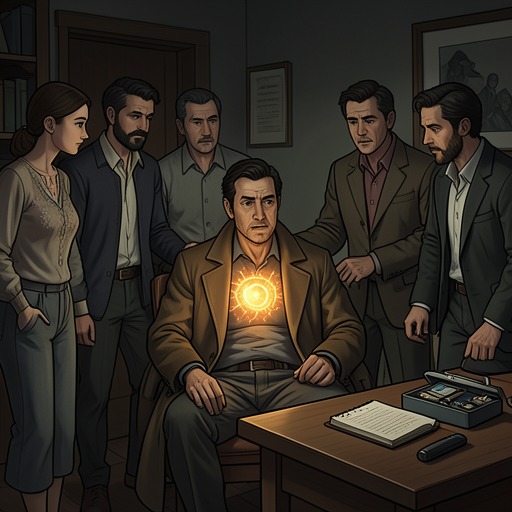
Human Pillars are specially prepared human sacrifices, valued by amoral sects and warlocks. Their bodies can be used to reinforce a place’s spiritual order or to meet the demands of supernatural powers. This makes the condition more than an individual affliction: a person’s life is converted into infrastructure, ritual fuel, or a commodity for whoever controls them.
The practice belongs to a wider social order in which many people without qi cores live as Scraps, laboring in service to cultivators. Some Scraps may receive a spirit pill if they serve a sect well and please its elders, but Human Pillars face a more direct form of appropriation: their bodies are prepared for uses selected by other people. The contrast is between restricted access to cultivation and the more extreme reduction of a person to a resource.
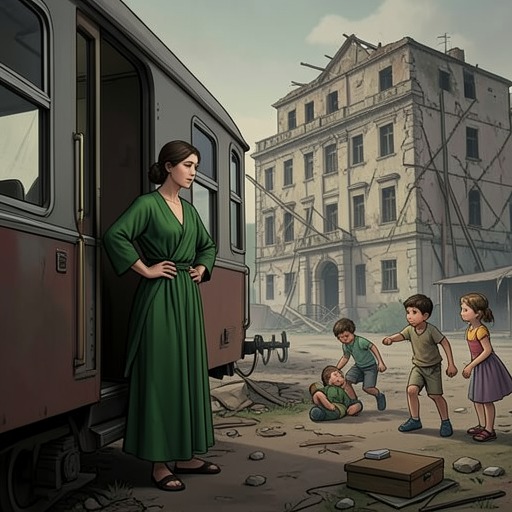
The system’s reach appears in more than one setting. Gayak says a Human Pillar was expected to pass through town on the way to Furyland, but the sellers never arrived. He notes that Holster came from the east and that she seemed to bear the same condition, raising the possibility that the failed delivery and her presence were connected. He then offers to cure her and repair her core, proposing an Unspeakable Vow if necessary. His offer establishes that repair is conceivable to those with the relevant knowledge, but does not make the practice benign: the proposal comes amid the suspicious arrival of a person already treated as merchandise.
Holster's Condition and Cultivation
Holster’s circumstances are described through her core and the limits imposed on her cultivation. After her experience with the Rad-Hag, she raises her hand to indicate that she wants to learn the basics. Yuan is willing to teach her, though he worries that her age and Hitobashira constitution will limit how far she can advance. Later, he observes her quickly refreshing a spirit-tree’s nutrients with the correct Barrier and takes pride in her progress. Her aptitude complicates the assumption that her limits reflect an inability to learn: Yuan wonders how she would perform without the restrictions attached to being a Human Pillar.
The condition is not resolved by ordinary spiritual treatment. Orient translates the contents of a sutra and explains that the Mahamayuri Mudra is meant to cleanse poison and toxins. Holster had hoped it would lift her curse, but the practice has no effect on her condition. Yuan also understands a broken core as a severe barrier: the causes he knows, breaking an Unspeakable Oath or undergoing a Human Pillar procedure, prevent the user from using techniques, let alone an Authority. Holster’s difficulty therefore involves more than an unwanted label; it is tied to the functioning of her core and her access to cultivation.
Mordiggian outlines the limited remedies available. He can offer Holster rebirth as a normal girl or a better reincarnation, but says that only practitioners with the knowledge of the Flesh Mansion Sect can repair her core without disabling it outright. He points Yuan toward neutral Flesh Mansion Sect offshoots in Battletown, some of whom might operate for the right price, and names Jared LaChaire as a possible contact. The options make the stakes of repair explicit: preserving her ability to cultivate requires specialized intervention, while the alternatives offered by Mordiggian involve beginning life again in another form.
Jared explains why age matters to the operation. A Human Pillar’s core accumulates qi while its bearer grows older, increasing instability and the risk that it will explode during surgery. Because Holster has not reached puberty, he considers her prospects for full recovery comparatively good. Yet he also warns that surgery would leave her spiritually weakened, unable to form a core even with a qi infusion unless a powerful spirit or force intervened. Repair could therefore free her from the Human Pillar condition without guaranteeing an ordinary cultivator’s future.
Exploitation and the Uses of the Body
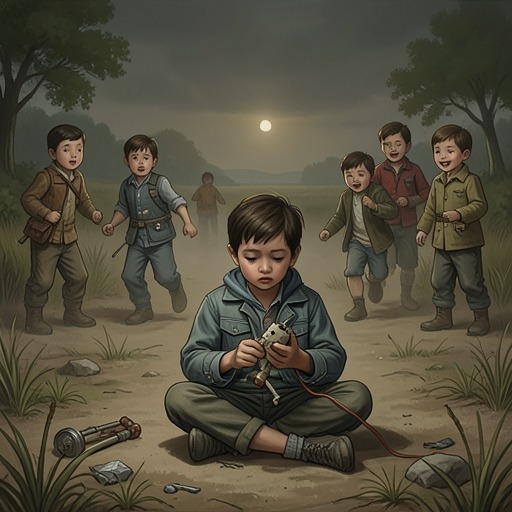
Holster later recalls that cultivators of the Flesh Mansion Sect bound her core and shipped her off like merchandise. Her memory connects the condition to organized captivity and sale, rather than to an abstract ritual category. Yuan had killed both her captors and the customer to whom she was to be delivered, but the rescue did not erase her nightmares about what might have happened if he had not intervened.
The same logic recurs at Sacri-Farm, where Kenta berates a crying orphan hardly older than seven, describing him as the last Human Pillar the farm managed to produce. The boy’s age and the language of production show how the practice can make a child into a finished item for a system of capture and use. Holster’s own history gives her a personal reason to recognize what is happening there.
By then, she has developed Cheruguns, extensions of her qi and the first Gun Path technique she invented. She has given them part of her soul and a measure of autonomy, and chooses to ask rather than command them. When the Cheruguns help rescue a captive child, Holster asks that he be carried to her doctor, who has become skilled at treating Human Pillars and has successfully operated on and cured several. Her preference for requests over orders is explicitly tied to having been a slave herself: she knows what it means to be bossed around. The scene reverses the old arrangement in concrete terms. A person once handled and delivered as merchandise now directs aid toward another captive, while taking care not to reproduce the coercion she endured.
Wider Consequences and Alternatives
Human Pillars also sustain places beyond the control of any single captor. Holster believes she could serve a stabilizing purpose for Arc, whose Authority risks going haywire if she leaves the leyline. Arc refuses that possibility, saying she will not use a Human Pillar because she is not a fiend. Her refusal marks a moral boundary within a world where sacrificing a person could be treated as a practical solution to a spiritual problem.
Mordiggian’s account of Lord Kou adds a contrast between age, cultivation, and time lost. He points out that Lord Kou was around Holster’s age when he began cultivating after the Thunderdance. Yuan, meanwhile, watches Holster learn quickly and thinks about the potential concealed by her Human Pillar restrictions. These comparisons do not erase the injury, but they make the cost legible as a life and development diverted by the condition.
In Battletown, Holster and Orient propose a different ending for Human Pillars trapped in the artificial leyline. Rather than burying corpses individually, they plan to alter the leyline so that a Last Rites ritual collapses the land, burying both Battletown and the History Road. The collapse is intended to let the hungry ghosts rest and allow the Human Pillars sustaining the leyline to move on to the afterlife. Here, the same bodies once bound to maintain a place are released through the destruction of that place; the solution acknowledges the accumulated dead instead of renewing the system that used them.
Healing, Identity, and Legacy
Four years before the later account of Holster’s life, she and her companions reached the ancient dragon sage Long after a year-long journey across the wastes. She remembers being frightened and amazed by the golden-scaled beast on a throne of treasure and spirit-roots. Long agreed to cure her of her Human Pillar status in exchange for Yuan working for him for a month. The cure marks a decisive change, but Holster does not describe herself as simply separated from the people who remain Human Pillars. Looking back at the ruins of a Human Pillar farm, she says she is still one of them on the inside.
That continued identification shapes what she does after being healed. Holster spends a year researching how to refine spirit-fruits into pills capable of helping people develop cores. She hopes for a future without Scraps, Human Pillars, or cultivators, in which everyone can belong without being ranked by those categories. Her ambition reaches beyond her own successful treatment: it challenges a society that distributes spiritual possibility unequally and then turns some of the people it excludes into instruments.
Holster’s experience gives the condition its fullest human dimension. Human Pillar status can alter a core, obstruct cultivation, expose a person to sale, and make a body useful to sects or landscapes. Yet the story also follows the skills and relationships that survive those imposed uses: Holster learns, invents a technique, protects a child, and seeks remedies for others. Her healing does not make the history disappear. It turns that history into a reason to care for those still living under the same designation.