Hamlet's father's ghost
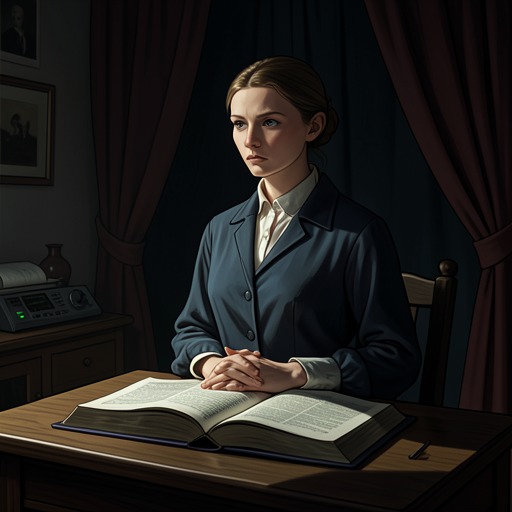
HamnetHamlet's father's ghost is the apparition at the center of Agnes's encounter with the play in London. First presented as a frightening figure in armor and a shroud, it becomes more than a role within the drama: Agnes recognizes William Shakespeare in its gestures and voice, and understands the ghost as part of the work through which he has given form to their loss of Hamnet. Its presence makes the boundary between theatrical invention and private bereavement feel perilously thin.
Identity and Stage Appearance
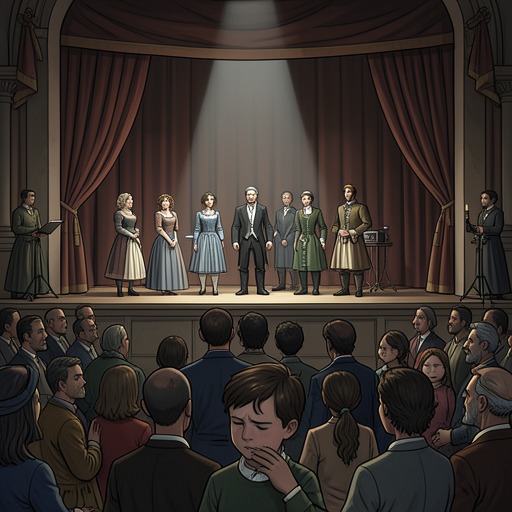
The ghost enters as a feared vision. The audience holds its breath when it appears, dressed in full armor, its visor closed and its body partly wrapped in a shroud. Agnes ignores the alarmed responses of the men on the castle battlements and studies the figure itself: its height, the movement of its arm, the raised hand, the particular bend of its fingers, and the way it moves its shoulder. She is watching for a person beneath the costume, not simply following the scene.
When the visor is lifted, the ghost's face is painted a sickly white and its beard appears gray. The revelation does not surprise Agnes, nor does she need the exposed face to identify the performer. She knows who is under the disguise. The scene thus gives recognition a physical vocabulary: posture, hands, and movement disclose what costume and painted features attempt to conceal.
Agnes's Recognition
Before the ghost returns, an actor's mention of a feared vision changes Agnes's understanding of what the men onstage want. They are seeking an apparition that they both desire and fear. She becomes still, folds her arms to prevent anyone nearby from touching or distracting her, and concentrates on every word. Her attention has shifted from resisting the performance to searching it for the ghost.
After the apparition appears, it turns sharply toward the crowd, as if Agnes's thought has reached it across the theater. She answers its look inwardly; the moment is staged as a connection across the distance between spectator and performer. The ghost then leaves. While the audience murmurs its disappointment and the actors continue speaking, Agnes moves and rises onto her toes, waiting for its return. She wants it in sight and wants an explanation from it. Its disappearance therefore intensifies rather than resolves her expectation.
The Ghost and Hamnet
The returning ghost speaks to Hamlet, the young man in the play, about how he died: poison flooded his body like mercury. Agnes sees the young Hamlet listen with the same tilt of the head and the same habit of bringing his knuckles to his mouth that belonged to Hamnet. She cannot understand how an actor who never knew her son can reproduce his manner so exactly. Her recognition makes the scene's resemblance more than a likeness of names: Hamlet's behavior recalls Hamnet's particular gestures.
The ghost, too, bears William Shakespeare's presence. Agnes sees her husband's hands and beard in the figure and hears his voice in it. Together, the living young Hamlet and the dead father make the stage image hold two lives at once. Agnes understands the performance as an act of imaginative exchange: William has made his son's death his own and, through the play, brought the boy back in the only form available to him. The ghost's role is therefore bound to a double substitution, with the father speaking from the place of the dead and the son appearing again in the living actor.
Grief, Burial, and Remembrance
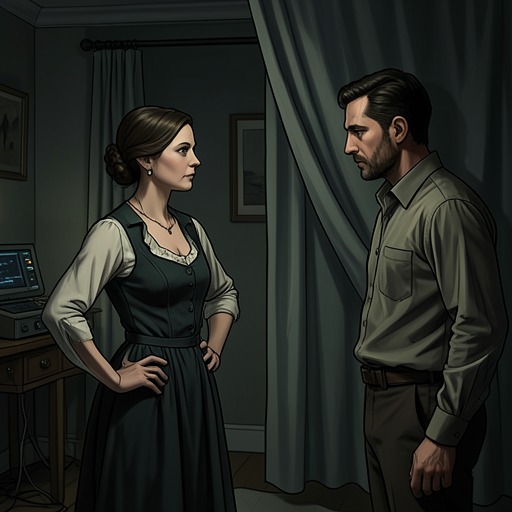
The play's apparition stands against the material finality of Hamnet's death. During the preparations for burial, the women have burned bedding, aired and cleaned the room, and laid out warm water, cloths, needles, and a white sheet. They remind Agnes that plague victims must be buried the same day, but she cannot answer them. She closes Hamnet's eyes herself, holds his hand, and later washes his body, tracing familiar marks left by a fall, a dog bite, and childhood illness. These acts attend to the actual body; the ghost's return offers no reversal of them.
Agnes sews Hamnet's shroud and places herbs inside its folds, choosing plants for comfort while rejecting those associated with failed remedies or an unpleasant smell. At the burial, William carries the shrouded body through Henley Street and onward to the grave. Agnes leaves the cemetery with two children where she had entered with three, and finds it difficult to cross back through its gate. Against that irreversible separation, the stage ghost is not a recovered Hamnet but a form through which loss can be addressed. At the play's close, the ghost turns toward Agnes and asks to be remembered. The request joins the theatrical figure to her private act of recognition: the dead cannot return to ordinary life, but performance can make their presence speak to the living.