Clover Hill
HarvestClover Hill is a modest rise above the common fields, but its height gives Walter Thirsk a rare view beyond the village and a clear sight of the lane. At the story’s turning point, he runs there after parting from his master, watches travelers pass, and weighs the temptation to follow them against the grief of leaving. The hill gathers the village’s fading past and Walter’s uncertain future into one exposed vantage point.
Setting and View
Clover Hill is a small, clover-covered hillock at the top end of the land, high enough to offer a pinched view of other parishes. From above, the shape of the village on Philip Earle’s rough map resembles the nose of a broad-headed man. The map and the view meet there: a place once rendered as a feature on paper becomes a landscape Walter can look across from the village’s edge.
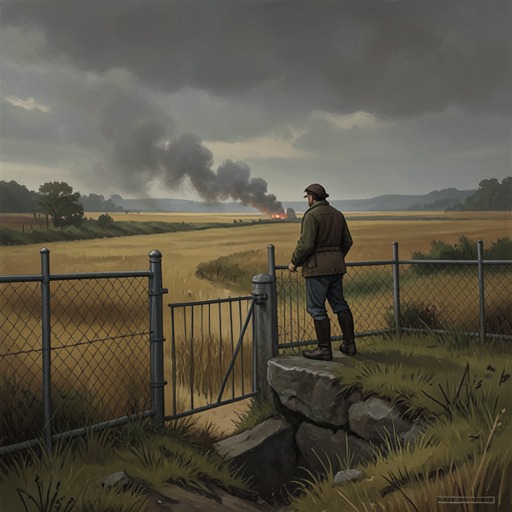
The hill also overlooks a stretch of lane that remains unobstructed for about fifty paces, with no hedges, trees, or walls screening it. That opening makes Clover Hill a lookout. Walter can sit above the route and see visitors approaching or passing without needing to meet them on the road.
A Lookout Before the Departures
Before he settled in the village, Walter often came to the hill hoping to spot a visitor first. He imagined that a carter, a tinker, a relative of Charles Kent, or a minstrel might appear. In those days, no visitor stayed for more than a day; the travelers of the present week mark a break with that accustomed pattern.
The hill’s meaning is therefore tied to Walter’s uncertain belonging. He remembers having settled in and fitted in, while hesitating to claim that he truly belonged. The view outward once held the possibility of news and novelty; now the lane carries people away from the village as its familiar community is coming apart.
The Farewell and the Passing Party
After his morning farewell to his master, Walter finds himself running uphill toward Clover Hill. He has little habit of hurrying and uses his exertion as an excuse for his tear-filled eyes. The open height gives him a place to pause and collect himself while he waits for the party to come along the lane.
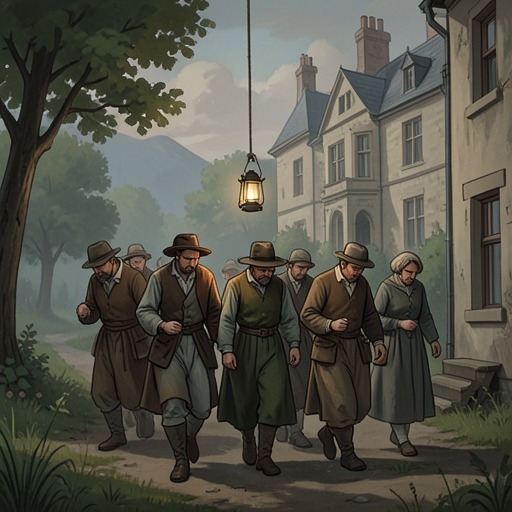
From the hill, Walter watches the travelers pass. The procession includes women walking beside the horses and attendants dressed alike; one carries a heavy stave taken from the village. Walter reads the scene as a pageant of privilege, suffering, and malice, with despair following behind. The lane is once again empty when they have gone, leaving the hilltop isolated above the valley.
Choice and Significance
The hilltop’s exposure sharpens Walter’s sense of abandonment. Although the sun still shines in the valley, he feels cut off from its warmth and imagines going after the party to escape the prospect of living without neighbors or anyone he loves. He pictures possible lives in town among the departing people, but recognizes that joining them would mean accepting shame and servitude as the price of company.
Instead, Walter holds his nerve and lets the party go on without him. He leaves Clover Hill by a cattle path and descends into the sunlight, delaying the choices he will have to face. The hill does not settle whether he belongs to the village or should leave it; it gives him a clear view of departure, then a route back into the open fields. In this final pause, Clover Hill becomes both a lookout over loss and the place from which Walter turns toward the land he knows he cannot remain in.