Sha'ar HaGai
JudasSha'ar HaGai is a mountain-pass section of the road outside Jerusalem whose open spring landscape stands in stark contrast to the divided, barricaded city. Its decisive significance in the novel is as the place where Mija Wald died during the 1948 siege: years later, Shmuel Ash travels past it and understands that his own winter in Mija’s family home was made possible by that death.
Setting and Approach
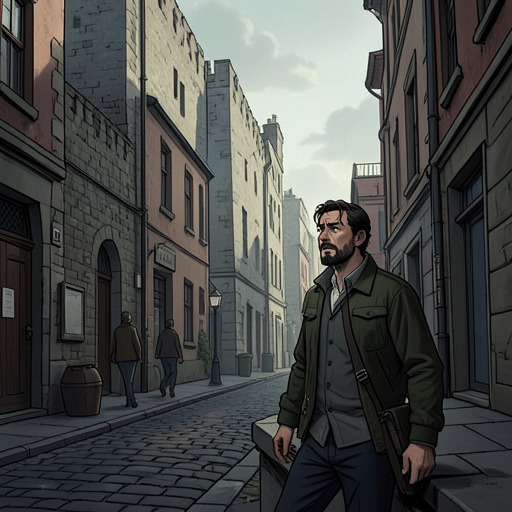
The road at Sha'ar HaGai winds among wooded hills. In spring, Shmuel sees green slopes and wildflowers from the bus window, with a pale daytime moon above the clouds. The expansiveness and quiet of the hills differ sharply from the Jerusalem he has left: a city marked by stone walls, barricades, barbed wire, minefields, and gunfire at night. Leaving the city feels relieving to him, and the changing landscape makes that departure palpable.
The contrast also places Sha'ar HaGai within a border-shaped geography. Jerusalem’s division has governed Shmuel’s movement and perception, while the pass opens onto a mountainous countryside that seems indifferent to the city’s political divisions and grief. Yet the apparent distance from urban conflict does not mean the place is free of its consequences: the road through the hills leads Shmuel directly into the memory of Mija’s death.
Mija Wald’s Death
Twelve years before Shmuel’s journey, in spring, Mija was left alone among the rocks near Sha'ar HaGai, bleeding and dying through the night. He lost consciousness and died at dawn. The account is given in the context of Gershom Wald’s recollection of the loss of his only son, which he identifies as a defining event in the family’s history. Mija’s death connects the pass not only to the siege but also to the grief and confinement that followed for those who survived him.
Gershom recalls that the family shut itself away after Mija’s death. During the Jordanian siege of Jerusalem, the thick stone walls of the house protected them from bullets and shells, while Atalia went out for necessities and rationed food. The family’s withdrawal continued after the war: Gershom remained at home, cut off from the outside world and bitterly disappointed in the new state. The memory of the pass thus reaches beyond the place of death into the household’s long aftermath.
Shmuel’s Passage and Recognition
On the bus, Shmuel recognizes that the road is passing the place where Mija died. He reflects that Mija’s death gave him the winter in the Wald household, among Mija’s father and wife. His stay had provided time and solitude, yet he judges that he wasted them. This recognition makes his journey more than a departure from Jerusalem: the landscape turns his temporary lodging into a consequence of another man’s absence.
The pass therefore links the novel’s present journey with the family’s remembered loss without erasing the difference between them. Shmuel can leave Jerusalem and move through the spring countryside, but Mija’s death remains embedded in the road. Sha'ar HaGai becomes a threshold between the enclosed city and open country, and between Shmuel’s brief winter in the household and the older grief that shaped it.