Manuel el Solitario
MayaManuel el Solitario is a flamenco singer, card player, and family legend whose fatal encounter with a mysterious dwarf ties the intimate history of Triana to a tale of magic cards and repeated meetings separated by 52 years. In José’s account, Manuel’s death follows from the same stories that make him seem uncanny: he claims to have learned winning tricks from the dwarf, and an angry, drunken player turns that claim into violence.
Identity and reputation
Manuel lived in Triana, identified in the story as Seville’s “gypsy quarter,” during what José calls flamenco’s golden age, when the city’s cafés cantantes were appearing. Manuel was a respected cantaor, following in the footsteps of his own great-grandfather. Yet his place in the family’s memory is marked by the name El Solitario, or Manuel el Solitario. José offers several possible explanations rather than a settled origin: Manuel may have been eccentric, a social outcast, a thinker, or simply a solitary man. His songs about human loneliness, his fondness for playing solitaire, and his mysterious reputation all gather around the nickname.
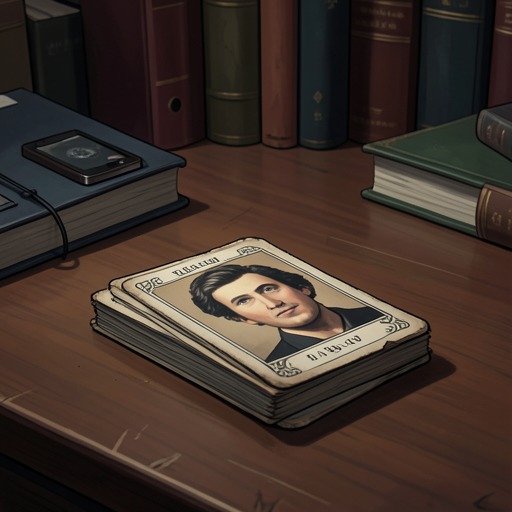
The portrait is of a versatile artist, not only a singer. Manuel was remembered as a good card player and a master of card reading. Those skills later become inseparable from the supernatural stories told about him: his apparent success at cards provides the occasion for his final misfortune, while the legend makes his abilities seem linked to a magical deck and its strange history.
The encounter by the Guadalquivir
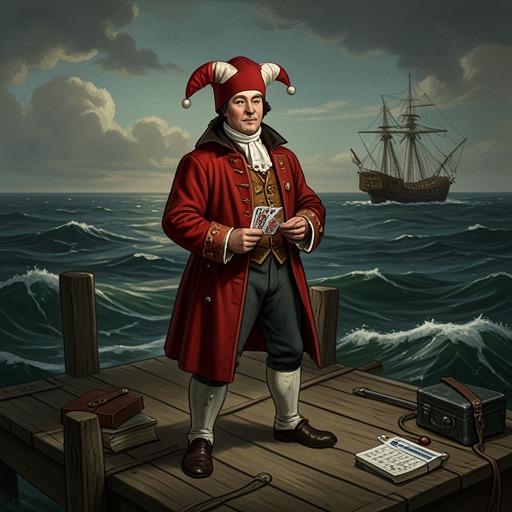
One summer night in 1894, after singing at Silverio Franconetti’s café cantante, Manuel took his customary walk beside the Guadalquivir River. Between the Triana and San Telmo bridges, only a few metres from the Church of Santa Ana, he saw a figure moving in the dark. The figure was a dwarf. José places the meeting at a particular stretch of riverbank, where the tale’s fantastic interruption enters a recognizable Seville landscape.
Manuel already knew the older story of El Planeta’s encounter with the dwarf in Marseille. According to Ana’s grandmother, Manuel recognized the significance of the stranger and stared at him. The dwarf then greeted him with an index-finger gesture identical to the one associated with El Planeta in a copper engraving. Dressed in ordinary clothing for a non-Romani man of the period, he began a lively conversation with Manuel after asking whether he was out for a walk.
The stranger spoke Spanish with an Andalusian accent, but his speech made clear that he had been born neither in Seville nor elsewhere in Andalusia—or even on the Iberian Peninsula. That mismatch between familiar speech and foreign origin reinforces the story’s central uncertainty: the dwarf appears in ordinary places and social situations, yet carries signs that he does not belong to the ordinary world.
Cards, legend, and violence
Two years or so after the 1894 meeting, Manuel was playing cards with friends and winning repeatedly. He liked to present himself as a kind of magician, someone able to win without effort. That evening, he recounted the stories associated with the dwarf: the sailor on the island that sank into the sea, the dwarf’s encounter with El Planeta in Marseille, and his own meeting beside the Guadalquivir. The stories made his card-playing prowess part of a larger chain of marvels, rather than a private talent alone.
When the other players asked why he always won, Manuel said he had learned tricks from the dwarf whom El Planeta had met in Marseille. One player, who had been losing all night and was very drunk on manzanilla, attacked him with his fists. Manuel died from his injuries a few days later. He left a wife and two small children, a boy and a girl. The account thus sets the elaborate, far-reaching legend against a brutally ordinary cause of death: resentment at a card table, sharpened by drink, ends the life of a respected singer.
The name El Solitario may itself have hardened into legend after the fatal story. José notes that some people believed Manuel acquired the nickname only after telling the tale of the sailor and the magical deck. The account does not resolve whether the name began in his personality, his songs, or the stories surrounding him; instead, these explanations overlap, making the remembered figure both a man known for loneliness and a character shaped by narration.
Family memory and the 52-year pattern
José presents Manuel as Ana’s great-grandfather and situates his encounter within a sequence of appearances separated by 52 years. The tale of the dwarf had been carried to Seville after the earlier Marseille episode, and the event involving Manuel occurred in June 1894, exactly 52 years after the encounter José has just described. José and Frank calculate that 104 years have passed by the time they discuss the story, while Ana had spent her life wondering what might happen in Seville that year. Manuel’s episode therefore matters not only as family history but as a turn in a cycle that Ana expects to recur.
The story is delivered as José’s remembered family tradition, with details attributed to Ana’s grandmother and with uncertainties openly preserved: why Manuel was called El Solitario, when the nickname arose, and how much of his apparent mastery came from a supernatural source are not settled. His life and death remain concrete within the tale, while the meaning of the dwarf’s appearance stays entangled with its retelling. The result is a double inheritance for the family: a singer’s history of performance and solitude, and a fatal legend in which the cards keep connecting one generation to another.