Magic Drink
MayaThe Magic Drink is an imagined potion through which Vera gives form to an impossible wish: to escape the brevity of life long enough to find a beloved companion, and then to share eternity with him. It never becomes a verified supernatural substance. Instead, its changing meanings—romantic hope, a shared life, and the child who will outlive its parents—make it a recurring measure of what Frank longs for and cannot keep.
Origin in Vera’s fantasy
As a young woman, Vera imagined that drinking half the potion would grant her eternal life. Immortality would give her unlimited time to find the man to whom she could offer the other half. She imagined that, even if the right person did not appear the following week, she could wait a hundred or a thousand years. The fantasy turns an ordinary uncertainty in love into a problem time could solve: the drink would not identify a partner for her, but would make the search limitless.
The potion thus begins not as a recipe or an object Frank can obtain, but as Vera’s private answer to the fear that life may be too short for love. Its logic depends on both halves: her own prolonged life and the eventual sharing of the remainder. The imagined gift joins endurance to intimacy, while its far-off time scale—centuries or millennia—sets it against the fragile duration of a human life.
The postcard and the promise
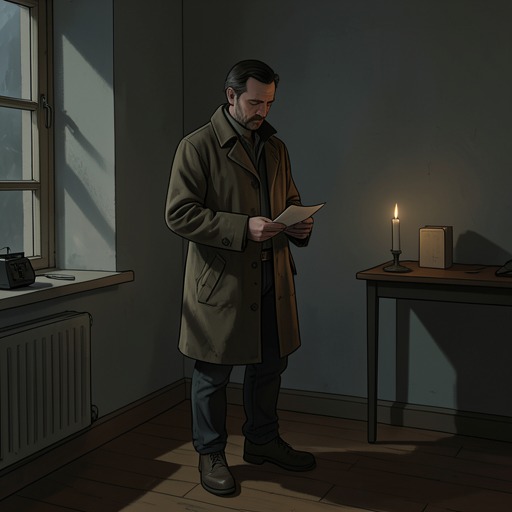
The Magic Drink returns in the postcard Vera sent Frank from Barcelona, dated May 26, 1992. She tells him she will arrive in Oslo on Tuesday, but will not come alone; she says that everything will be different and warns him not to call. Before any further words, she wants to feel his body. She asks whether he remembers the Magic Drink, says that he will soon drink a few drops, and admits that she sometimes feels afraid. Her question about whether the two of them can accept life’s brevity places the fantasy alongside a real, impending change in their relationship.
Years later at Maravu, Frank shows the postcard to the narrator after hearing that the narrator had lost Sheila. Frank translates Vera’s Spanish word by word. The scene makes the card more than a surviving message: Frank brings it out suddenly, unfolds it on the table, and seems to need help taking in the words he has just translated. When the narrator asks about the promised drink, Frank hesitates, then dismisses it as a foolish idea Vera had. His evasion leaves the potion’s status unresolved; the account gives no evidence that Vera possessed or administered a literal substance.
A figurative drink shared through a child
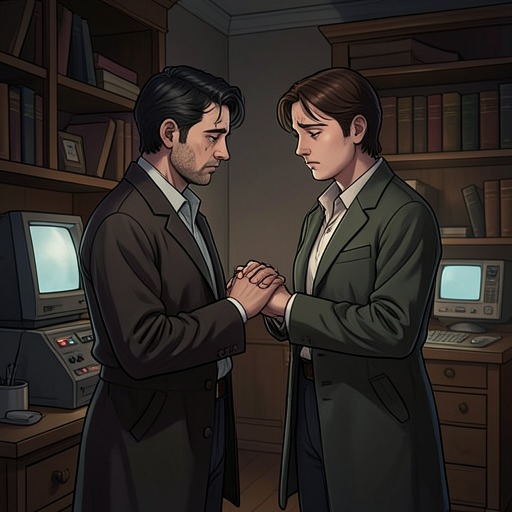
Frank recalls that after returning from Barcelona that summer, Vera solemnly declared that in some way they had taken a few drops of the Magic Drink she had dreamed of as a girl. She was thinking of the child who was about to be born. Something belonging to the two of them, she said, had begun to live its own life and might bear fruit for thousands and thousands of years. When Frank asks whether she means posterity, he confirms that this is what she meant and connects the thought to the fact that all human beings on Earth descend from a woman who lived in Africa hundreds of thousands of years ago.
In this account, the potion’s promise changes scale. The lovers do not achieve personal immortality, and Frank does not describe a physical drink; what continues is their child and, through human descent, life extending across generations. Vera’s image makes parenthood the closest available equivalent to sharing the potion: a life that began with the two of them can continue beyond either individual lifespan. The imagined drops become a language for biological continuity rather than proof that death has been defeated.
Commitment, bereavement, and the unanswered wish
When Vera reached Oslo, Frank says, she assured him she would not have hesitated to share the drink with him if she had possessed it. She gave him no actual Magic Drink, but he experienced the assurance as a great moment. He regarded her willingness to make a choice she could never retract as sublime. The potion matters here less as a supernatural promise than as the form in which Frank understands an irrevocable act of fidelity: Vera was prepared to share what, in her fantasy, made life endless.
The image acquires a harsher resonance after Frank loses Sheila. Having reread his letter to Vera, the narrator reflects on preparing Sheila’s clothes for collection and on becoming accustomed to life as a widower. In that aftermath, he says he still would not have hesitated to take Vera’s Magic Drink, even without certainty that he would find someone to give the other half to. The possibility arrives too late for Sheila, whose final year involved little more than chemotherapy. Frank’s willingness therefore does not resolve grief or reverse death; it exposes the persistent force of his longing for a life that could outlast separation and loss.
Narrative significance
The Magic Drink links the postcard’s intimate urgency to the longer timescales of birth, ancestry, and extinction-level human continuation. Its recurrence also depends on a carefully maintained uncertainty: Vera speaks of future drops, Frank later calls the idea foolish, and yet he treats her willingness to share the imagined potion as a sublime declaration. The text supplies neither a confirmed miracle nor a definitive debunking beyond Frank’s statement that she did not give him one. The drink remains powerful precisely as an unrealized possibility, poised between supernatural escape and metaphor.
Its meaning changes with the people who invoke it. In Vera’s youthful fantasy, it postpones the end of the search for love; in her account after Barcelona, it names the future life of their child; in Frank’s memory, it embodies an unwithdrawable promise; and in his bereavement, it becomes the impossible offer he would still accept despite having no partner for the second half. The object’s imagined immortality cannot save Sheila, but it gives the characters a language in which finite love can reach toward a future it cannot personally inhabit.