Manifesto of 52 Maxims
MayaThe Manifesto of 52 Maxims is a set of fifty-two maxims that José gives Frank as writing on the backs of photographs Ana took on Taveuni. Frank calls it something meant to be shared by two people; the narrator, who later obtains Frank’s letter to Vera, sees in it both a significant document and a test of what should remain private, be circulated, or be left for posterity.
Form and Significance
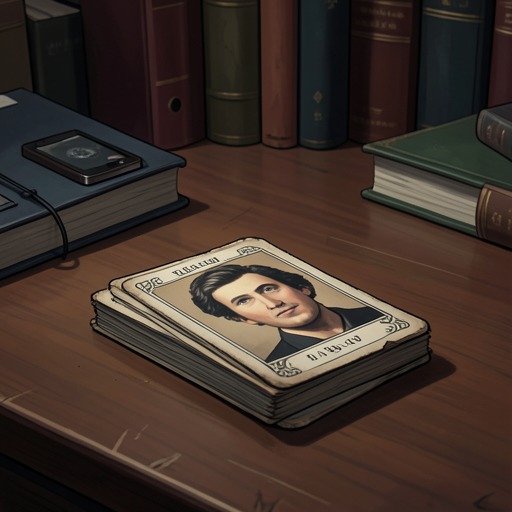
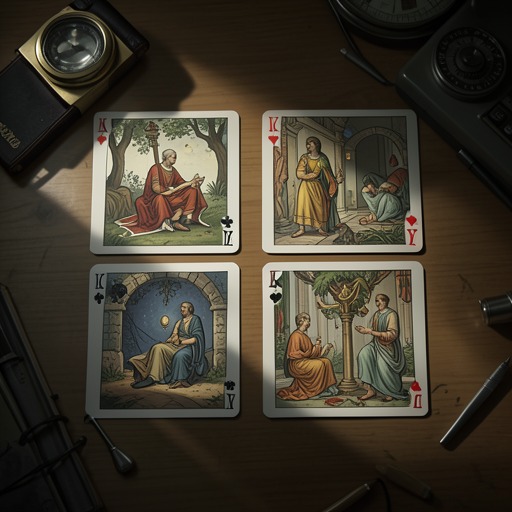
The manifesto reaches Frank not as a conventional document but as a bundle of photographs. After meeting José in Madrid’s Retiro Park, Frank accompanies him across the park to Atocha. As José runs to catch his train, he gives Frank the pictures; back at his hotel, Frank turns them over and discovers that the manifesto has been written on every reverse. The image-bearing fronts and inscribed backs unite Ana’s photographs with José’s text, making the message something carried, assembled, and read through a personal exchange.
Frank describes the manifesto as something that should be shared by two people, and suggests it is unwise for a man of his age to keep it unshared. Its arrival changes the purpose of his stay in Madrid: rather than simply leave, he feels obliged to send Vera the whole account of what José has told him and what the photographs disclose. The manifesto is thus not merely an object within the story; it prompts the act of transmission that gives Frank’s account its shape.
From Madrid to Vera
Frank incorporates the manifesto into a long letter to Vera, recounting episodes from Taveuni and focusing especially on Ana and José. The letter is sent by email on Thursday, 7 May 1998. Its ending returns to the photographs and the words on their backs, so the manifesto supplies the letter’s culminating discovery as well as its material evidence.
The narrator later obtains a copy of the letter after encountering Frank at Madrid’s Hotel Palace in November 1998, where Frank had written it in May. He emphasizes that he did not take a personal letter, while also acknowledging that the document has allowed him to study all fifty-two maxims. His account therefore distinguishes possession from appropriation, even as his decision to make the letter public places the manifesto before readers beyond its original two-person exchange.
Publication and Preservation
The narrator presents Frank’s letter in full rather than interrupting it with his own commentary, then adds an extensive epilogue. This editorial choice preserves the letter as a complete communication to Vera, but the narrator’s framing makes clear that the document has acquired another audience and another purpose. The manifesto’s route from Ana’s photographs, through José and Frank, to Vera’s letter and the narrator’s copy is also a history of changing custody.
The narrator considers whether the letter and epilogue should be placed in a time capsule near the International Date Line, to be opened a thousand years later. He wonders whether Vera’s reading the letter—and possibly allowing others of their own time to read Ana’s story—would make the capsule unnecessary: once the writing has circulated, it is no longer a secret being kept for posterity. The proposed preservation of the manifesto therefore depends on a tension between withholding and sharing. Its original purpose is intimate exchange; its possible future is archival survival, while its present publication risks deciding on behalf of others what should be remembered.