Spanish brig Ana
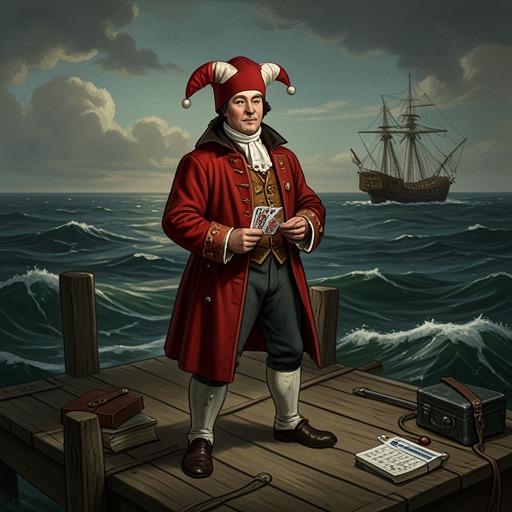
MayaThe Spanish brig Ana is the historical-sounding vessel through which the novel’s card legend first enters maritime history. Sailing from Cádiz in 1790 with a sailor carrying a mysterious deck, it is said to have gone down on its return from Veracruz with a great cargo of silver and all hands lost. The ship’s reported wreck gives the tale a documentary foothold while leaving its most extraordinary elements in the realm of legend.
Voyage and Wreck
In José’s account, the brig departed Cádiz at the beginning of 1790, sailed first to Veracruz in Mexico, and sank while making the return passage to Cádiz. The cargo was a substantial load of silver. José says he checked old annals and ship registers for these particulars, distinguishing the wreck itself from the legend that grows around it.
Those records, as he recounts them, say that everyone aboard perished; they offer no indication of survivors. The sailor’s later appearance in another shipwreck story therefore sits in deliberate tension with the recorded fate of the Ana. Frank accepts the premise provisionally, suggesting that the sailor could have been lost again on a deserted island 52 years later without ever returning to civilization.
The Cards at Cádiz
Before the brig put to sea, it spent a short time at the Cádiz wharf after coming from Sanlúcar de Barrameda. The wharf’s customary sellers offered sailors oranges, olives, cigars, lighters, and playing cards before their ocean crossings. In the legend, the sailor bought his strange deck there from a six-year-old Romani boy named Antonio.
Antonio would later become known as the legendary cantaor El Planeta. José supports the coincidence of age by noting that El Planeta was born in Cádiz around 1785, making him approximately six when the brig called at the wharf in 1790. The vessel thus links a specific departure, a remembered commercial waterfront, and the childhood origin assigned to a celebrated figure.
The Ship in the Larger Legend
The Ana’s documented route and loss are only the opening layer of a story that continues beyond the ship’s destruction. José says that the sailor carried the deck aboard when he left Cádiz; the legend of how he acquired it is attached to the brief stop at the wharf. The ship’s sinking with all aboard does not resolve the deck’s later history but sharpens its mystery, placing an object with a continuing story inside a voyage said to have ended without survivors.
The novel also gives the cards a later, practical life: Ana and José use the memorized verses associated with them as a private code during bridge games, sometimes murmuring words that signal the cards in their hands. This disclosure offers a concrete explanation for at least some of their apparent clairvoyance, an impression previously voiced by Mario after the pair repeatedly won. The old legend and the present-day game remain distinct, but both make the deck a medium for concealed knowledge. In that structure, the Ana is more than a named wreck: it supplies the earliest chronological anchor for a chain of stories whose evidence alternates between records, inherited legend, and Frank’s own observations.