German General Staff
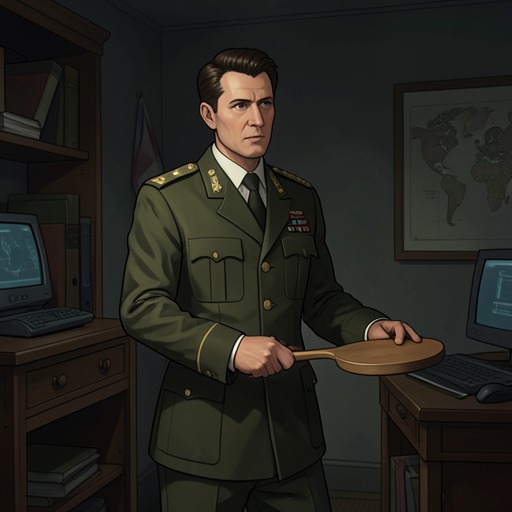
MunichThe German General Staff occupies a pivotal but uncertain position in the resistance to Adolf Hitler’s intended war against Czechoslovakia. Its senior figures are described as increasingly opposed to a conflict they believe would bring disaster to Germany, yet opposition does not automatically become action: the Wehrmacht’s oath binds the Army to Hitler, and the conspirators need a disturbance inside the government before it can plausibly intervene.
Military dissent and Beck’s resignation
General Ludwig Beck, formerly Chief of the General Staff, tells a small group of conspirators that he resigned a little under six weeks earlier in protest against the plan for war. He had kept his resignation private because he had promised Hitler not to publicize it, a promise he now regrets. Although no longer chief, Beck remains in contact with former colleagues in the high command and reports strong opposition there. He believes that if Hitler orders mobilisation, the Army may disobey and move against the regime.
Beck’s case against war rests on a distinction between earlier territorial gains and the crisis now unfolding. The return of the Rhineland and the incorporation of Austria had been bloodless, and he thinks the Sudetenland could likewise be obtained without war. In his view, Hitler is no longer pursuing peaceful gains: he wants a conflict with Czechoslovakia, while the Army agrees that a war with France and Britain that year would be disastrous for Germany. The General Staff’s dissent is therefore presented not as simple opposition to expansion, but as alarm at the prospect of a major war and the leadership’s refusal to avoid it.
The oath and the limits of intervention
Beck identifies a constitutional and practical obstacle to action. The Wehrmacht has sworn loyalty to Hitler, so the Army cannot make the first move against him without violating its oath. But Beck argues that if a disturbance occurs in the Chancellery, the Army could enter to restore order; intervention in response to disorder would not, in his account, contradict the oath. This distinction gives the conspirators a possible route to action while showing how carefully they must frame it.
Colonel Hans Oster has considered the operational problem for weeks. With surprise and an assurance that the Army would protect the conspirators against a rescue attempt by the SS, he estimates that roughly fifty men would be enough to arrest Hitler. Captain Friedrich Heinz says that such experienced fighters are already available and prepared to act the following day. The proposed force is small, but its plan depends on military protection beyond its own numbers—and, ultimately, on whether the Army will actually provide it.
Beck’s successor and uncertain command
The prospect of support from the General Staff does not settle the question of who will act. Beck says his successor, Franz Halder, is sympathetic to the opposition and even more opposed to Hitler than Beck. Oster has passed Hitler’s reply to Neville Chamberlain to Halder at Army Headquarters; according to Oster, Halder was appalled by it. The document strengthens the conspirators’ belief that the military leadership understands the danger, but sympathy is not yet a commitment to move.
That gap becomes decisive when the conspirators later assess why no action occurred. Oster says that everything depended on Brauchitsch, who was still deciding what to do when Hitler postponed mobilisation for twenty-four hours. The narrative thus distinguishes broad military disquiet from an effective command decision: even senior opposition cannot produce a coup while the leaders with the authority to act remain uncertain.
The General Staff in the coup plot
The conspirators treat stopping mobilisation as more urgent than deciding what government should follow Hitler’s removal. Oster insists that constitutional questions can wait until Hitler is in custody; if he cannot be captured and appears likely to escape, the group agrees he may have to be shot. Hartmann assents first, while Beck gives his agreement reluctantly. Their decision makes the Army’s potential intervention part of an immediate plan, rather than a distant political possibility.
When mobilisation is postponed, the conspirators’ opportunity changes. Hartmann argues that they must try to prevent an agreement being signed at Munich, because Hitler has delayed mobilisation rather than cancelled it. The General Staff’s importance therefore persists even as the coup plan falters: military readiness, command hesitation, and the timing of diplomatic events remain interdependent. The organization is neither presented as a unified resistance nor as a reliable instrument of Hitler. It is a divided institution whose possible refusal to obey could determine whether opposition becomes action.