British Parliament
MunichBritish Parliament is recalled during the Sudeten crisis to hear Neville Chamberlain explain the accelerating diplomatic emergency. Its role in the novel is both public and carefully mediated: the House of Commons receives the Prime Minister’s account, while the papers prepared to inform Parliament leave important parts of the government’s deliberations undisclosed.
Recall and Preparation
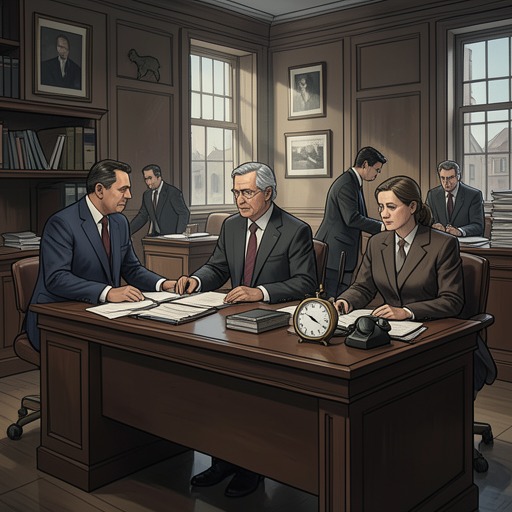
After Parliament has been in recess for two months, it is recalled as the prospect of war sharpens. The government plans for Chamberlain to make a statement to the House of Commons the following afternoon. Oscar Cleverly assigns Hugh Legat to arrange the relevant minutes and telegrams from the preceding two weeks in chronological order, so the Prime Minister can brief the Cabinet and prepare his parliamentary account. The sequence makes clerical work part of the institution’s response to crisis: before members can assess events, a record must be assembled and ordered.
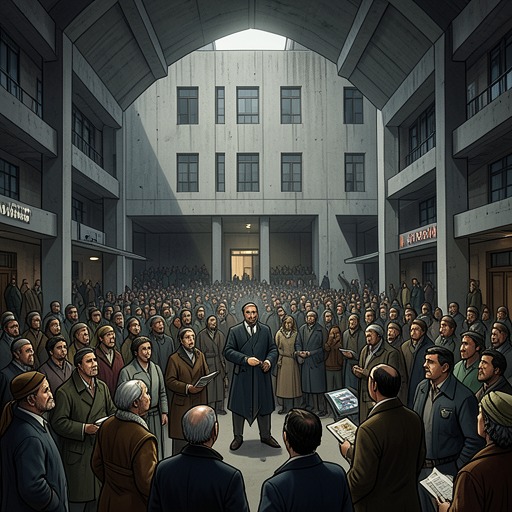
The preparation also extends to the practical management of the House. As Chamberlain enters, the packed chamber’s noise rises into a roar; Legat and Miss Watson take their places on the bench reserved for government officials. The scene sets the formal business of Parliament against the press of a crowded chamber and the urgency of a government attempting to explain events that have unfolded during the recess.
The Record Presented to Members
Chamberlain’s statement is unusually extensive: forty-two typed pages and more than eight thousand words. Its length reflects the need to bring members up to date on the crisis since July, when Parliament had risen for the summer without an imminent Czech crisis or threat of war. The telegrams and minutes Legat has compiled are being printed as a White Paper, The Czechoslovakian Crisis, Notes of Informal Meetings of Ministers, for release to peers and MPs as Chamberlain speaks.
That public record is selective. The Foreign Office and Cabinet Office remove sensitive documents before publication. In particular, an agreement between Chamberlain and Édouard Daladier—that even if war were fought and won, Czechoslovakia in its present form would cease to exist—is kept classified. The reason given is political: disclosure would make it difficult to persuade the public that the sacrifice was worth making. Parliament is therefore shown a substantial documentary account, but not the whole of the government’s thinking about the possible outcome of war.
Debate and Parliamentary Reception
Before the address, Lord Halifax, Foreign Secretary, opposes sending a proposed telegram that would tell the Czechs to surrender their territory immediately under threat of force. He considers this complete capitulation, warns that Parliament would not accept it, and stresses that Britain cannot guarantee the German Army would stop at the borders of the Sudetenland. His challenge is voiced in a ministerial meeting rather than on the floor of the House, but it establishes the parliamentary constraint surrounding the government’s decision: the House of Commons is not merely an audience to be informed; its likely judgment matters to what ministers are prepared to do.
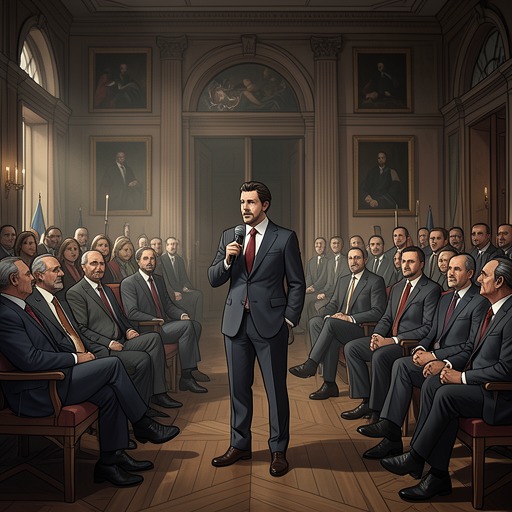
When Chamberlain addresses the House, members listen in silence. No one rises to interrupt as he recounts the crisis day by day, sometimes hour by hour. The silence gives the speech an attentive, unusually uninterrupted hearing, while the continuing arrival of telegrams and pink telephone slips shows that the account is being delivered amid a stream of new messages from outside the chamber. Parliament’s deliberation thus takes place at the point where a retrospective narrative and an unfolding emergency meet.
Parliamentary Function and Limits
The novel presents Parliament through linked tasks: recalling members, organizing a documentary record, hearing the Prime Minister’s statement, and weighing the political acceptability of policy. Miss Watson’s work preparing answers to parliamentary questions supplies a quieter, routine counterpart to the crisis proceedings. Together, these details show an institution sustained not only by speeches and votes but also by the offices and paperwork that shape what can be asked and answered.
Yet the White Paper’s omissions place a limit on Parliament’s access to the crisis. Members receive a chronological account and a large body of supporting papers, but the classified understanding that even a victorious war might leave Czechoslovakia dismantled remains outside the published record. The contrast gives Parliament a double significance: it is the forum before which the government must justify its conduct, and a forum whose judgment depends on information that the government has chosen, in part, not to disclose.