Nazi SS
MunichThe Nazi SS is presented through the armed guards and uniformed officials who make the Reich Chancellery a place of controlled access, and through the danger it poses to the September 1938 coup plan. The conspirators’ calculations turn on a stark institutional distinction: the Wehrmacht might intervene to maintain order, but the SS could attempt to rescue Adolf Hitler, so the plotters require military protection before they can act.
Presence at the Reich Chancellery
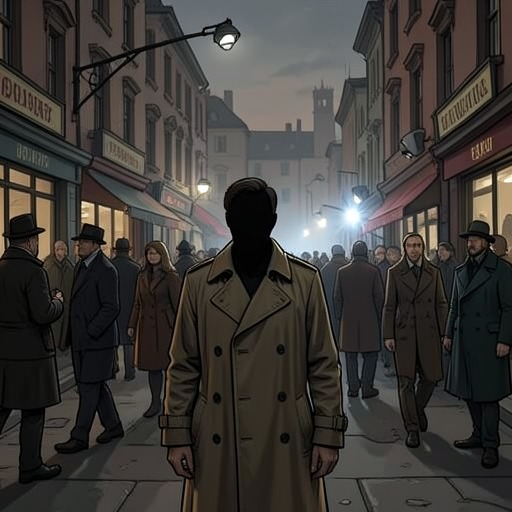
When Paul von Hartmann arrives at the Reich Chancellery at night, activity and security are visible throughout the building. At the canopied entrance, an SS sentry carrying a machine gun checks his papers. Inside the reception hall, two more SS guards are armed with pistols. As Hartmann waits to see State Secretary Ernst von Weizsäcker, he counts the security around him: two policemen at the gate, four SS riflemen in the reception area, and at least three more in the guardroom. The detail makes the building’s protection part of the scene’s political reality: access to senior officials passes through armed checkpoints, and Hartmann quietly assesses the force surrounding him.
The SS presence is not confined to the Chancellery entrance. On the stairs leading down to the lobby, Hartmann encounters Sturmbannführer Sauer, a black-uniformed official from Joachim von Ribbentrop’s private office. Sauer recognizes him, and Hartmann responds with the obligatory Hitler salute. The brief encounter shows how an SS uniform can turn an unexpected meeting into a moment requiring immediate performance of allegiance, even as Hartmann is secretly carrying out a dangerous mission.
The coup plan and the SS threat
The organization’s significance becomes explicit in the opposition’s discussion of how to arrest Hitler. General Ludwig Beck explains that the Wehrmacht has sworn an oath of loyalty to the Führer, making it impossible for the Army to initiate a move against him. If a disturbance began in the Chancellery, however, the Army could enter to maintain order without, in Beck’s account, breaking that oath. The distinction makes the proposed first move dependent on how the action is framed and who appears to initiate it.
Colonel Hans Oster describes the practical requirement for the arrest: surprise, a small initial force, and an undertaking that the Army will protect the conspirators from any attempt by the SS to rescue Hitler. Captain Friedrich Heinz estimates that about fifty men would suffice for the initial operation, and says that experienced fighters are already available. The SS is therefore not described as initiating an action in these scenes; its anticipated intervention is instead a central obstacle the plotters must plan against. Without a guarantee of Army protection, the arrest force could be overwhelmed or undone by a rescue attempt.
Narrative and political significance
The SS’s brief appearances give the coup discussions a material setting. Guards, weapons, papers, checkpoints, and Hartmann’s quiet tally of personnel turn abstract questions of military loyalty into an immediate calculation of who controls access and who could intervene. The Chancellery is both the place where the conspirators hope to arrest Hitler and a guarded institution where the SS is already visibly present.
The novel’s depiction of the organization is limited to these concrete encounters and the resistance leaders’ expectations; it does not provide a general account of the SS’s structure or operations. Within that limit, the contrast is decisive: Beck’s proposed Army intervention depends on the appearance of maintaining order, while Oster’s plan depends on the Army preventing the SS from reversing the arrest. The coup’s feasibility rests not only on finding men willing to act, but on anticipating the response of an armed organization stationed around the regime’s centre.