German Propaganda Ministry
MunichThe German Propaganda Ministry is presented as a visible counterpoint to the subdued street outside the Foreign Ministry during the Sudeten crisis. Its windows fill with onlookers, but the surrounding scenes suggest a widening gap between the regime’s public presentation of events and the German people’s hopes for peace.
A Spectacle Across the Street
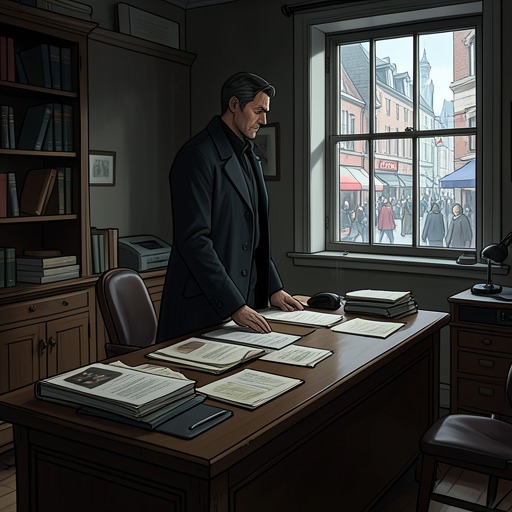
As Hugh Legat and Erich Kordt leave the Foreign Ministry to watch a column pass, only a handful of ministry staff have gathered on their side of the road. Across from them, at the German Propaganda Ministry, people are practically hanging out of the windows. The contrast is sharp: the spectacle has an audience, but the street itself is strikingly quiet. Beneath motionless swastika banners, people keep their heads down or stare ahead; nobody waves or cheers. The narrative does not identify the people at the windows or describe an organized display there, so the building’s prominence is chiefly visual—a crowded institutional vantage point opposite a strangely unresponsive public street.
Publicity and Expectations of Peace
Kordt interprets the subdued response as evidence that the regime has misjudged the mood it helped create. He tells Hartmann that Hitler, flattered by Neville Chamberlain’s visits, had let Goebbels tell the media to make much of the prospect of peace. The German people, Kordt says, had thought peace was coming; now they are being told that war may follow after all, and they do not welcome it. This is Kordt’s explanation of the moment, not an independently confirmed account of the ministry’s instructions or the public’s views. Its significance lies in the connection he draws between publicity and expectation: once peace has been advertised as attainable, renewed threats of war can expose the distance between official messaging and popular feeling.
The Ministry’s Narrative Role
The ministry’s brief appearance establishes a contrast between the machinery of political communication and the reaction it cannot fully command. Its crowded windows suggest attention focused on the passing column, while the near-absence of cheering nearby gives the scene an air of failed choreography. Kordt’s later account supplies a possible explanation: publicity had encouraged hopes that the crisis would end peacefully, making the turn back toward war unwelcome. The organization is therefore associated with both the staging of public attention and the limits of that staging; the scenes show a regime able to shape expectations, but not guarantee the response it wants.