Houselessness
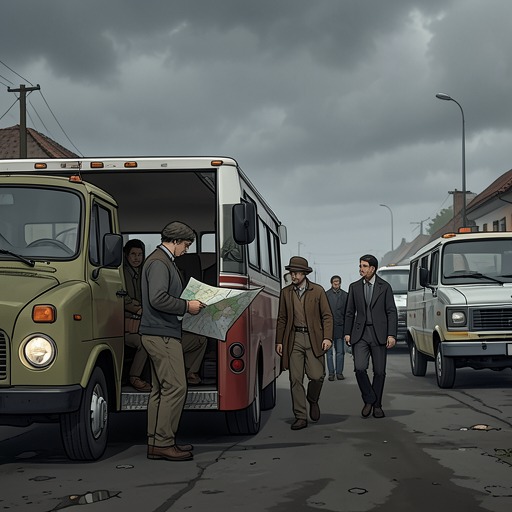
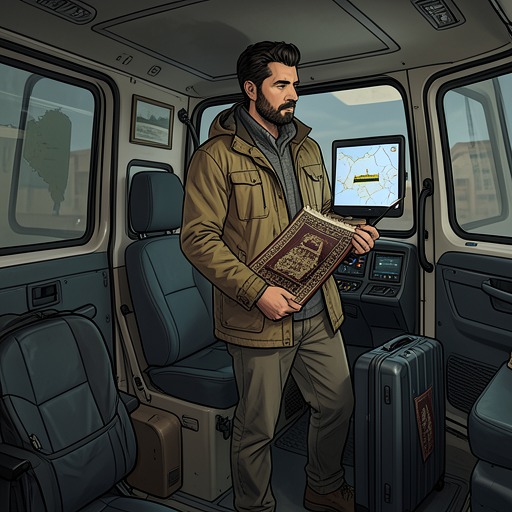
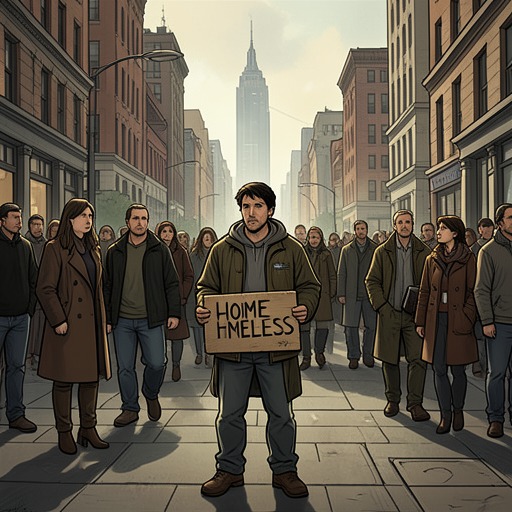
NomadlandHouselessness is the self-description adopted by people who live in vehicles and reject the assumption that lacking a conventional home makes them simply homeless. The distinction is material as well as rhetorical: they have shelter and transportation, but their ability to stay on the road depends on precarious work, legal addresses, fuel, and permission to park. Their mobility offers a way to survive rising housing costs, yet it leaves them exposed to rules that can make ordinary acts of sleeping and staying in place grounds for removal.
Meaning and Social Position
The book presents houselessness as an identity claimed by nomads who regard a vehicle as both home and means of movement. From a distance, many resemble retired recreational-vehicle travelers; in appearance and outlook, they are often middle class. They use Laundromats and fitness clubs for showers, and some will occasionally go to a movie or restaurant. But many took to the road after the Great Recession erased their savings. In an economy of flat wages and rising housing costs, giving up rent or a mortgage can make the difference between subsistence and financial collapse. Many then work long hours in physically demanding jobs to keep their vehicles fueled and themselves fed.
This is not presented as a life free of hardship. It begins for some as a last-resort response to job loss, eviction, or the inability to afford housing. The book’s account also shows why the label matters to those who use it: a person living in a vehicle may lack a fixed home without lacking shelter, transportation, or a sense of self. Trooper Dan, who lost his job in Ohio and moved into a white Toyota pickup with a red camper top, described it as his bug-out vehicle and said he considered himself to be camping rather than homeless. His account joined economic displacement to a prediction that more people would be living in tents and vehicles.
The Infrastructure of Mobility
Vehicle dwelling does not mean existing outside formal systems. There is no clear count of America’s full-time nomads partly because they are statistically folded into the broader population, while the law requires them to maintain a fixed domicile. That official address anchors vehicle registration and inspection, driver’s-license renewals, taxes, voting, jury service, and health-insurance enrollment for people not on Medicare. Nomads may travel widely, but on paper they must belong somewhere.
Some choose Florida, South Dakota, or Texas, states with no state income tax, and use mail-forwarding services to receive correspondence. South Dakota’s process, as described in the book, can involve spending one night at a local motel, registering with a mail-forwarding service, and presenting both receipts to the state department of public safety. These requirements reveal a tension at the heart of houselessness: movement is possible, but it is sustained through administrative attachment to a place.
Work is another necessary support. Seasonal jobs can draw vehicle-dwellers across the country, but the arrangements vary from hourly wages to exchanges of labor for a parking spot and hookups. The book gives examples ranging from a Georgia farm offering an RV site and limited paid work after twenty to twenty-four hours of weekly llama training, to unpaid water-taxi work in exchange for an RV site. At the annual sugar-beet harvest, workers may take twelve-hour shifts for a starting wage of twelve dollars an hour plus overtime, along with a place to park. Mobility therefore depends not simply on owning a vehicle, but on finding work, fuel, and places where the vehicle can remain.
Parking, Public Land, and the Right to Stay
A parking space can function as temporary shelter, but access is conditional. Walmart has long allowed overnight stays at many locations, a practice appreciated by travelers and criticized by some paid campgrounds. The policy is not universal: local bans, store decisions, and conflicts over visitors who overstay or set up encampments can close off that option. After a 2015 confrontation involving an eight-member family living in a Chevrolet Suburban in a Walmart Supercenter parking lot in Cottonwood, Arizona, the store began rousting overnight visitors. The episode shows how quickly an informal refuge can become unavailable.
Travelers use tools such as the AllStays Walmart Overnight Parking Locator to distinguish stores where overnight parking may be permitted from those where visitors risk being moved along or towed. The map uses red and yellow markers and includes user reports; one July 2015 report from a Pahrump, Nevada, Supercenter recorded that a traveler had stayed in a van alongside two other traveling vans. Such practical information turns parking access into part of the infrastructure of life on the road, while also showing how uncertain that access remains.
Public land offers another, similarly regulated refuge. Near Quartzsite, Arizona, free Bureau of Land Management camping areas generally allow stays of up to two weeks. Afterward, campers must move at least twenty-five miles to another federal desert site or pay to stay in the La Posa Long Term Visitor Area, where the listed fees are forty dollars for two weeks or one hundred eighty dollars for as long as seven months. More than forty thousand RVers are estimated to spend December through February in the desert near Quartzsite. The colorful permit stickers on their windshields can identify them to one another, but the land’s rules still require them to keep moving or pay for a longer stay.
The boundaries extend beyond parking policy. In Coconino National Forest, rangers have questioned people in vans and RVs about their home addresses, and people perceived as permanent nomads can be ticketed and evicted for making residential use of the forest. A sticker indicating that a vehicle has camped in Quartzsite may be treated as evidence of long-term residence. The book also describes a proposed Forest Service smartphone app for reporting suspected long-term campsites. Together, these practices illustrate how public land can be available for camping while remaining unavailable as a settled home.
Laws, Stigma, and Unequal Security
The book places these restrictions alongside a wider wave of laws that penalize people without conventional housing. A 2016 report cited in the text described ordinances embraced by cities including Orlando, Santa Cruz, and Manchester. By the end of 2014, one hundred cities had made sitting on a sidewalk a crime, a forty-three-percent increase from 2011; the number banning sleeping in cars had risen from thirty-seven to eighty-one. The account connects this expansion to urban gentrification and higher housing costs, which intensify homelessness even as rules narrow the places where people can sleep.
These policies distinguish between a vehicle and the person who needs to use it as shelter: a car may be allowed to remain while its occupant is told to leave. The resulting insecurity is not only a matter of social disapproval. It is built into the allocation and policing of space, from city streets and retail parking lots to forests and desert camping areas. Houseless travelers may have a vehicle, but that possession does not guarantee a lawful or stable place to stop.
Seasonal Movement and the Promise of the Road
The road is both a practical home and a route through recurring uncertainty. As seasonal jobs end and winter approaches, nomads pack up and move toward work, warmer places, friends, or family. Their travel follows the country’s ordinary landscape—shopping centers, dormant fields, factories, subdivisions, and highways—and can end for the night in a Walmart lot, on a quiet suburban street, or at a truck stop. Before others notice them, they may be moving again. The repeated departure makes mobility look like freedom, but the nightly search for somewhere to stop reveals its conditions.
The book also describes the communities that form within this movement. Nomads who meet online, at work, or at remote campsites can develop a shared sense of kinship; when someone’s van breaks down, others may pass a hat to help. The road offers hope through motion and the possibility of a new job or chance encounter, even when the choices available are narrow. Houselessness thus holds together two truths: it is a response to economic hardship and a chosen way of naming life beyond conventional housing, but its promise of autonomy remains dependent on work, infrastructure, and the precarious permission to stay.