Nomads as an “indicator species”
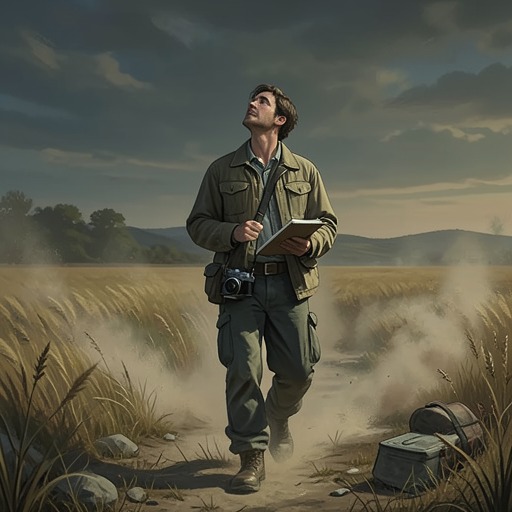
NomadlandNomads as an “indicator species” is the book’s analogy for people whose move into vehicle dwelling makes wider economic and social change unusually visible. Most people facing financial strain will not live in vehicles, but the nomads’ exposed, mobile circumstances signal a broader erosion of household security, retirement protections, and access to stable housing. Their lives register that pressure while also showing how movement itself depends on rules, work, and places to stop.
The analogy and its reach
The comparison is ecological in form: as an indicator species can signal changes in a larger ecosystem, nomads are presented as sensitive witnesses to changes extending far beyond their own community. Their visible departure from conventional housing is not evidence that everyone experiencing insecurity follows the same path. Rather, their circumstances make a shared problem legible through an especially radical change in how people live.
The book locates that problem in the ordinary arithmetic of household survival. Unpaid bills gather on kitchen tables as people repeatedly subtract groceries, medical costs, credit-card debt, utilities, student loans, car payments, and rent from their wages. The resulting choices may mean skipping meals, delaying medical care, or postponing bills in the hope that services will not be cut off. Nomadic life is one outcome of this pressure, but the dilemmas it makes visible reach into households that remain conventionally housed.
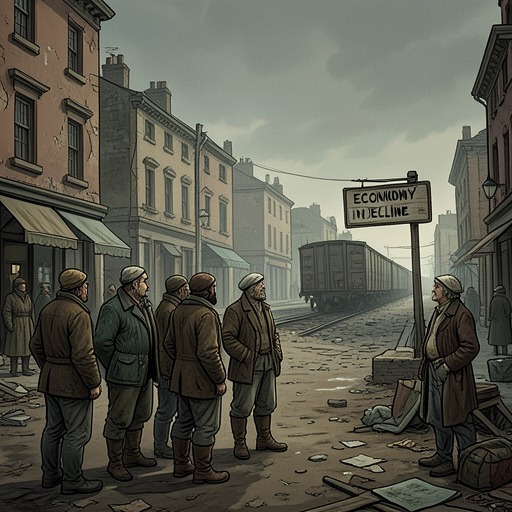
The larger economic divide gives that household arithmetic its context. Average earnings among the top 1 percent are eighty-one times those of people in the bottom half, while earnings for roughly 117 million adults in the lower half of the income ladder have not changed since the 1970s. The book describes this not as a modest gap but as a chasm whose effects include narrowed social mobility and wasted human capacity. The nomad’s visible change of address thus points toward pressures that are widespread even when their outward signs are less dramatic.
Mobility, work, and the conditions of being nowhere
Life on the road is not freedom from administration. The law requires full-time travelers to maintain a fixed domicile, even when they have no conventional home. That address determines where they register and inspect vehicles, renew licenses, pay taxes, vote, serve on juries, and arrange health insurance. Because there is no clear count of the nomadic population, travelers also tend to disappear statistically into the settled population whose systems they must continue to use.
Some states make that paperwork easier. South Dakota, for example, lets a prospective resident establish residency by spending one night at a local motel, registering with a mail-forwarding service, and presenting both receipts to the state department of public safety. Florida and Texas are also favored by travelers because they have no state income tax. These arrangements show how mobility relies on a legal and postal infrastructure: a person may travel widely, but still needs an official place from which to register and receive correspondence.
Work is another essential condition of movement. Seasonal layoffs send nomads back onto the road in search of the next job, a warmer place, or friends and family. In autumn, they pack up and travel through a landscape of malls, farms, factories, subdivisions, and big-box stores, sometimes stopping overnight in Walmart parking lots, on quiet streets, or at truck stops before leaving again in the morning. The recurring journey makes parking a practical necessity, not merely a symbol of freedom.
The public-land system makes that dependence explicit. Near Quartzsite, Arizona, free Bureau of Land Management campsites allow stays of up to two weeks; after that, campers must move at least twenty-five miles or pay to stay in the La Posa Long Term Visitor Area. A permit there costs $40 for two weeks or $180 for as long as seven months. These limits show that access to open space can make nomadic life possible, while also placing a clock and a price on how long people may remain in one place.
A visible test of retirement security
Older workers sharpen the book’s account of what the nomads reveal. The population of downwardly mobile older Americans has grown in circumstances that would have been difficult to imagine in the era of stable jobs and pensions. In 2016, nearly nine million Americans aged sixty-five or older were still employed, an increase of 60 percent in a decade; only 17 percent of older Americans surveyed expected not to work at all in later life. Continued work in old age is therefore presented not simply as an individual preference, but as a sign of weakened retirement security.
The changing retirement system helps explain that shift. The post-New Deal “three-legged stool” combined Social Security, private pensions, and savings or investments. The book argues that the structure has weakened: the Great Recession destroyed many households’ assets, while employers increasingly replaced defined-benefit pensions with 401(k) plans dependent on worker contributions and investments that may not last a lifetime. Risk once shared through employers and government has moved onto families’ balance sheets, leaving more people to keep earning as they age.
The experience of David Roderick gives this change a human scale. At seventy-seven, he worked as a seasonal workamper after losing much of the retirement cushion he might otherwise have had: his teaching pension had been cashed out during an earlier divorce, and his later wife had lost an annuity in the 1991 collapse of Executive Life. In one winter job, he and his wife sold Christmas trees while living in a fifteen-year-old Lazy Daze RV. His work included carrying trees as long as nine feet and lifting them onto customers’ vehicles for eight to ten hours a day, six days a week. The scene contrasts the expectation of retirement with the physical labor required to keep going.
At Adventureland, older employees also appeared across the workplace: a ride operator was eighty-one, and staff described coworkers aged eighty and eighty-six, including employees with disabilities assigned tasks they could perform. These examples convey older people’s continued participation in work, but they do not erase the economic conditions behind it. Read beside the expanding number of employed seniors and the thinning of pension protections, their presence reinforces the indicator’s warning: the need to work can persist well beyond the age once associated with rest.
Regulation and the limits of refuge
The spaces that shelter travelers can also become sites of surveillance and exclusion. In Coconino National Forest, rangers questioned van and RV campers about their home addresses. A vehicle sticker showing that its owner had camped near Quartzsite could be treated as evidence of permanent nomadism; campers judged to be making residential use of the forest could be ticketed and evicted. The Forest Service was also developing a smartphone app through which members of the public could report suspected long-term campsites.
Such restrictions make clear that mobility does not guarantee a right to remain. A traveler may have a vehicle and access to public land, yet still be required to prove that a temporary campsite is not functioning as a home. The book connects this scrutiny to a wider rise in laws restricting the use of public space: between 2011 and the end of 2014, the number of surveyed cities banning sleeping in cars rose from 37 to 81. The nomads’ exposure to these rules makes visible a tension between the practical need for somewhere to sleep and the regulation of who may occupy space.
What the nomads make visible
The analogy gathers these strands without claiming that vehicle dwelling is the only or inevitable response to insecurity. Nomads are unusually legible because their lives depend on visible objects and permissions—a vehicle, an address for official purposes, seasonal employment, a legal place to park. Their everyday requirements expose how readily the promise of mobility can be constrained by wages, housing costs, registration systems, and land-use rules.
The book’s final image returns to that dependence: after miles of roadside America, travelers pull in to rest and depart again before they are noticed. The parking spot is both a temporary foothold and a measure of how narrow refuge can become. By treating nomads as an “indicator species,” the book asks readers to see their lives not as an isolated subculture, but as an early and unusually visible signal of pressures shared across a much larger society.