Housing affordability crisis
NomadlandHousing affordability crisis is presented as more than the inability to pay rent: it is a widening household shortfall that reaches into health, family life, work, and the choices people make to keep going. Through Linda May’s experience and the improvised support networks of vehicle-dwelling nomads, the book shows both the material consequences of that pressure and the limits of treating survival as a purely individual problem.
Household arithmetic and structural pressure
The book renders the crisis in the repeated calculations of ordinary households: wages minus groceries, medical bills, credit-card debt, utility fees, student loans, car payments, and, above all, rent. When income cannot meet those expenses, people face choices that are all costly in a different way: skipping meals, delaying medical care, letting bills go unpaid, or risking the loss of electricity and heat. The arithmetic is not a one-time emergency but a routine that recurs through exhaustion and sometimes tears.
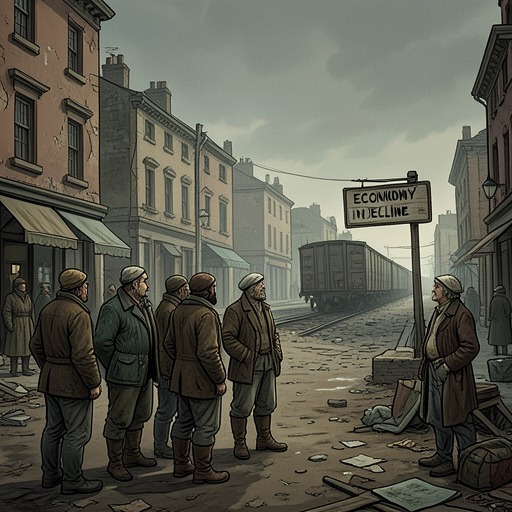
That private arithmetic sits within a larger economic divide. The book reports that average earnings for the top 1 percent are eighty-one times those of the bottom half, while earnings for roughly 117 million American adults in the lower half of the income ladder had not changed since the 1970s. Two housing measures sharpen the point: minimum-wage workers face a rent shortfall, and one in six households spends a majority of its income on housing. These figures describe a squeeze in which even continued employment may not make conventional housing affordable.
Linda May: autonomy under strain
Linda May’s time on her daughter Audra’s couch makes the crisis intimate. Staying with Audra, Collin, and three teenage grandchildren in Mission Viejo, Linda had no private room; the couch by the front door became an island as family members passed on their way out. She adored them, but felt stranded and missed her autonomy. With her Jeep in the repair shop, even leaving depended on circumstances she could not control. Her situation exposes a hidden cost of housing insecurity: a roof supplied by relatives can still mean dependence and a diminished sense of belonging.
The household’s capacity to help was itself under pressure. A granddaughter had been weak and intermittently bedridden for years before testing positive for Sjogren’s syndrome; a grandson was managing type 1 diabetes; Audra had severe arthritis; and Collin’s migraines and vertigo had forced him out of his office job. Those health problems strained the family emotionally and financially. Linda, in turn, was short of money and unable to resume the work she had planned: a repetitive-motion injury from an earlier Amazon CamperForce job had left her with a grape-sized lump on her wrist and pain running up her arm. Family support, paid work, and health were not separate issues; each depended on resources the others were already consuming.
The pressure followed Linda into retirement planning. Census figures cited in the book show that more than one in six older women living alone were below the poverty line in 2015; 2.71 million elderly women were poor, compared with 1.49 million men. Women’s Social Security benefits averaged $341 less per month, reflecting lower lifetime payroll contributions. In the same year, women earned about 80 cents for every dollar earned by men and were more likely to provide unpaid care for children and aging parents. Linda had raised two daughters mostly on her own and later helped care for her mother, who developed aggressive brain cancer. Lower earnings and unpaid care accumulated across a lifetime, leaving less income and savings to stretch through a longer average life.
Eviction and the transfer of housing risk
The family’s insecurity became an eviction when Collin lost the short-term disability benefits he had been receiving after leaving work. Unable to pay rent in Mission Viejo, the family faced clearing a two-thousand-square-foot house and its garage. Linda gave them her stored, twenty-eight-foot El Dorado motorhome, which she had nearly sold earlier that summer. It offered shelter, but not an easy fit: Audra and Collin would sleep in the bedroom, Julian in the cab loft, two granddaughters on the fold-out dinette, and four dogs wherever space remained.
The move required the family to reduce their possessions to what they could carry. Each teenager received one Rubbermaid tub for belongings to keep; the rest went into a large yard sale that brought in $1,000 over two weekends. A beloved accordion and much of the teenagers’ clothing and equipment were among the things given up. Linda helped organize the sale, but the crisis exhausted her, and she eventually pulled back from helping. The motorhome transferred housing from one generation to another, while making visible how quickly a household can be forced to exchange space, privacy, and possessions for a place to sleep.
That instability continued in smaller, precarious forms. Linda later heard that her grandchildren were sleeping in a tent beside the RV. A storm lifted the rain fly and drenched them; water also seeped in from below. Vacuuming sand from the floor had made tiny holes in the tent fabric, which the family patched with duct tape. Their efforts show both resourcefulness and the fragility of a shelter that depends on a tent, weather, and makeshift repairs.
Mutual aid as practical support
The book also follows people who respond to scarcity by sharing resources rather than relying only on cash or formal services. At the Rubber Tramp Rendezvous, skills and equipment circulated: mechanics taught basic repairs, carpenters built shelves and bed frames, and people with large solar panels made excess power available to others. Swankie baked for the gathering in a solar oven, while a deaf woman offered an impromptu American Sign Language class. These exchanges had practical value for people living with limited space and money; Linda later used skills learned at the gathering to help forest rangers with a flat tire.
Food moved through similar networks. Lesa NeSmith rose at sunrise to make cowboy coffee for anyone who came by, carrying forward a habit of inviting neighbors to share a pot. Group meals drew on ingredients contributed by participants. When the Valentinos ran out of fuel while trying to keep warm in Quartzsite, Vincent drove them to town for a fuel jug; they returned with food from the local food bank, including apples, sausages, and a bag of salad. After Linda became ill with bronchitis in Ehrenberg, neighbors brought her boiled eggs, tomatoes, and sausage when she was too weak to cook. The support was not an abstract feeling of community: it meant coffee, food, repairs, and help when illness or a cold night made self-reliance impossible.
What the crisis signals
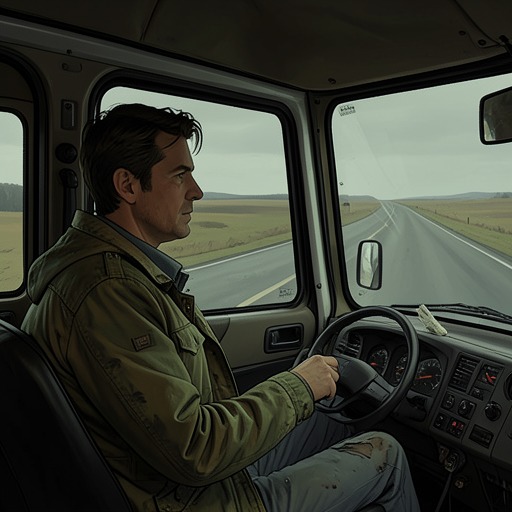
The book frames vehicle dwellers as an Indicator species: people whose conspicuous departures from conventional housing signal pressures experienced less visibly by millions of others. Most people confronting unpaid bills will not live in vehicles, but many face the same recurring calculations and make their own withdrawals from food, healthcare, utilities, or debt payments. The analogy broadens the subject beyond the nomadic community without equating everyone’s circumstances.
Housing costs in this account connect to insecure employment, illness, retirement shortfalls, and the unpaid care that families provide when money and services run out. Relatives may lend a couch or a motorhome; nomads may share food, labor, and knowledge. Such help can keep people going, but the eviction, the crowded RV, and the patched tent show what it cannot guarantee: stable housing, private space, or relief from the next bill. The crisis is therefore both a material shortage and a transfer of risk—from institutions and unstable markets onto households, relatives, and informal communities.