Homelessness
NomadlandHomelessness in the book is not simply the absence of a roof: it is a condition measured by material insecurity, imposed through law and public judgment, and resisted through the language of identity. Many vehicle-dwelling nomads call themselves houseless because their vehicles provide both shelter and transportation. Yet that distinction cannot insulate them from poverty, exclusion, or the fear that a precarious life may become homelessness in the harsher sense they associate with the word.
Shelter, insecurity, and the name
The distinction begins with a concrete claim: nomads have shelter, even if they lack a conventional home. Their vehicles serve as both dwelling and transport, and many have chosen a life on wheels as housing costs rise and wages remain flat. For some, the choice followed the Great Recession, which wiped out savings; strenuous, long-hour work helps keep fuel in the tank and food on the table. The term houseless presents this arrangement as a different way of living, rather than proof that a person has no home or resources. But a chosen identity cannot erase the material conditions that make the choice necessary.
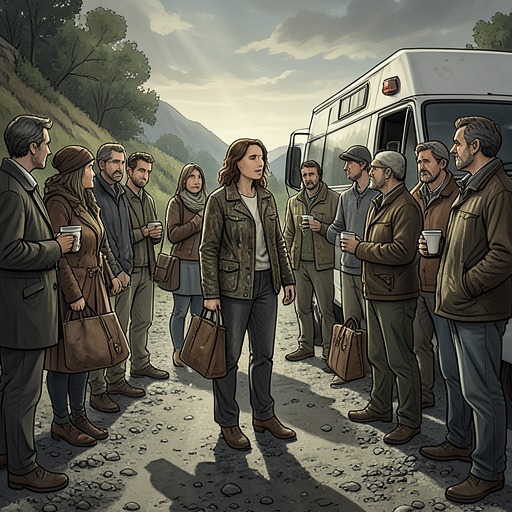
The label also carries emotional force. At an off-the-radar camp where roughly fifteen people came and went, LaVonne Ellis reflected that others might consider her homeless, though she did not: she had shelter. She also worried that separating herself from homeless people could reinforce the stigma attached to them. Her hesitation exposes the instability of the boundary. The category can offer dignity and solidarity, but it can also mark a distinction between people whose circumstances may be closer than they would like to admit.
At a gathering of nomads, Al Christensen, a former advertising art director, described his livelihood shrinking over several years as remaining opportunities went to younger creatives. He called himself virtually unemployed after moving from a virtual agency. Though he was a self-described loner who sometimes had to leave the gathering to be alone, he returned because he valued its company and the respectability it gave to nomadic life. His pride in being houseless did not mean he was untouched by economic displacement; it showed how people could frame that displacement without accepting the identity of the socially rejected homeless.
When the label draws near
For LaVonne, the distinction became harder to sustain when her van broke down in Ehrenberg. She spent nearly a month and a half living in the dead vehicle as the heat rose and other campers left. A repair shop quoted $3,000 for the engine, more than she could afford. She eventually borrowed to buy a nearly new twelve-person Chevy Express, despite uncertainty about the loan terms, because she feared that without it she would be homeless. She named the van LaVanne Two. The episode makes the stakes of the word immediate: a working vehicle was not merely transportation but the shelter on which her claim to a different status depended.
Back in San Diego, she wrote that living in a city van caused people to think of her as homeless, and that their perception could make her feel that way. She described trying to appear normal and hiding in plain sight. An encounter with an older man who hid his belongings in a bush near her van brought home the closeness she had tried to keep at a distance: she recognized that she had joined a growing group of people living on the streets, with less difference between their situations than the labels suggested. Her writing traces a movement from managing others’ impressions to acknowledging shared vulnerability.
The money pressures were not abstract. LaVonne relied on payday loans to get through the month; each loan cost $255 and was due within a week, with another $45 in interest. Sameer Ali responded with an account of having almost no fuel, five days of food, and two days of water before payday while camping in a forest with his dog, Mr. Pico. He urged her to leave the streets of San Diego and return to the desert or forest, where she could be among people who cared for her. His advice offered belonging, but it also underscored how poverty could narrow the difference between a chosen nomadic life and a condition understood as homelessness.
Public space and the power to exclude
The distinction is not only personal. The book describes a nationwide increase in laws that criminalize activities associated with homelessness. By the end of 2014, 100 cities had made sitting on a sidewalk a crime, and 81 banned sleeping in cars, up from 37 in 2011. Such rules can leave a vehicle in place while excluding the person who needs to sleep inside it. In the account presented, the pressure was intensifying alongside gentrification and rising housing costs, making the regulation of public space part of the housing crisis rather than a separate matter.
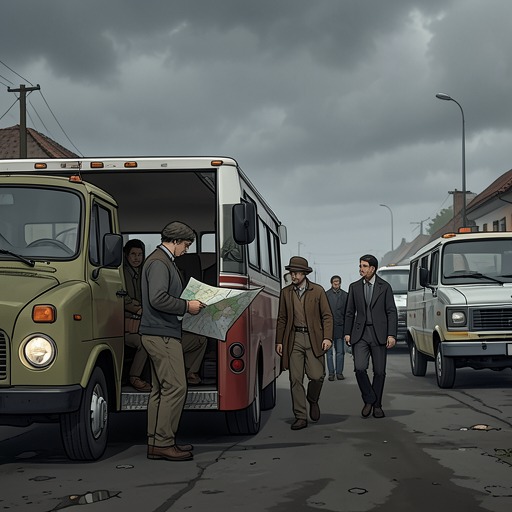
Nomads also faced restrictions beyond city streets. In Coconino National Forest, rangers questioned people camping in vans and RVs about their home addresses. A Quartzsite boondocking sticker could be treated as evidence that someone was living in the forest; a camper deemed to be making residential use of it could be ticketed and evicted. The Forest Service was also developing a smartphone app through which members of the public could report suspected long-term campsites. These practices make the contradiction plain: access to public land may allow people to stay temporarily, while signs of continued residence can make that same stay grounds for removal.
Even overnight parking at Walmart was conditional. The company had long permitted RVers to stay in many lots, but some stores stopped allowing it when visitors overstayed, put out grills and lawn furniture, or created semipermanent encampments; some cities banned the practice as well. After a 2015 confrontation between police and an eight-member family living in a Chevy Suburban in Cottonwood, Arizona, left one traveler dead, the store began rousting people who had stayed overnight. The AllStays locator mapped stores in the United States and Canada, marking some in red as places where visitors might be moved along or towed. A place to sleep could thus depend on local policy, a store’s tolerance, and information maintained by travelers themselves.
Family, care, and the limits of independence
The book also shows how housing insecurity runs through family relationships, including when someone technically has a place to stay. Linda May lived on a couch by the front door of her daughter Audra and son-in-law Collin’s home in Mission Viejo while her Jeep was being repaired. She adored her family but felt stranded and missed her independence; outings that did not include her required everyone to pass her couch. At the same time, family members were coping with serious health problems: her granddaughter Gabbi had been weak and intermittently bedridden for years before testing positive for Sjogren’s syndrome; her grandson Julian had type 1 diabetes; Audra had arthritis; and Collin’s migraines and vertigo had forced him out of his office job. The arrangement was shaped not by a simple lack of affection, but by crowded housing, illness, financial strain, and the difficulty of relying on relatives already stretched thin.
The wider account connects this insecurity to older women’s economic position. Census figures cited in the book show that more than one in six older women living alone were below the poverty line in 2015, and that elderly women were nearly twice as likely as elderly men to be poor. Women’s Social Security benefits averaged $341 a month less, reflecting lower lifetime payroll contributions; the account relates those gaps to wage inequality, unpaid caregiving, lower savings, and women’s longer average lives. Linda, who had also cared for her mother when she developed aggressive brain cancer, received her first Social Security check at sixty-two. She knew the check would not provide a secure retirement and worried about working for the rest of her life or becoming a burden to her children.
Her aspiration to build an Earthship—a home with its own systems for food, electricity, climate control, and water—was a search for self-sufficiency and long-term stability. It stood in contrast to the immediate dependence and insecurity that shaped her life and her family’s. That tension became sharper when the family faced eviction from its rented home after Collin lost short-term disability benefits. Linda gave them her stored twenty-eight-foot El Dorado motorhome. Two adults, three teenagers, and four dogs would have to fit inside; a later storm drenched the grandchildren’s tent, whose rain fly lifted and whose floor was already letting water through. These events show housing insecurity moving among generations, with family members sharing shelter and absorbing one another’s risks.
Stigma, concealment, and consequence
The book places contemporary stigma against a longer history of suspicion toward people who live in trailers or vehicles. In the 1930s, trailer residents were portrayed as a threat to middle-class morals and accused of being rootless, idle, or parasitic. That earlier trailer movement largely ended as the economy improved and many people settled again. Many modern nomads interviewed in the book, by contrast, did not plan to return to conventional housing. The prospect of continuing to live outside it meant that hiding, moving, and negotiating public tolerance could become enduring parts of life.
LaVonne experienced that pressure directly when an officer knocked on her van while she was stealth camping in San Diego. Officer Nunez was friendly and said he wanted to ensure she was alive and not running a meth lab. He issued no citation, but recorded her name, license plate, and the make and model of LaVanne Two. Her clean, new-looking van and her dog helped shape the encounter, as did her being white; nevertheless, the officer’s record meant her cover had been blown and she would soon have to move. The scene condenses the book’s account of homelessness into a question of who may remain visible in a place: shelter can be present, but the person inside it may still be scrutinized, classified, and displaced.
Across these experiences, houselessness is a claim to shelter, autonomy, and an alternative identity; homelessness is at once a material danger and a stigmatized category that can be imposed by neighbors, officials, or law. The boundary matters to the people who use it, but it is repeatedly tested by broken vehicles, unaffordable repairs, eviction, debt, and rules against sleeping or staying. The book does not treat the naming distinction as either meaningless or sufficient. It shows why the distinction can protect a sense of dignity, while making visible how little control a person may have over whether others accept it.