Padi Valley
PeacemakerPadi Valley is the northern location of Lord Tatiseigi’s estate chosen for the preliminaries of Cajeiri’s birthday celebration. The party never proceeded as planned: Ilisidi abruptly gathered the guests and hurried them toward the capital. Later, the valley reappears not as a festive destination but as a possible point on a concealed railway journey, linking the estate’s ceremonial purpose to the unsettled politics of the north.
The estate and the birthday gathering
The planned gathering was to take place in Atageini territory, at Lord Tatiseigi’s Padi Valley estate. Cajeiri’s personal guests included Jase Graham and three human children from the space station. The occasion was therefore both a family celebration and a rare meeting place for atevi and human guests within the domain of a notably traditional lord.
The plan changed in uncommon haste. Ilisidi swept up the entire birthday party and set off for the capital before notifying Tabini. The party’s bodyguards did not trust outside communications, so the movement was kept from ordinary channels. Padi Valley consequently marks the point of departure for a gathering that became a hurried relocation: the estate was meant to host the celebration, but the guests were removed before the preliminaries could unfold there.
Clan boundaries and the northern estates
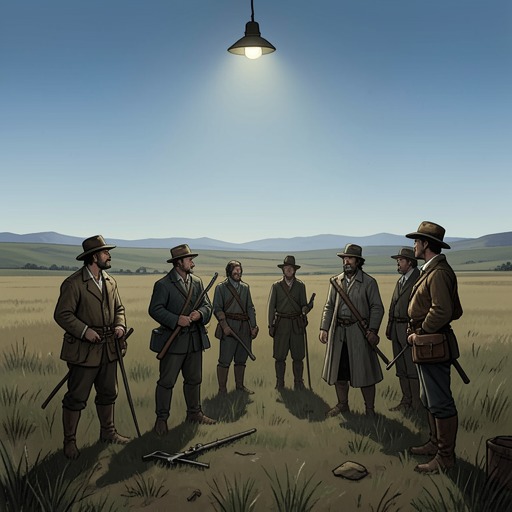
Padi Valley lies in Atageini territory, close to the Taibeni clan’s lands. The two clans had remained technically at war from before the founding of the aishidi’tat. That history gives the northern estate a political context beyond its role as a host for Cajeiri’s guests: the surrounding landscape carries the memory of a long-standing feud, even as formal relations begin to change.
Only days before the journey, Lord Tatiseigi had signed a formal peace with the Taibeni lord by proxy in the capital. The agreement was not publicly confirmed by either side when the news services made inquiries. In a related account of activity at one of Lord Tatiseigi’s estates, Taibeni clansmen had already moved onto extensive grounds with mecheita cavalry, trucks, and supplies while Lord Tatiseigi remained in the capital. The account presents this presence against the history of clan warfare and the newly signed peace, but does not explicitly identify those particular grounds as the Padi Valley estate.
The contrast is pointed: a peace agreement could be signed at the capital while the clans’ presence on an old estate remained startling enough to invite speculation about renewed conflict. Padi Valley’s explicitly stated association with Atageini territory places it within this broader northern landscape of proximity, inherited hostility, and political change, without making the valley itself the confirmed site of every reported movement.
A possible route through the north
Padi Valley also figures in the uncertain geography of a high-priority train’s movement. The train was travelling east on a track usually used for freight. Observers could wonder whether it would take the old southern route toward the Marid or instead follow the northern end of the old route, up to Padi Valley and the Kadagidi township, where trouble had occurred. Both possibilities remained open until the next switchpoint; the passage does not establish that the train actually took the northern route.
The uncertainty mattered because the train’s movement could not be hidden completely from the railway system. Its operators had given the Transportation Guild a cover story, while the train’s true destination remained something that had to be concealed or made plausible. In this context, Padi Valley is not merely a point on a map: it is one possible leg in a route whose disclosure could signal that the operation had leaked.
Narrative significance
The valley’s two roles sharpen one another. It is first a planned household setting for a child’s birthday, with human friends invited as personal guests; it is also part of a northern region shaped by clan divisions and recent political maneuvering. The abrupt departure from the estate interrupts the expected celebration, while the later railway reference turns the valley into a marker of danger and uncertainty.
That shift is restrained but consequential. Padi Valley is not described at length, and the evidence does not establish a detailed portrait of its buildings or terrain. Instead, its significance comes from what is scheduled there, what is hurriedly taken away, and what might pass through the region unnoticed. The estate gives the birthday gathering a specific home; the old rail route places that home within the wider crisis.