Shejidan
PeacemakerShejidan is the capital where the Aiji’s authority, the guilds, and the rail network meet. It is at once a city of old walled neighborhoods and narrow streets, a growing commercial center, and the political heart of an association that came to extend across the west. Its railways do more than connect districts: they help organize collective rule, enable discreet movement during emergencies, and, when deliberately stopped, interrupt the routines on which the city depends.
Capital and Urban Setting
Shejidan rises around the Bujavid, the fortress on a hill above the capital’s red-tiled roofs and maze-like streets. The Bujavid is both a seat of power and a point of access to the city below. A newcomer arriving at Shejidan airport is met by the Aiji’s black-uniformed bodyguards and escorted uphill; at the other end of the city, stations and tracks provide routes between the capital, its districts, and the wider rail system.
The older heart of Shejidan is defined by walled neighborhoods and narrow, cobbled streets. The oldest rail line runs around the perimeter of the Old City, linking its warehouses and markets. This route is served by short cars and small engines suited to tight curves and older tunnels. Modern transcontinental cars, though they use the same gauge, are too long to manage the curves of the city route or the Bujavid tunnels. The contrast between newer express lines and the compact local railway reflects the city’s layered development: rapid expansion sits alongside infrastructure still using equipment and practices inherited from an earlier age.
Shejidan’s streets and transport also shape daily life. In one account, the area around the guilds’ cobbled plaza sees mainly vans and small buses, with relatively few pedestrians beyond guild members visiting local restaurants or sheltered stops. In another, the streets below the Bujavid are expected to fill with booths ahead of a major Festivity. As crowds gather in the hotel district, smaller streets become impassable to vans, making the common rail or walking necessary even for people accustomed to private transport. Eateries, open-air pubs, musicians, and informal entertainers serve a citywide holiday crowd. The contrast between quiet guild precincts and crowded festival streets shows how sharply the city’s tempo can change with place and occasion.
The Railway and the Making of a Political Center
Shejidan’s significance grew alongside the railway. Before the Foreign Star appeared in the heavens, eleven regional associations agreed to build a line west from the city without going to war over the undertaking. Guilds had existed within associations for years, but the Transportation Guild and the Builders exceeded both clan boundaries and regional limits during the project. The railway thus depended on new forms of cooperation even as it helped make those forms more durable.
The project required a governing authority able to secure agreements across districts. Aijiin, once warleaders elected for a particular purpose, were elected to manage the railway: their task was not to command armies, but to coordinate guilds, clans, and sub-clans, secure the route through their territories, and uphold the promises sealed by individual clan lords. A small group empowered to protect these aijiin against attacks by other assassins serving individual lords became the beginning of the Assassins’ Guild. Rail construction and the Guild therefore developed together, linking practical coordination with a new means of enforcing impartial law.
The first railway and the authority of the Aiji in Shejidan brought associations together more powerfully than trade alone. Lords, guilds, and trading interests had to meet in the capital and reach agreements with the Aiji who served and ruled them. This process became the beginning of the legislature and the Aishidi’tat, though the political entity did not yet bear that name. As conflicts arose, the Aiji and the institutions centered in Shejidan could settle them without returning to war.
The city grew rapidly under this arrangement. With no lord of its own other than the Aiji, Shejidan attracted smaller clans involved in crafts and trade. The railway helped those clans prosper, and they supported the Aiji’s order when it was threatened. Guilds likewise settled in the city and separated their institutional loyalties from clan structures: lords seeking the services of the Scholars, Merchants, Treasurers, Physicians, or Assassins had to accept that members’ primary man’chi was to their guilds and the Aiji in Shejidan. The capital’s authority thus rested not only on a ruler’s position, but on the concentration of people and institutions whose shared interests crossed older regional divisions.
Railways as Emergency Routes
The city railway’s ordinary flexibility can become a means of concealing political movement. During one emergency, a party that had been expected to hold birthday preliminaries at Lord Tatiseigi’s Padi Valley estate instead returned toward Shejidan in haste. The journey was arranged on a northern train that was not supposed to carry them: it was moving surplus cars south, and the plan used its short body and existing route to avoid the attention that bringing the armored Red Train out from the Bujavid would have attracted. A brief stop under a clan lord’s traditional privilege provided another unobtrusive way to make a pickup. Such stops, sometimes for a crate or a letter, were an old practice that the legislature had not managed to curtail.
Railway procedure also helped guide the party safely into the capital. On arrival, the train was directed to the reserved first track, where it faced the Red Train. That placement spared the Aiji-dowager and Lord Tatiseigi a longer, more exposed walk along the platforms. Their party crossed quickly to the lifts, with bodyguards between them and likely vantage points. A senior bodyguard then used a Guild key to open a lift and temporarily take its car out of service. Here, track allocation and access control mattered as much as the journey itself: the station’s arrangement shortened the exposed portion of the route and gave the party a more controlled passage into the Bujavid.
In another operation, the Red Train was routed away from its expected path toward the Assassins’ Guild Headquarters. The intended course relied on two switchpoints: one to move from the Bujavid track to an eastern track occasionally used by the train, and another by the canal to divert it onto an ancient line serving freight yards, warehouses, and the old city. The train’s appearance on this unusual route would attract attention, but it could be explained as the movement of a high official. The stated reason for the detour was the pickup of large crates of artwork from Lord Tatiseigi’s estate for a special exhibit at the Bujavid Museum. The crates were real; their additional contents, spare clothing left behind at Tirnamardi, did not need to be explained to rail operators.
The Red Train’s age and size made it useful for this work. The older city tracks could carry short-bodied cars that modern transcontinental trains could not maneuver through the tunnels and curves. The Red Train’s veteran crew, who had survived the coup and returned with their engine, had orders to take the unfamiliar route, stop at a predetermined point in front of Guild Headquarters, and hold there. The delay was to be reported as a mechanical breakdown. Once the train stopped, the city rail system itself was to come to a prolonged halt; the Aiji-dowager’s people were to make sure the Transportation office did not send repair crews in haste, but allowed traffic to stop.
The disruption was temporary but consequential. Once the Red Train returned to its berth, mail began moving again, freight deliveries resumed, and day-shift employees could travel home while night-shift workers reached their jobs. At the same time, councils in the Transportation, Merchants’, and Scholars’ guilds reportedly met in emergency session to understand what had happened at Guild Headquarters. The restored flow of trains marked a return to routine, but the emergency meetings showed that Shejidan’s transport and political institutions could not treat the interruption as an ordinary delay.
Political Crises and the Capital’s Reach
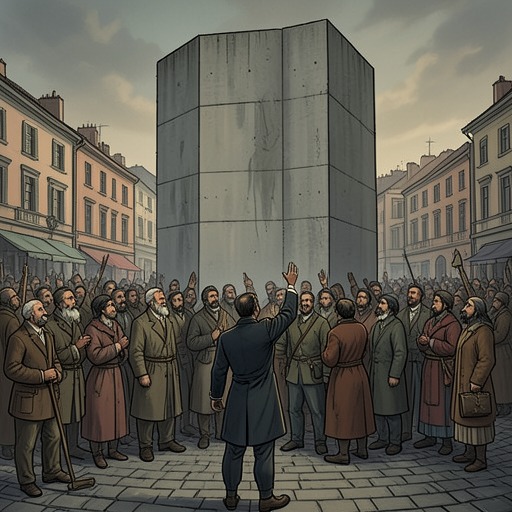
Shejidan is also where competing claims to rule become national questions. After Valasi died unexpectedly, his heir was still younger than the required age of twenty-three for election as Aiji. Ilisidi returned to Shejidan with her grandson Tabini and sought election herself. She argued that the Aishidi’tat’s complex affairs required experienced management, citing unresolved arrangements left after the War of the Landing and the growing environmental effects of Mospheiran industry near the northwest coast. The legislature rejected her proposals, with regional interests resisting any reopening of treaty terms and other interests opposing her proposed remedies.
When Tabini reached the required age, an unusual temporary coalition elected him Aiji. Its supporters included the Taibeni, Kadagidi, Marid, mountain clans, and Northern Association; Ajuri, for its part, was ready to support anyone opposed to Ilisidi, Tatiseigi’s political patron. The election in Shejidan carried the possibility of confrontation, armed conflict, and even the breakup of the Aishidi’tat. Instead, Ilisidi and Tabini appeared together on television and radio, and she publicly congratulated him. The episode demonstrates the capital’s dual character: it is the seat where rival political interests contend, but also the place from which a public settlement can reaffirm the larger union.
Shejidan’s political importance persists in the later crises centered on its institutions. During a Festivity approaching in the city, political visitors came and went from Lord Tatiseigi’s residence amid turmoil over the Guild. Cajeiri learned that there had been a serious incident downtown at Guild Headquarters and another Ajuri death. The city’s celebratory calendar and its political emergency therefore occupied the same streets and households at once.
The railway remains essential in this setting, not simply as transport but as a system of switches, timetables, stations, and customary privileges that can be adapted to political need. The Guild’s communications network presents a parallel infrastructure problem: after its new leadership took control, the Council chose technical changes that would deny access to units not specifically cleared. The change affected which guards could coordinate through the system, while authorized units, including those assigned to the Aiji and Lord Tatiseigi, were cleared from the outset. In Shejidan, control over movement and control over information are both practical questions of access, and both can determine whether authority is secure.
Narrative Significance
Shejidan brings the book’s political scale into focus through concrete urban systems. A hilltop fortress overlooks a city whose old tracks can carry an unexpected party, deliver freight, or stop daily traffic; a railway built through agreements among regional associations becomes the foundation for institutions that outlast the project. At the same time, the capital is not a frictionless center: its narrow streets, older equipment, clan privileges, and contested political loyalties shape what can be done and how openly it can be done.
The city’s growth offers a material counterpart to the widening political associations it helped create. Trade and guild membership draw smaller clans toward Shejidan, while the railway and legislature give distant lords reasons to negotiate there rather than fight. Yet the emergency journeys and Guild crises show that these connections can be repurposed or interrupted. Shejidan matters because its infrastructure makes cooperation possible, and because the same infrastructure becomes a measure of how much order the political center can preserve when that cooperation is under strain.