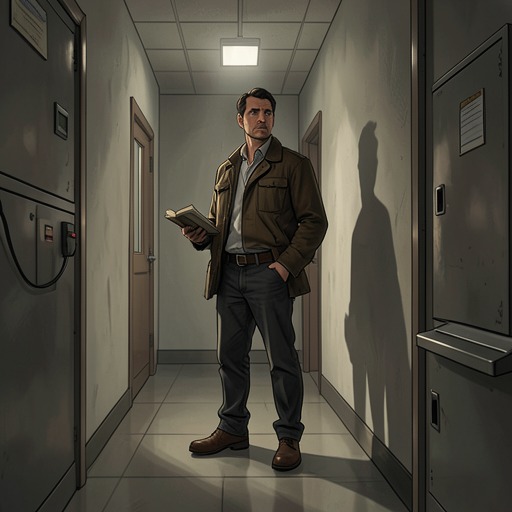
Maud and Roland flee Brittany
PossessionMaud and Roland’s flight from Brittany brings their three-week stay there to an abrupt close, as the researchers’ secret holiday gives way to the risk of being confronted and drawn back into the struggle over the Ash–LaMotte papers. They leave not because their findings are complete, but because Maud is unwilling, for the moment, to discover what comes next or help Mortimer Cropper acquire the story.
Causes and Background
Maud and Roland’s journey to Brittany had begun as a precipitate escape from the pressures surrounding their research. They had expected to spend their stolen time in the university library at Nantes. The library’s closure and Ariane Le Minier’s absence instead left them on holiday together for three weeks, in separate rooms but with a growing sense that their stay had taken on a marital or honeymooning character. Both were confused and ambivalent about this intimacy, though Maud had willingly travelled with Roland and would not willingly have gone anywhere with Fergus Wolff again.
Their excursion to the dunes brings the secrets of place and research into uneasy proximity. They hear a visitor speak at length about Île de Sein, Breton traditions, and the drowned city of Is, then recognize that other scholars may have traced their whereabouts. Maud reasons that if Leonora Stern wanted to find Ariane, she would have done so, and that James Blackadder could read French. Their possible access to Ariane and her journal means that Maud and Roland’s concealment may already have failed.
The Decision to Leave
The prospect of facing the others is inseparable from the prospect of being judged for deception. Maud and Roland recognize that Leonora and Blackadder may consider themselves tricked and taken advantage of. They briefly consider whether to confront the scholars or allow themselves to be confronted, but Maud concludes that they cannot do either: they must go, and quickly. When Roland asks where, she answers that they will probably go back.
The choice is not a resolution of the scholarly dispute. Maud understands that Cropper wants the letters and the story, and she doubts that she and Roland can stop him directly. Their remaining option is to withhold what they know by leaving before he can obtain it from them. Maud’s wish to go home is also a refusal, for now, to force the investigation to its conclusion: she says that she does not want to know the ending at that moment, though perhaps she may want to know later.
The Mercedes at the Hotel
As they return to their hotel, a large black Mercedes turns out of the car park and passes them. Its darkened windows prevent Maud from seeing whether Cropper has noticed her at the wheel. The car does not slow; it disappears in the direction from which they have come. The encounter leaves Cropper’s presence uncertain but makes the possibility of pursuit tangible.
At the hotel, the proprietress reports that an American gentleman has asked whether Maud and Roland are staying there and intends to dine that evening. Roland identifies the likely purpose: Cropper wants to buy what they know, or discover whether they know more, in order to get the letters and possess the account they uncover. Maud asks whether they can avoid helping him by leaving immediately. Roland raises the possibility that Cropper may be following Leonora and Blackadder instead, but that does not persuade Maud to remain.
Consequences and Significance
Roland agrees that they must leave. Their departure interrupts the Brittany investigation without settling what Ariane’s journal contains, what the other scholars have learned, or who will ultimately possess the letters. The unresolved questions are part of the event’s force: Maud and Roland choose withdrawal at the instant the competing researchers may be converging on the same evidence.
The flight also marks a change in the terms of their time together. What they had expected to be a brief, decorous period in a library became a shared holiday whose intimacy neither could comfortably define. Now they turn away both from the approaching scholarly confrontation and from knowledge they are not ready to receive. Their exit protects them from immediate entanglement with Cropper, but leaves the story’s archival contest—and their own uncertain relationship—open.