Psychic powers
StrangersPsychic powers are the unexplained abilities that surface among people connected to the events of July 6, most visibly as telekinesis and healing. Their decisive significance lies in the uncertainty surrounding both their origin and their control: what first appears to be an outside force may instead be an ability within the witnesses themselves, awakened by the encounter and entangled with memories they cannot access.
Emergence and Proposed Source
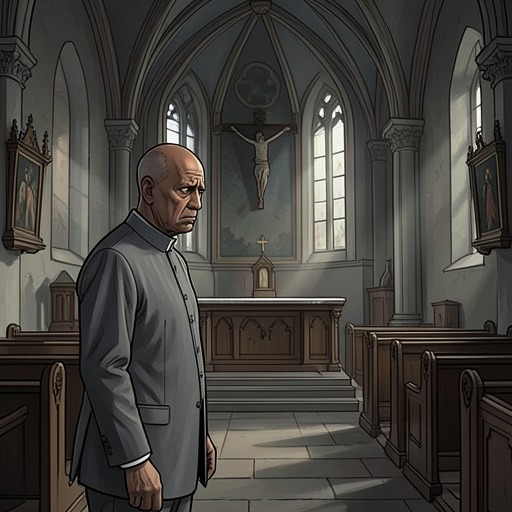
At first, the extraordinary events invite an external explanation. Father Stefan Wycazik senses a force beyond human agency at work in the miraculous events involving Brendan Cronin, including the healing of Emmy Halbourg and Winton Tolk. He interprets that force as a Presence, while other witnesses consider an unknown power reaching toward or threatening them. The children at St. Joseph's Hospital for Children offer a different kind of context: their enduring faith amid severe suffering moves Brendan deeply, but it does not restore his belief in God. The events therefore do not settle whether healing is divine intervention, human ability, or something else.
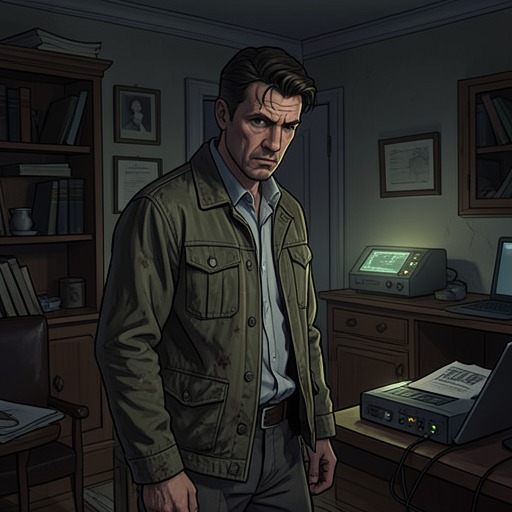
Ginger Weiss proposes that some of the phenomena may originate within the people experiencing them. At the Tranquility Grille, she suggests that Brendan and Dom Corvaisis possess telekinesis as a consequence of what happened during the night of the red moon, though neither is consciously aware of it. Her argument links the power to intense feeling and to the return of suppressed experience: Brendan's first healing and the appearance of rings on his hands came while he was overwhelmed by pity and frustration at a sick child's condition; a later healing occurred during the crisis in which Winton had been shot. Ginger proposes that such extreme emotional states may have released an ability Brendan had been made to forget.
She reads Dom's earlier experience at Zebediah Lomack's house in the same way. Frustrated by the accumulating mystery, Dom had wanted to tear the paper moons from the walls; as he recounted it, the moons came down without his touching them. When he shouted for the disturbance to stop, it did. What Dom had taken for an unseen presence responding to him, Ginger suggests, may have been his own unconscious power at work. Her explanation makes emotional pressure, rather than deliberate technique, the common circumstance in which the abilities first become visible.
Ginger extends the theory from moving objects to the strange light associated with the witnesses' memories. She suggests that when Brendan and Dom met, each may have recognized something in the other at a level below conscious thought, and that both were struggling to recover the same blocked memory. The red light, in this account, could have been an unconscious recreation of the moon changing from white to red on July 6, an attempt by their minds to force the buried event back into awareness. She offers photokinesis as a possible name for producing light by mental power, while acknowledging that the explanation is speculative. The distinction between an external force and an ability arising within the witnesses remains central to the mystery.
Demonstration and Loss of Control
The theory becomes tangible at the Tranquility Grille when Dom Corvaisis tries to move a salt shaker by concentrating on it. The shaker rises instead of sliding: it floats four feet above the table, beyond the standing witnesses’ eye level. Brendan Cronin’s pepper shaker rises at the same time and stops at precisely the same height. Neither man needs to keep watching his object, and Dom feels no surge of power or deliberate exertion. The ability seems to operate automatically, as involuntarily as breathing or a heartbeat. The ordinary shakers become proof not that either man has mastered the power, but that it is acting through them.
The demonstration turns from wonder to danger. As salt and pepper shakers spin and orbit one another around the room, a dozen chairs suddenly shoot upward and smash against the ceiling. Two strike a wagon-wheel light fixture, bursting its bulbs and tearing the fixture from its supports; it crashes to the floor behind Dom. The shakers continue to whirl overhead, while others fall out of their paths, and one hits Ernie Block on the shoulder. Dom and Brendan have lost control—and, because neither understands how control began, they cannot find a way to restore it. The scene makes the power’s central danger immediate: its reach can exceed the users’ conscious intention, turning a playful display into physical harm.
Healing reveals a different expression of the same unexplained capacity. When Winton Tolk recounts placing his hands on the badly wounded Hector Mendoza, he describes a boy losing blood from a deep neck wound and a wound that closed while Winton’s hands were still there. The injury left a raw, bright red scar, but the bleeding stopped and Hector survived. Winton says he felt nothing special in his hands and did not realize what was happening until the blood stopped. Father Stefan Wycazik wonders whether Brendan had passed the healing power to Winton, or whether God had acted through them both; Winton, examining his palms, insists that the power remains in him and senses that it includes something more, though he does not yet know what that is.
The abilities also appear in Emmy Halbourg’s bedroom, where the objects move in a scene that is frightening to her family but delightful to her. Two teddy bears waltz in midair, roller skates travel separately around the room, hats jiggle on their rack, and a Care Bear bounces on a bookshelf. Emmy stands in bed, healthier than she had been on Christmas Day, and hugs a pillow as she watches. Here the same class of unexplained agency that can send chairs crashing into a ceiling animates familiar toys with apparent playfulness. Its manifestations vary, but conscious command remains uncertain.
Faith, Contact, and the Meaning of Power
The abilities remain difficult to place within a single explanatory system. Father Stefan Wycazik sees a force beyond human agency in the events surrounding Brendan Cronin, and wonders whether God acts through Brendan and then through Winton Tolk. Yet Winton rejects the idea that the power has simply passed away: he feels it still within him, and senses an additional capacity whose form has not yet emerged. His account makes the abilities seem less like a one-time miracle bestowed on a chosen intermediary than a continuing, developing condition, without establishing how that condition began.
Parker Faine connects Brendan’s crisis of faith to a memory of encountering a species radically unlike humanity and far more advanced. He argues that such an encounter could unsettle Brendan’s understanding of what it means for humanity to be made in God’s image. Parker’s answer is not that physical resemblance proves kinship, but that reason, compassion, love, friendship, and care are the more important likenesses. This interpretation does not resolve whether the powers are divine, human, or connected to extraterrestrial contact; instead, it shifts the question toward what kind of beings exercise them and what their actions reveal.
The contrast between explanations also unsettles familiar forms of authority. Winton asks whether Brendan is a saint, but Wycazik calls him a good man rather than one. The distinction resists turning an extraordinary healing into proof of sanctity, even as the priest remains open to divine action. Across these accounts, psychic power is neither a settled doctrine nor a reliable badge of special status. It is a force whose source remains contested, whose effects can heal or endanger, and whose moral significance depends less on spectacle than on the capacity to care.
Power and Coercion
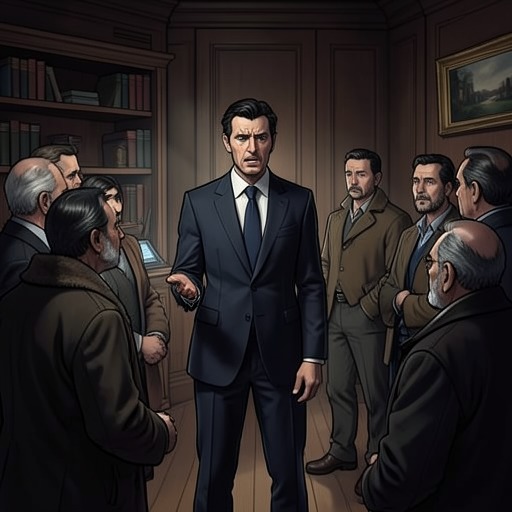
The witnesses’ abilities do not place them beyond human control. At the entrance to Thunder Hill Depository, seven witnesses and Parker Faine are taken from a transport and grouped in the snow; Lieutenant Horner’s machine gun discourages flight or resistance. Set against the involuntary powers already displayed, this scene draws a hard distinction between extraordinary capacity and practical freedom: the witnesses may move objects or heal injuries, but their abilities do not automatically protect them from armed custody. The power remains a source of wonder and danger, not a guarantee of command over the circumstances in which its holders find themselves.