Cushla’s interrogation by the RUC
TrespassesCushla Lavery’s interrogation by the Royal Ulster Constabulary makes the gap between formal liberty and coercive power painfully clear. Summoned after Michael Agnew’s death, she is told she has not been arrested and is free to leave, yet the questioning turns personal and intimidating. Afterward, she retraces the connections between her affair with Michael, her friendship with the McGeown family, and the chain of events that culminated in his killing, wondering whether her presence altered its course.
Summons and arrival
Three days after the preceding events, two uniformed officers arrive to ask Cushla to accompany them to the station. Her mother, Gina Lavery, comes out of the kitchen and stands near the hall table. Cushla silently hopes that Gina will challenge the officers or insist on going with her, but Gina does not intervene. The departure therefore carries a private disappointment alongside the official request: Cushla faces the encounter without the support she wants from her mother.
On the drive, Cushla sits beside the female officer in the back seat. The car stops opposite the parochial house, and Cushla lowers her head, aware that the station can be seen from its bay windows. That effort to avoid notice anticipates the surveillance that will become central to the questioning. The station itself is small but enclosed by security barriers, including a high fence topped with coils of wire; a sentry sits at the gate. Police personnel are moved frequently for safety, so the officers Cushla once knew are no longer a stable presence in the town.
The setting is not wholly unfamiliar. Cushla has previously visited the station to obtain permits for flag days and sponsored walks, and once to report a customer who had threatened her father with what proved to be a toy gun. The weapon’s harmlessness did not undo the consequences: the incident brought on an angina attack and left her father fearful. The station thus shifts in meaning from a place associated with ordinary civic errands and a family complaint to the site of an intimidating investigation.
Questions about Michael and Tommy
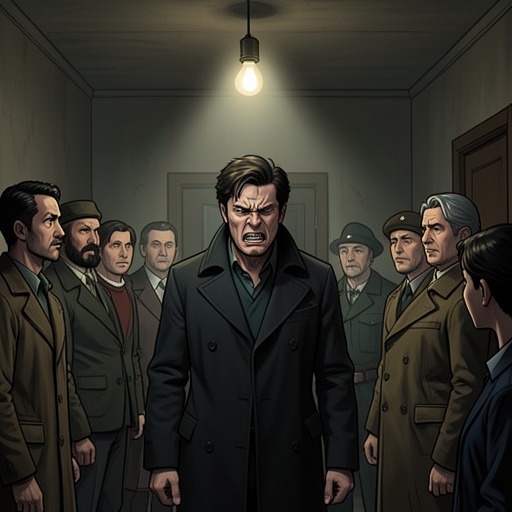
A female officer leads Cushla through a fire door to meet Disco Peeler, whom she recognizes from having seen him before in poor light. His measured manner makes the encounter feel controlled rather than open. In the interview room, a table is fixed to the floor, and a folder, ashtray, and tape machine have been placed before her. The machine is not switched on. Disco Peeler tells her she has not been arrested; when she asks whether she can leave, he says they hope she will help them.
The questioning focuses on Cushla’s connection to Michael Agnew. Disco Peeler lays out a photograph of her speaking with Michael, his face turned toward hers. The image makes visible what the questions are designed to establish: not merely that she knew him, but that their relationship carried feeling. He asks whether they were sexually involved and whether she visited Michael at home. Cushla challenges the use of the photograph rather than answering on his terms, recognizing that the authorities have been documenting their association.
When Disco Peeler states that Michael was shot dead in his family home, Cushla cries and confronts him with the implication of the surveillance: if the police had followed Michael so closely, why had they not stopped his killing? He does not engage with that challenge. Instead, he turns to Tommy McGeown and asks about Cushla’s relationship with him. She denies having a relationship with Tommy and explains that his younger brother, Davy McGeown, was her pupil. Disco Peeler’s next assertion—that she befriended the family—recasts her support for them as another connection requiring scrutiny. The interrogation thus joins two strands that Cushla had experienced as separate: her involvement with Michael and her concern for Davy and his family.
Coercion and release
The encounter becomes more openly intimidating when Disco Peeler makes a degrading personal demand and laughs. He also claims that he can keep Cushla at the station for as long as seven days. The threat sits uneasily beside the earlier assurance that she has not been arrested. The tape machine remains unused, and Disco Peeler has taken no notes; the scene offers no visible record of the conversation even as he asserts the power to detain her. His conduct makes the distinction between being technically free and feeling able to refuse or leave seem precarious.
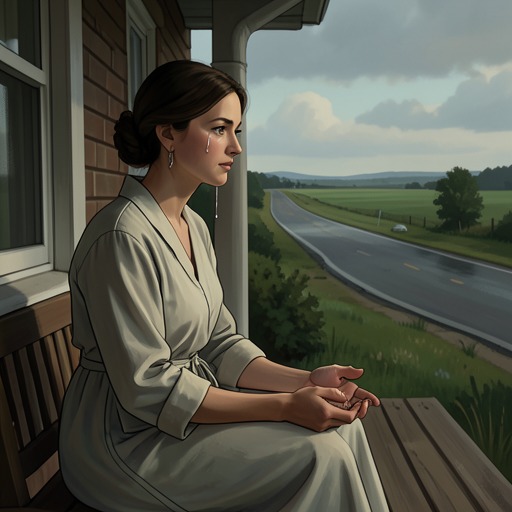
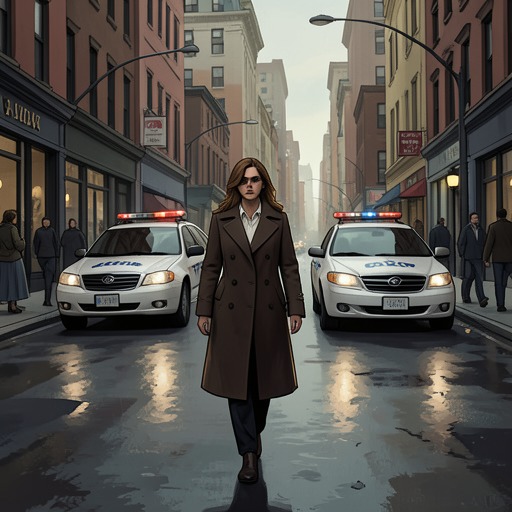
At the end, Disco Peeler thanks Cushla for cooperating and tells her that she was free to leave at any time. He walks behind her to the fire door, opening it so that she has to duck beneath his arm to avoid touching him. Once outside, she crosses High Street and thinks she sees a curtain move at Slattery’s window. She continues past the school railings and the chip shop without a basket, keys, or car. Her ordinary belongings and means of getting around are absent, and she experiences the walk as a loss of the familiar markers of her own life. The release ends the interview, but it does not restore her sense of security.
Surveillance and the chain of events
As she walks, Cushla wonders why the police had been following Michael: whether their attention began because of her, or whether he had already been under surveillance. She recalls that in his final weeks he seemed harried, a change she had attributed to the strain of moving between two homes and two women. She is certain that, apart from having foolishly said Michael’s name on the phone, she had not mentioned him to Tommy or the other McGeowns. The questioning forces her to revise her sense that the affair and her friendship with Davy had proceeded independently. In retrospect, she sees them as intertwined, each affecting the course of the other.
That revision widens into a sequence of contingencies. Cushla considers whether Davy might have remembered his coat, whether Seamie McGeown might have stayed unemployed instead of being alone on a dark street, whether Michael might not have entered the pub on a quiet night in February, and whether Betty McGeown might have persuaded Tommy to remain at school. These possibilities do not establish that Cushla caused what followed; they show her trying to locate responsibility in a chain where many people’s choices and circumstances meet. Her final question—whether Michael might still be alive if he had never met her—makes the interrogation’s aftermath less a resolution than an unsettled reckoning with surveillance, intimacy, and the limits of knowing how events might have gone otherwise.