Michael takes the case of three boys accused of murdering a policeman
TrespassesMichael takes the case of three boys accused of murdering a member of the Royal Ulster Constabulary, accepting a politically contentious defense that Victor opposes. The case links a disputed identification to a larger argument about justice, Republican prisoners, and the consequences of state action during the Troubles; the evidence establishes the charge and the conflict around Michael’s decision, but not the boys’ guilt or the case’s eventual outcome.
The accusation and the identification
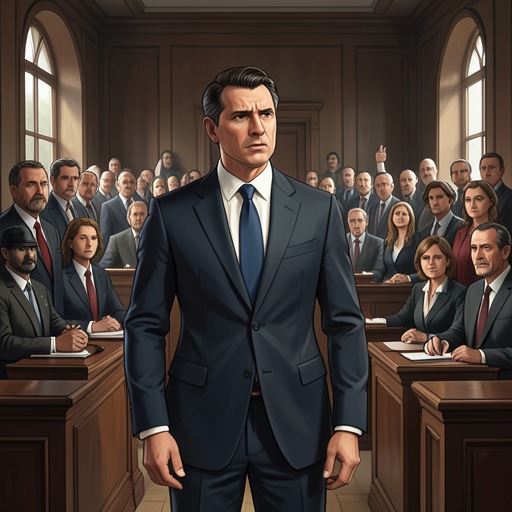
Michael describes the case as involving three boys selected from a police line-up by a witness he considers unreliable. That qualification matters: the accusation is grave, but the account gives no verdict, further evidence, or resolution. Michael’s phrasing distinguishes the boys’ alleged act from what has been proved. When Cushla asks what the boys did, he corrects the premise: they are accused of murdering a member of the RUC. The distinction makes the case one of representation as well as legal defense. Michael is not presented as establishing their innocence; he has taken responsibility for challenging a prosecution whose identification evidence he doubts.
The scale of the charge gives the disagreement its force. Murdering a police officer is not a minor accusation, and the boys’ youth is significant in Michael’s subsequent argument that political conditions help put young people in trouble. But the narrative does not provide their names, the circumstances of the alleged killing, or the basis for the witness’s unreliability. Those absences limit what can be concluded about the prosecution while keeping attention on Michael’s choice to take the case and on the reasons others resist that choice.
A legal decision opposed by Victor
Cushla learns of the case in a private conversation with Michael, after asking what is happening between him and Victor. Michael explains that he has taken a case Victor does not approve of. Victor’s opposition is not depicted as an abstract dislike of legal work: Michael connects it to Victor’s experience reporting on Bloody Friday, when he was among the first journalists at the scene. That experience, Michael says, hardened Victor’s views on militant Republicanism. The contrast is between two responses to political violence: Victor’s outlook has been shaped by witnessing its consequences, while Michael insists that a defendant’s case must still be taken seriously.
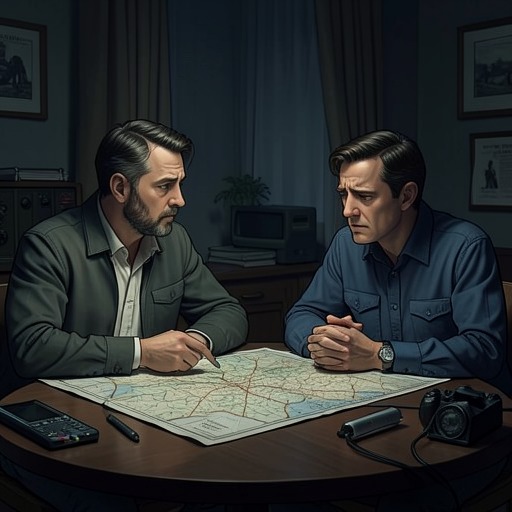
The earlier dinner argument shows the disagreement extending beyond the three boys. When Republican prisoners’ refusal to recognize the court is raised, Michael explains that all Republican prisoners do so. Victor answers with contempt, treating their claims of unfair treatment as self-serving. Michael argues that the system would not be tolerated elsewhere in the United Kingdom or in a civilized country. The dispute concerns more than courtroom procedure: it turns on whether prisoners can be understood as political actors subjected to an unjust system, or dismissed as gunmen and bombers seeking special treatment.
Michael does not avoid the charge of taking sides. Victor describes him as a defender of the indefensible, and Michael responds by explaining why he thinks young people become involved in trouble: there is no work for them, they face constant harassment, and failures by police or army can drive recruitment to the IRA. These are Michael’s account of the political conditions, not an independent finding about the three boys or their alleged offense. They clarify, however, why he sees legal representation as inseparable from a wider pattern of exclusion and coercion.
The argument across two scenes
The case is first introduced at a dinner where political disagreement becomes difficult for the company to contain. Michael speaks about Republican prisoners and the justice system; Victor rejects his position, while the others’ reactions register the strain in the room. Michael’s arm rests across Cushla’s chair, and she notices Penny watching the gesture and then Jim. Penny eventually asks the men to stop. The scene gives the political dispute a social setting: their opposing judgments are not detached opinions but a source of discomfort among people sharing a meal.
Later, Cushla asks Michael directly about his conflict with Victor. Michael is lying on the bed with a bottle of whiskey and a cigarette, and the conversation moves from Victor to the case itself. Cushla asks what the boys are accused of; Michael’s correction from what they did to what they are accused of makes the presumption of guilt visible in the exchange. He then explains the line-up identification and Victor’s history at Bloody Friday. The sequence joins an intimate conversation to a public controversy without resolving either: Cushla can hear Michael’s reasons, but the evidence does not show her judging the case or changing its course.
Significance and limits
Michael’s decision establishes a fault line between legal defense and political allegiance. Victor’s disapproval follows from a hardened opposition to militant Republicanism, while Michael’s defense of the boys is framed through doubts about identification evidence and his criticism of the conditions surrounding Republican prisoners and young people. The narrative allows both the gravity of the charge and the wider political argument to remain in view. It does not equate defending the accused with proving them innocent, nor does it settle whether Michael’s account of the system is correct.
The episode also places courtroom legitimacy inside the daily arguments of a divided society. Refusal to recognize the court, the status of political prisoners, police and army conduct, and Republican recruitment all enter the same discussion. Michael’s acceptance of the case therefore marks a concrete professional choice with political consequences for his relationship with Victor. Its outcome remains unstated: what the episode reveals is not a judgment but the disagreement, the evidence Michael distrusts, and the competing histories through which the two men understand the same conflict.