Gina is injured while drunk, and Cushla discovers her hidden alcohol
TrespassesGina is injured while drunk, and Cushla discovers her hidden alcohol is an episode in which a daughter’s immediate care for her mother becomes an unplanned search through the household’s private spaces. Cushla finds Gina in the bath, tends to her and puts her to bed; only afterward does she uncover the scale of the concealed drinking. The twenty-nine empty Gordon’s gin bottles make visible what had been dispersed among bedrooms, cupboards and plumbing, while Cushla’s repeated attempts to reach Michael Agnew underline that she is left to face the discovery largely on her own.
Finding Gina at Home
Cushla arrives home expecting the familiar smell of chicken, but finds the house quiet apart from an afternoon radio programme. Gina is not at the kitchen table. Cushla calls for her and runs upstairs; the bathroom door is ajar, and she finds her mother in the bath, shuddering, with a cut near her eye and blood in the water. She turns off the tap and pulls the plug. The scene begins not with an explanation but with a practical emergency: Cushla has to respond before she knows what has happened.
Gina tries to speak, but her words are barely intelligible. Cushla wets a facecloth and presses it to her mother’s brow, supporting her when she begins to slump forward and telling her to keep the cloth in place. Gina tells her that she has been left alone. The accusation gives the scene an emotional charge beyond the immediate injury: even in her impaired state, Gina makes Cushla’s absence part of what she is trying to express. The account does not establish the circumstances of the injury, and Cushla’s attention remains on keeping Gina safe rather than extracting an explanation.
Care Before Explanation
Cushla gets towels, covers Gina’s shoulders and cleans the bathroom. She puts on gloves to clear the basin and plughole, becomes nauseated, and struggles to finish the cleanup. The work is practical and physical, and her own distress does not release her from it. Once the room is clean, she fills the basin with warm soapy water, helps Gina out of the bath and seats her on the closed toilet. The cloth has not soaked through, and Cushla keeps her mother pressing it against the cut.
She finds a plaster large enough to cover it, helps Gina into a nightdress and leads her to her room. Gina raises her arms for the nightdress like an infant; Cushla lays her on her side and draws the blankets around her. The reversal in their roles is striking but concrete: the daughter now has to dress, steady and settle the mother. Gina’s drunkenness is conveyed through what she can no longer manage, while Cushla’s response is shown through a succession of necessary acts rather than a confrontation.
The Hidden Bottles
As Cushla turns to leave, something glints under the bed. She pulls out a Gordon’s gin bottle and starts searching. Among Gina’s clothes she finds two empty half-bottles; a large handbag clinks, and the smaller bags inside each contain a quarter-bottle. More are concealed among her father’s jumpers and in the spare room. The hiding places make the drinking a household secret distributed through ordinary possessions, not a single bottle left openly in view. Cushla imagines Gina going into town to buy alcohol and thinks of how humiliating that must have been for her, but the text presents this as Cushla’s thought, not as an explanation from Gina.
While Gina sleeps, unaware of the evidence being assembled, Cushla lines bottles on the hall table behind the telephone. She continues through the kitchen, finding five in the fish kettle in which she had cooked spaghetti a few weeks earlier and three behind the pipe beneath the sink. Remembering the bathroom cleanup, she checks the toilet cistern and removes a green bottle caught against the ballcock. The search reaches into places used for cooking and washing, binding the concealed drinking to the ordinary routines of the home. These are not merely scattered discoveries: each new hiding place enlarges the scale of what Cushla has found.
The Count and Its Immediate Aftermath
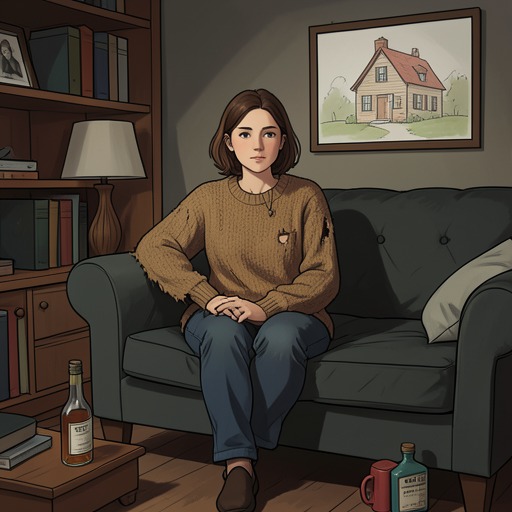
Sunlight through the fanlight catches the green glass of twenty-nine empty Gordon’s gin bottles. Cushla has also found a bottle in the sitting room with a couple of inches left, which she adds to the others. The count converts a series of concealed containers into a stark accumulation. The scene does not supply a diagnosis or a history of Gina’s drinking; it shows the evidence Cushla can gather, and the labor of finding it, while Gina remains asleep and unaware of the display downstairs.
Cushla smokes on the bottom step and calls Michael Agnew’s flat, but there is no answer. She tries again just before six and still gets no reply, then calls the pub; Eamonn Lavery answers over the noise of voices and the till. The episode therefore closes not with a resolution of Gina’s condition or an explanation of the bottles, but with Cushla seeking someone else while the evidence remains assembled in the hall. Its significance lies in that shift: an injury that first demands immediate care opens onto a concealed pattern of drinking, and the daughter who has just carried out the rescue is left to confront what she has uncovered.