Jackson County Court
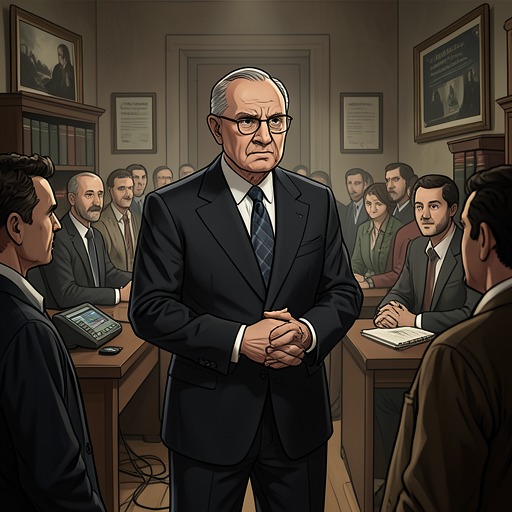
TrumanJackson County Court was the governing body of Jackson County and, from 1927 to 1935, the institution through which Harry S. Truman exercised his first substantial executive authority. Its remit extended far beyond judicial business: it administered a multimillion-dollar budget, supervised hundreds of employees and public facilities, and took responsibility for a countywide road network. Under Truman’s leadership, the court became known for competent administration in the very county associated with the Pendergast political machine.
From judicial office to executive authority
After the Pendergast organization and Joe Shannon’s faction repaired their differences, Truman ran for presiding judge of Jackson County Court. He faced no opponent in the primary, and in November 1926 the Democratic slate swept into office. The court’s presiding judge was a four-year office, not the two-year post Truman had previously held; he won two consecutive terms, serving from January 1927 through January 1935. His victory margin grew from 16,000 votes in 1926 to 58,000 in 1930, evidence of the broad electoral support his administration acquired.
The court included Howard Vrooman, the western judge, and Robert Barr, a gentleman farmer and West Point graduate whom Truman had selected to take his former position as eastern judge. Truman was its de facto chief executive. The annual operating budget under his responsibility was $7 million—larger than the budgets of some states—and its workforce numbered about 700. The court’s administrative reach included county officers and specialists such as the treasurer, sheriff, road overseers, surveyors, highway engineer, health officials, parole officers, purchasing agents, recorder of deeds, school superintendent, liquor-license inspector, and election commissioners, as well as nine justices of the peace.
Administration, patronage, and public accountability
The court also had oversight of the county home for the aged, the county hospital, several children’s homes, and more than a thousand miles of county roads. It managed two courthouses with jails, apportioned much of the budget, and bore ultimate responsibility for the county’s accounts. The presiding judge could influence contracts, tax rates, bond issues, and county borrowing, giving the office practical executive weight as well as a public representative’s duties.
On his first day, Truman stated that the county would be run for taxpayers’ benefit. He said that Democrats would receive appointable jobs, but that every employee would be expected to do a full day’s work for the pay. The administration did hire Democrats from both the Goats and Rabbits factions, apparently in even measure. It also placed Truman’s brother Vivian on the county payroll as purchasing agent for the county homes and appointed his brother-in-law Fred Wallace county architect, a choice described as intended chiefly to appease Bess and her mother. The combination shows that the administration operated within a partisan appointment system, even as Truman publicly emphasized work, economy, and service to taxpayers.
Contemporary assessments stressed the contrast between the county’s reputation and the court’s record. The Independence Examiner reported that no important criticism or scandal had centered on the court and that it had faced no political charges of graft and corruption. The Kansas City Star praised Truman’s devotion to county affairs. A representative of the Kansas City Civic Research Institute described him as informed about both what was happening and what ought to be done. At a government conference, an editor observed that Truman’s views commanded respect among reformers despite his position as presiding judge in the home county of the Pendergast machine.
Roads and the countywide plan
Roads became the court’s leading practical priority. Within days of taking office, Truman appointed a bipartisan board of two civil engineers, E. M. Stayton and Republican N. T. Veatch, Jr., to assess roads throughout the county and prepare a comprehensive plan—a task not previously undertaken. Truman accompanied them on much of their survey, which covered hundreds of miles.
The report, issued three months later, identified 350 miles of inadequate “pie crust” roads and warned that even maintaining them would cost more than taxes were likely to raise. It proposed 224 miles of new concrete roads, arranged so that no farmer would be more than two miles from at least one road. The projected cost was $6.5 million, to be financed through a bond issue, an approach not previously used for Jackson County roads. Because bond proposals had seldom succeeded locally, Truman argued that voters would support the plan if they could trust the contracts to be honest and the construction to be first-rate.
Tom Pendergast and the Kansas City Star were skeptical. Pendergast warned that voters would suspect him of intending to steal the money. Truman’s response was that voters would approve the bonds if he explained what he meant to do; he understood Pendergast’s reply as an agreement to let the proposal proceed. The evidence establishes the court’s plan and the political challenge of securing support for it, not the eventual completion of all the proposed roads.
Reputation and significance
The court’s standing rested on a conjunction of scale and restraint: it administered a large, varied public service system while avoiding the major graft scandals that critics might have expected in Jackson County. Truman’s success was recognized not only by Democratic voters but also by civic and business figures, Republicans, the press, and observers of government. His record as presiding judge gave substance to his later experience as an executive, since he had managed a substantial budget, supervised a broad workforce, and confronted decisions about infrastructure, public finance, and appointments.
Jackson County Court therefore marks a formative stage in Truman’s public career. The office placed him within the county’s political organization, but its administration also gave him a platform to insist on efficiency and taxpayer accountability. The proposed road system made that approach concrete: a countywide survey, measurable deficiencies, a defined construction plan, and a financing proposal whose credibility depended on honest contracting. The court’s significance lies both in the responsibilities it entrusted to Truman and in the public record he established while exercising them.