President's Committee on Civil Rights
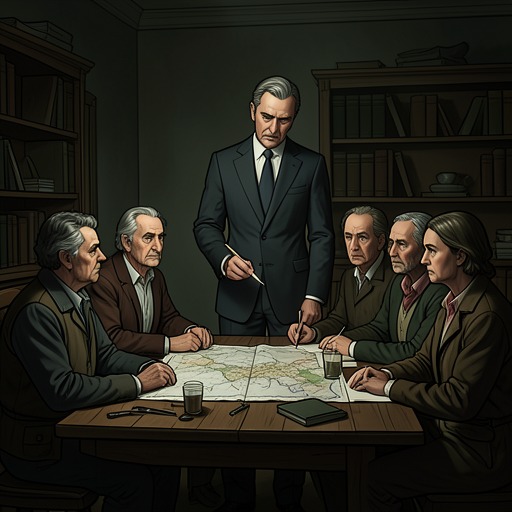
TrumanThe President's Committee on Civil Rights was an unprecedented presidential commission whose investigation helped move civil rights from a politically dangerous subject to a stated responsibility of the federal government. Established by Harry S. Truman in late 1946, it produced To Secure These Rights, a report that informed his landmark civil-rights message to Congress and remained central to his public case for equal opportunity.
Establishment and political stakes
Truman created the commission at the urging of Walter White and others. Charles E. Wilson, head of General Electric, chaired the blue-ribbon panel. Its formation was itself a consequential choice: White later recalled that nearly all of Truman’s political advisers, from both North and South, regarded an official inquiry into civil rights as political suicide. Truman nevertheless authorized it, putting his political fortunes at risk before the commission had even completed its work.
Investigation and report
The commission’s report was not ready until October 1947. Entitled To Secure These Rights, it became a landmark account for Truman, who regarded its findings as a shocking revelation. In a private reply to a correspondent who urged caution, he invoked the report’s implications while describing the failures of law enforcement that allowed people to be shot by mobs and a Black sergeant to be beaten and blinded by local authorities. He also cited violence against Black railroad firemen. These examples informed his insistence that equal opportunity and protection under the law required action, not merely expressions of concern.
From findings to federal policy
On February 2, 1948, three weeks after his State of the Union address, Truman sent Congress a special message on civil rights without first consulting congressional leaders. Drawing on the commission’s findings, he proposed what the book describes as the strongest civil-rights program any president had yet advanced. The message argued that the federal government had a clear duty to protect constitutional guarantees and equal protection, and called on Congress to enact comprehensive civil-rights laws. Until then, no president had sent Congress a special message devoted to civil rights.
Public legacy
The commission’s work also shaped Truman’s campaign presentation. In Harlem, during the 1948 presidential campaign, he made his only civil-rights speech of the tour, focusing on the commission’s work and its momentous report. He reminded the largely Black audience that he had issued two executive orders aimed at equal opportunity in the armed services and federal employment, and pledged to continue working for equal rights and opportunity. The committee’s significance thus extended beyond its investigation: it supplied findings for a presidential policy program and a public argument that Truman continued to make despite the political risks.