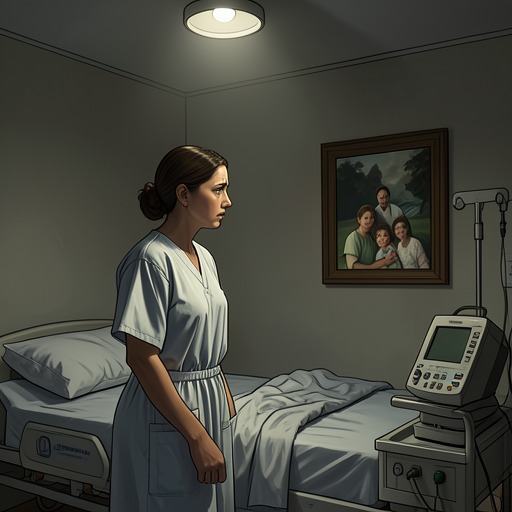
David’s suicidal crisis and psychiatric hospitalization
UpDavid’s suicidal crisis and psychiatric hospitalization are disclosed to Emma only after she has herself been readmitted. The account does not establish whether David attempted suicide: Elise found him profoundly neglected, surrounded by alcohol bottles and pills, but he would not explain what had happened. The uncertainty is part of the crisis. What becomes clear is that he can no longer live in his supported room, and that his parents cannot offer the care he needs at home.
Background and delayed disclosure
David’s mother initially hesitates to tell Emma because Emma is back in the hospital and, in her view, should be able to focus on her own recovery. Her concern also reflects a longer family history. She says she tried to shield Emma and Elise when David was doing badly, though she now doubts that she succeeded. Looking back, she recognizes that Emma, who also had Asperger’s, needed calm and routine—needs she had not understood at the time. The disclosure therefore brings two crises into the same conversation: David’s immediate collapse and the mother’s painful reassessment of how the family managed earlier episodes.
The timing makes the news especially difficult. David was found on the same day Emma called Elise to say that she had been admitted, several weeks before their mother tells her what happened. Emma immediately asks why nobody told her. Her mother had meant to spare her, but the silence has also kept Emma outside a major event in her brother’s life. Emma’s response is not detached concern: she insists that David is her brother, even as she struggles with the history between them.
Discovery and uncertainty
David had been living in a supported room. Because things appeared to be going well, the visits to check on him had gradually become less frequent. When he stopped answering the phone, Elise decided to visit. She found him in a state of severe neglect, amid bottles of alcohol and pills. The discovery prompted urgent concern, but it did not provide an explanation.
Their mother says that no one knows precisely what happened and that David will not talk about it. She cannot tell whether he made an attempt that failed, was confused, or intended to do something else. She adds that he had never done anything like this before, a fact that deepens her alarm without resolving the ambiguity. The narrative preserves that uncertainty rather than naming his actions as a confirmed suicide attempt. His silence leaves his family to confront the danger through what they found and through the consequences that follow.
Hospitalization and loss of independence
David was taken to a hospital and was able to leave it the same day, but he then entered a psychiatric hospital. He knew nurses there from earlier day programs and seemed comfortable in the setting. Yet he was no longer speaking. Familiarity with the staff offers some reassurance to his mother, but it does not mean that he can return to his previous living arrangement.
The crisis marks a practical break in David’s independence. He cannot go back to living in his supported room, and the possibility of moving in with his parents is considered and rejected. His mother explains that she and David’s father can no longer provide what he needs. The plan is for him to remain in the psychiatric hospital until a place becomes available in a group home for autistic adults. Emma recognizes the implication as a long stay: the hospital is not simply a brief stop between home and his former accommodation, but the setting in which he must wait for a different form of supported living.
Family impact and significance
Emma’s first response combines alarm, hurt, and grief. She wants to know why the family kept the news from her and protests that David is her brother. She has long wished she had one fewer brother, but she does not want that estrangement to end in a catastrophe of this kind. His crisis makes the distance between them newly painful, while also exposing the limits of what she can do from her own hospital admission.
The scene also shifts Emma’s understanding of her mother. As her mother takes her hands, Emma recognizes the helplessness of watching someone in danger without being able to stop what is happening. She imagines her mother’s earlier position in the family: struggling to protect her children from crises she could not control, including David’s and Emma’s. That recognition does not erase the hurt of being left uninformed; it makes the mother’s effort to shield her legible as both care and a source of separation.
David’s hospitalization thus changes more than his immediate living arrangements. It exposes the limits of the family’s previous support system, makes his need for long-term care explicit, and draws Emma into a crisis she had not been told about. The unresolved cause, his silence, and the uncertain wait for a group-home placement leave the event without a clean explanation or quick return to normal life.