Gelsomina Wayvone’s wedding and the fake-band incident
VinelandGelsomina Wayvone’s wedding and the fake-band incident turn a lavish family celebration into a test of who gets to perform an identity, and who has the power to decide whether the performance is convincing. The deception is exposed when the hosts’ request for Italian music makes the band’s disguise impossible to sustain. The party continues, but the episode leaves Billy Barf convinced that a threat has been issued against him.
The wedding and its music
The celebration takes place at the Wayvone estate, a large Mediterranean Revival villa built in the 1920s on a hillside south of San Francisco. Its modest street-facing facade conceals a house extending down the slope across eight levels, with gardens, courtyards, fruit trees, and, for the wedding, pale jasmine plantings. The estate’s scale and seclusion establish the ceremony as both a family occasion and an exhibition of wealth. Ralph Wayvone senior has arranged an expensive reception after the sung Mass, with a menu ranging from tournedos Rossini, lobster, and caviar to lasagna, ziti, and Lolli’s elaborate wedding soup. Hundreds of relatives, friends, and business acquaintances are expected.
Music is the one unsettled element. The San Francisco Symphony is touring abroad, and the band Ralph senior first hired becomes unavailable after a gambling-related delay in Atlantic City. Ralph junior takes responsibility for finding a replacement in Vineland County and books Gino Baglione and the Paisans without having heard them. The resulting uncertainty is not enough to change his father’s plans: Ralph senior assumes that a poor performance would be the musicians’ problem.
The replacement arrives around noon, after a two-day journey lengthened by detours through wine country, along the coast, and in Berkeley. The musicians have altered their appearance with shiny black wigs, mint-colored European-cut suits, false moustaches, and gold-colored accessories. At the guarded entrance to Lugares Altos, they are searched and screened for metal and electronic devices before being admitted to the estate. The women accompanying them, including Prairie Wheeler, also borrow wigs, clothes, and cosmetics to make their appearance less conspicuous.
The disguise unravels
The band is not Gino Baglione and the Paisans: it is The Vomitones, led by Billy Barf. Billy’s limited knowledge of Italian culture has led him to consider adopting a Neapolitan accent. Isaiah Due Quattro warns him against the idea, both because it sounds inauthentic and because it risks ethnic insult. Ralph junior, who has spoken Californian all his life, mistakes Billy’s attempted accent for a speech impediment and does not recognize the act.
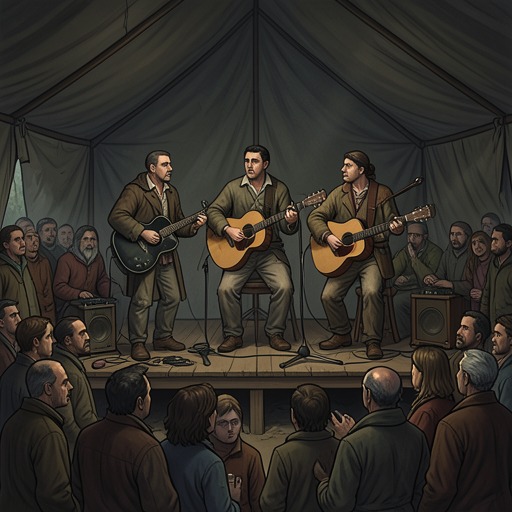
The musicians begin with harmless popular songs, rock-and-roll standards, and a couple of Broadway numbers. During the first break, Carmine Torpidini, Ralph senior’s trusted lieutenant, delivers a request on his employer’s behalf: the younger guests have enjoyed the contemporary music, but Ralph senior wants songs that the older guests can recognize as Italian. The band responds with a medley that includes music associated with the film Mondo cane and Senza fine, then Billy sings an English-language version of Al di là in a nasal tenor.
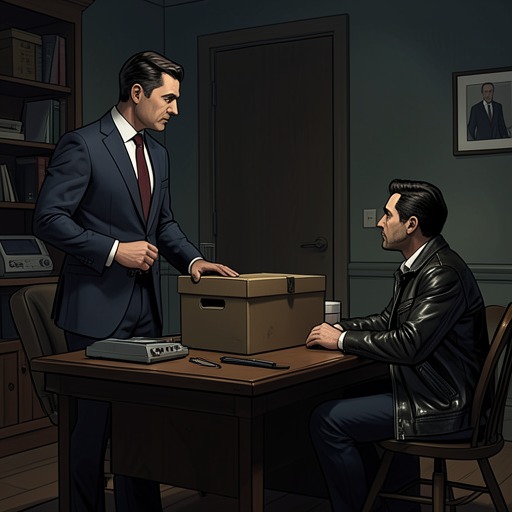
That performance still misses what the host has in mind. Torpidini returns, now excited and visibly keyed up, asking for communal favorites such as C’è la luna and Way Marie, and an operatic selection such as Cielo e Mar. Billy takes the request as an opportunity to suggest fetching the relevant songs from the band’s van. Torpidini takes his guitar and turns it so its strap tightens around Billy’s neck, making the request a threat rather than a musical negotiation. The band stands silent as its leader is intimidated. Its members include Anglo-Saxons, Irish and Scots, and a Jewish musician—but no Italians.
Torpidini presses the contradiction between the band’s appearance and its actual identity, accusing the musicians of impersonating Gino Baglione and the Paisans and warning that the deception could bring legal trouble. Billy’s bright blue hair begins to show as his wig slips out of place, making the disguise harder to maintain. Isaiah notices Billy has forgotten the fasteners on the strap and releases them, allowing him to move away. Torpidini acknowledges that the false identity has been exposed and says he had been prepared for a gunfight. Billy, meanwhile, searches frantically for the van keys.
Gelsomina intervenes
Gelsomina, the bride, acts before the confrontation can settle the fate of the reception. She retrieves a copy of the Italian Wedding Fake Book from Ralph senior’s library and brings it to Billy, hoping to protect her marriage celebration from ill omen. Her intervention offers a practical solution: the musicians might still be able to play the songs the family expects. But Billy already has the van keys and is stubbornly making for the parking area. Gelsomina, wearing her grandmother’s wedding dress, runs after the blue-haired musician.
The image of the bride pursuing a disguised, non-Italian bandleader punctures the decorum of the elaborate celebration. For the most traditional members of the Wayvone circle, her pursuit is itself an affront that cannot simply be ignored. Yet the music resumes, dancing and festivity continue, and Gelsomina’s wedding is saved. The book’s presence means the party has a possible musical remedy; Billy’s flight means that remedy cannot undo the fear the confrontation has produced.
Aftermath and significance
The incident’s outcome is therefore split. The reception survives, but Billy remains convinced that an order to kill him has come from the highest levels of the Wayvone entourage. His bandmates offer competing, darkly comic forms of advice: the bassist Meathook recommends obtaining a military rifle, while trumpeter 187 argues for a dagger and hand-to-hand training. Their suggestions extend the wedding’s brief threat into a running fear for the remainder of the engagement; the evidence does not show Billy actually taking either course.
The episode makes the band’s costume more than a comic disguise. The musicians are searched at the gate, dressed to satisfy an imagined expectation, and then judged against the family’s preferred repertoire. The exposure comes not from a formal investigation but from a mismatch between the performance and what Ralph senior wants to hear. Gelsomina’s wedding book briefly offers a way to accommodate that demand, while her pursuit of Billy reveals the cost of keeping the performance—and the celebration—going. The wedding remains festive, but its music has exposed the unease beneath the ceremony: a hired act can be welcomed as entertainment and, almost at once, treated as a threat when its assumed identity fails.