Zoyd’s home seizure
VinelandThe seizure of Zoyd Wheeler’s home converts the improvised refuge he built for himself and Prairie Wheeler into guarded government property. A civil forfeiture claim puts the house under federal control just as troops withdraw from the surrounding area, leaving police behind. For Zoyd, the loss is not merely legal or material: the house, once a collection of repairs waiting to happen, has become something he fears for as if it were alive.
Legal Seizure and Federal Occupation
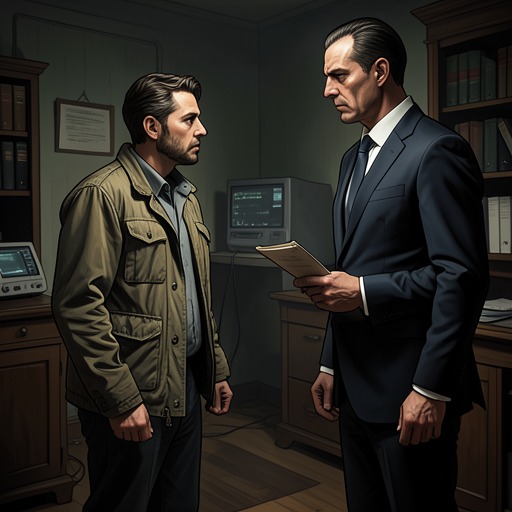
The government has filed a civil case against the house under a new forfeiture law that President Reagan is expected to sign at any moment. The account presents the legal proceeding alongside the physical facts of occupation: a chain-link fence surrounds the property, federal Dobermans patrol inside it, and police remain on guard after the rest of Brock Vond’s troops depart. The house is thus both the subject of a civil claim and a space held by force.
The seizure follows weeks of military-style pressure on the neighborhood. Vond’s troops had marched along its dirt roads chanting against drugs, publicly strip-searched people, killed household and farm animals, and poured herbicide into wells that could not be used to irrigate marijuana crops. Neighbors saw their actions as those of an invading army in a helpless foreign country, although the district was not far from San Francisco. Their departure does not end the occupation: guards and dogs make the confiscated house a continuing presence in Zoyd’s life.
Zoyd is increasingly wary of the police. At a public performance, he disguises himself as an ordinary man, shaving his beard, cutting his hair, and wearing a borrowed tie. When the crowd applauds, he limits himself to a nod rather than joining in. The small gesture conveys how thoroughly the surrounding enforcement has changed his behavior: even a public response that would ordinarily be unremarkable feels risky.
The House Zoyd Built
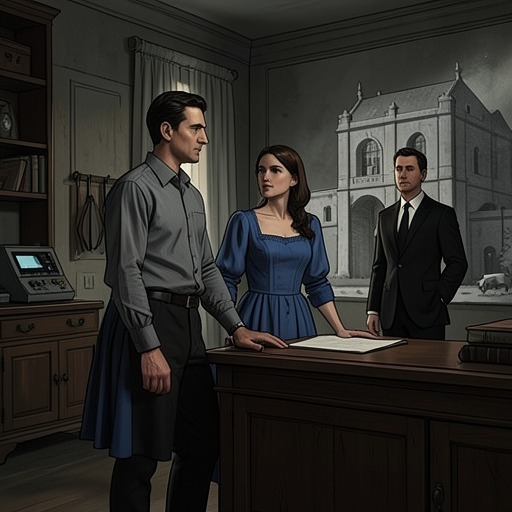
The property’s value to Zoyd lies in its accumulated history as much as in its shelter. He began with a small, used trailer shaped like a canned ham and an artesian well for which he had to find a pump. Over the years he enlarged the place bit by bit, using salvaged lumber from old shacks he had helped demolish. He added a room for Prairie, then a kitchen and a bathroom, and eventually a treehouse perched among four redwoods at the foot of the hill.
The treehouse and attic stood at the same level, joined by a rope bridge. The house was not built to code or finished to professional standards. Its plumbing combined pipes of different sizes, including an old five-eighths-inch pipe, and keeping it working demanded continual repairs and searches for fittings at flea markets and the public dump at Crescent City. These details make the home a record of Zoyd’s resourcefulness: its irregular construction embodies years of piecemeal effort rather than a finished possession acquired all at once.
Before the seizure, he thought of the house chiefly as a succession of problems that would eventually need his attention. Now he experiences it as a living thing whose safety matters to him. The change in feeling is inseparable from the loss of control: once the government has fenced the property and set dogs inside, familiar defects and repair jobs give way to the more urgent question of whether the place itself can survive.
Visits, Dreams, and Dispossession
Zoyd repeatedly approaches the house closely enough to hear his own television playing inside. He times these furtive visits for just after the dogs have been fed, when, he supposes, their appetite for blood is less pressing. The domestic sound reaches him from a home he can no longer freely enter. Its familiarity sharpens the separation: the television remains inside, but the ordinary life associated with it has been displaced.
The house also returns in increasingly frequent nightmares. Zoyd dreams of rounding a bend to find it burning, with no time left to save it. The imagined fire threatens not only the wooden structure but something else that would be destroyed beyond recovery. Once the dreams come as often as every other night, he becomes convinced that the house is asking him to set it alight as its only release from captivity. The thought gives the dream a terrible reversal: destroying the home might appear to be an act of liberation, but it would also make Zoyd its destroyer.
On a furtive visit, he reaches the house by the suspended walkway between the trees and the attic. The dogs hear him and prowl in the garden. He slips down from the attic and moves silently through the rooms, finding no trace of himself or Prairie, only stripped, empty spaces. Outside, the dogs scratch at the windowsills. The scene replaces the remembered, gradually expanded family home with vacant interiors and the sounds of its guards; the seizure has emptied the house of the life that made it Zoyd’s.
The Struggle Continues
The confiscation remains an unresolved fight. Driving after dark in a battered Power Wagon, Zoyd listens to the Eagles’ “Take It to the Limit” and thinks of his effort to regain his small piece of Vineland. He understands that any confrontation with Brock Vond will not take place head-on, but somewhere out on the roads that carried him away from the house and may lead him back. The journey makes the seizure more than a completed act of dispossession: Zoyd continues to orient himself toward return, even as the conflict shifts to the margins.
Flash suggests that the simplest solution would be to kill Vond, and Zoyd is tempted enough for them to be about to discuss it. Prairie arrives before the conversation develops. She says she feels entirely foreign to the family, then looks at Zoyd and recognizes her own face in his features more clearly than before. That moment connects the threatened home to the family whose life it once housed, while leaving the seizure’s practical outcome open. The government controls the property; Zoyd still carries its history, its absence, and the unresolved hope of getting back.