DL and Takeshi end their celibacy pact
VinelandDL and Takeshi end their celibacy pact when they renegotiate its no-sex clause during a visit to the Ritiro delle Attente Kunoici. The change marks a turn in a relationship long organized around restraint and an annually renewed agreement: DL recognizes what the prohibition has cost her, and intimacy becomes possible only after they have taken several days to act on the change. Their private shift occurs in a year of larger crossings, as the Thanatoids awaken and Brock Vond is carried toward the land of the dead.
The Pact and What DL Keeps Secret
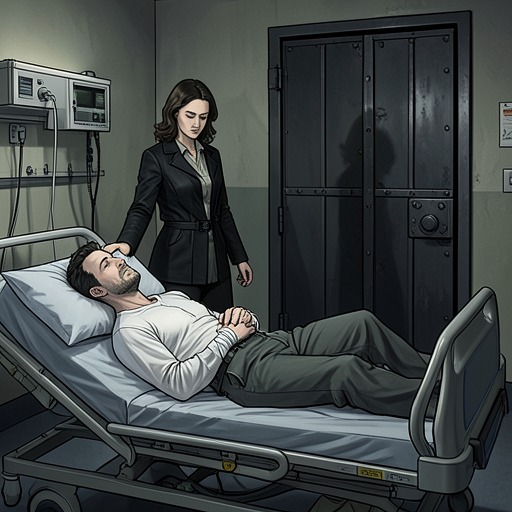
For years, DL and Takeshi have returned to the Ritiro delle Attente Kunoici for examinations and to renew the agreement that binds them. Its no-sex clause is one part of a wider arrangement whose origins and full terms are not recounted here. The annual renewal gives the relationship a recurring structure: their connection is not simply left to develop, but repeatedly examined and recommitted to under rules associated with DL’s training and karmic obligations.
DL does not tell her mother, Norleen, how she and Takeshi met or what their shared history entails. She withholds the circumstances in Japan, DL’s use of the Vibrating Palm, Takeshi’s resurrection by the Puncutron, and the couple’s yearly returns to the retreat. She especially avoids disclosing the no-sex clause, fearing that Norleen would be hurt and might despise her if she learned of it. The omission shows how the pact governs not only DL and Takeshi’s private relationship but also what DL feels able to tell her family.
Norleen views Takeshi as someone who needs and adores DL, and urges her to recognize that attachment rather than dismiss him as a source of danger. DL remains wary: she thinks he may be mad and knows that he has people pursuing him, including dangers he has never explained to her. Her uncertainty sits beside her mother’s confidence in their bond, making the later change in the pact a development DL has to understand for herself.
Renegotiation and Delayed Intimacy
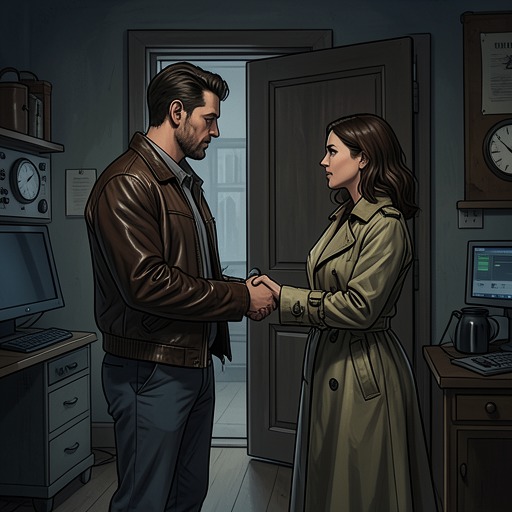
During that year’s visit, the no-sex clause is renegotiated and dropped. DL realizes that she has lost something over the years under the agreement, but the recognition does not immediately settle what the change means. Several days pass before she and Takeshi make love. The interval matters: lifting a rule permits a new possibility, but does not make their relationship instantly easy or render their past restraint irrelevant.
The conversation that follows takes place in a penthouse suite overlooking Amarillo. DL asks what is happening between them, surprised by the intensity of her desire as well as Takeshi’s. He responds by recalling their first night in Tokyo. DL had been so absorbed in the idea of killing Brock Vond that she missed the sexual part of that encounter. Takeshi finds the memory amusing rather than treating it as an injury, and his recollection makes clear that her fixation on Brock had already crowded out her awareness of what was happening with him.
The agreement’s end therefore changes more than a practical condition between partners. DL has to confront the distance between the role she had pursued—directed by the hunt for Brock—and the closeness she now discovers she wants. The novel presents that discovery through her question and Takeshi’s teasing recollection, rather than as a sudden resolution of every tension between them.
Brock, the Karmic Journey, and the Meaning of the Change
Takeshi connects DL’s pursuit of Brock to an obstruction on the way to her karmic purpose, an interpretation associated with Sister Rochelle. When DL asks what that purpose is, Takeshi describes it as the ordinary passage from one point to another and suggests that Brock may have been only a means of transport, not the destination. The metaphor recasts DL’s long fixation: the pursuit that seemed to define her direction may instead have carried her toward something beyond Brock.
That possibility is not presented as a settled explanation of DL’s life. Takeshi’s answer is another koan, one that leaves her unsettled, and the text does not claim that ending the pact completes her spiritual journey. Instead, the changed agreement allows a different relation to emerge beside the old one: DL can attend to Takeshi without treating Brock as the unavoidable center of every road she takes.
The timing places their personal change against the Thanatoids’ awakening. These people occupy a condition described as like death but different; they have long limited their emotions, with resentment and the desire for revenge among the few feelings they allow to persist. In Shade Creek, synchronized devices play the opening of Bach’s Wachet Auf, and the Thanatoids wake and seek one another’s gaze. The music and their unprecedented collective response make the night a break in a long-standing condition, rather than an ordinary gathering.
The Night of the Crossing
As the Thanatoids respond to the awakening, Radio Thanatoide broadcasts their activity to other communities. At a rural tavern, people gather, food and music are available, and some visitors discover that they are Thanatoids and decide not to leave. The scene gathers strangers into a temporary community while the Thanatoids’ previously isolated condition begins to change. The radio presenter’s description of the broadcast as live but not necessarily in person underscores the novel’s play with mediated presence, even as people assemble in the same place.
On the same night Brock is taken across the river, DL and Takeshi are among the couple dancing in an embrace at the crowded gathering. Their closeness is set amid the Thanatoids’ arrival and the movement of Brock toward the land of the dead; the scene does not make their relationship’s future certain, but it does show them together after the clause has been dropped. The pact’s ending thus belongs both to their intimate history and to a wider night of altered boundaries: the Thanatoids move toward renewed awareness, Brock crosses out of the living world, and DL and Takeshi step beyond a rule that has shaped their partnership for years.