Shinarian rebel movement
WatchmenThe Shinarian rebel movement is the organized and improvised resistance of Shinar’s inhabitants to Terran imperial control. It begins in grievances over colonial administration and material deprivation, develops through demonstrations, riots, and armed revolt, and eventually becomes a necessary military partner for Emil Vorgens’s strategy of defending Shinar against the Komani. Its decisive significance lies in the movement’s divided position: it fights for freedom from the Empire while having to prevent the Komani, invited as allies, from conquering the world it seeks to liberate.
Origins and Political Grievances
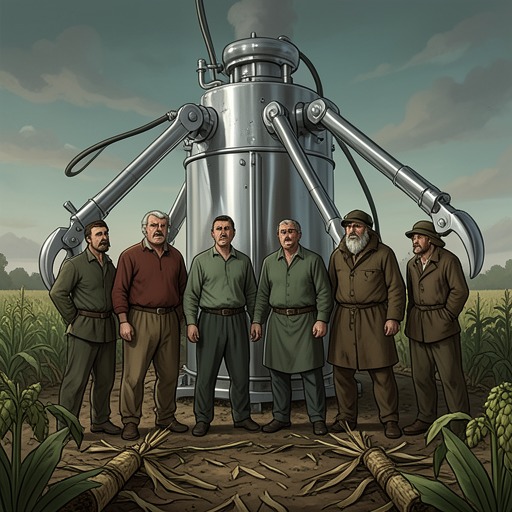
The movement emerges from the ordinary economic pressures imposed on Shinarian society. Clanthas, a merchant whose business depended on buying and selling farmers’ produce, appealed to the Terran governor when the nutrient processors were restricted. The processors were described as necessary, even vital, but the authorities did not quietly resolve the dispute. Instead, Clanthas remembered a statement from galactic history that connected freedom with the intelligence, courage, and collective strength required to resist enslavement. The words had originally been spoken by Geoffrey Knowland, the Terran conqueror who defeated the Masters and established Terran rule over Shinar. Clanthas applied the conqueror’s own principle against the Empire that had inherited his power.
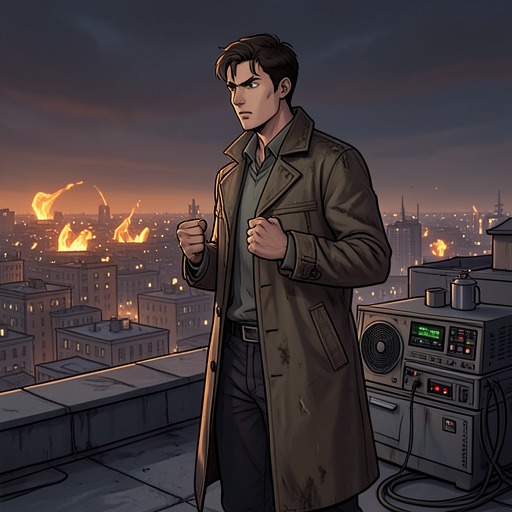
Clanthas organized farmers and led a demonstration in Katan, then arranged similar demonstrations in Shinar’s major cities. The protests did not remain peaceful in every location. Some of the larger gatherings became riots; troops were summoned, shots were fired, and unarmed civilians were killed. Violence intensified, violent men seized the initiative, the Terran governor was murdered, Imperial Marines arrived, and Komani warriors landed on Shinar. The movement therefore develops not from a single military conspiracy but from a chain in which economic control, public protest, repression, civilian deaths, assassination, and foreign intervention transform dissent into war.
Structure and Internal Diversity
The Shinarian rebel movement is not a single uniform army. Clanthas becomes its acting leader before he fully understands the position into which events have forced him, and he stands between several constituencies he cannot completely control. The Terrans seek to pacify Shinar and restore it as a docile colony; the Komani have their own plans; and hotheads and opportunists within Shinar act beyond the reach of the movement’s leadership. The resistance thus contains both a political demand for self-rule and an unstable military environment in which local authority is continually tested.
Merdon explains that the Komani are present because Shinarian leaders invited them. They are treated as guests and allies, not as an occupying force summoned against the wishes of the population. Merdon rejects the Terran commanders’ assumption that Shinarians are merely unwitting pawns in a Komani plan of conquest. He presents the alliance as a deliberate attempt by Shinarian resistance leaders to meet imperial force with force. The movement’s stated aim is to fight until the Terrans no longer consider Shinar worth the cost and leave the planet in freedom.
The movement nevertheless extends well beyond Merdon’s immediate force. Sittas tells Emil Vorgens that Merdon commands the youngest and most aggressive rebels, while other groups operate in the cities, hills, and farming villages. These groups do not form a conventional army, but they can fight in their own ways for Shinar’s freedom. Their dispersed character gives the resistance breadth and resilience, but it also makes coordination difficult: the leaders Vorgens needs to reach are precisely those whose identities and organizations are not known to him.
Alliance, Recruitment, and Conflicting Loyalties
The invitation to the Komani is the movement’s most consequential strategic decision. The rebels use an external fighting force to compensate for their weakness against the Empire, but the arrangement creates a second threat. Emil Vorgens warns that Okatar Kang wants a rapid, decisive victory on Shinar and may use the planet as a springboard for a wider galactic war. If the Komani can be frustrated until their campaign loses its promise of glory, other Komani clans may refuse to join them, and even Okatar’s own people may tire of a fruitless war.
Merdon attempts to recruit Vorgens by appealing to his non-Terran origins. He argues that Vorgens’s people once fought the Empire and invites him to help free Shinar, perhaps eventually helping to destroy the Empire itself. Vorgens refuses. Although he is not a native Terran, he identifies himself as a citizen of the Empire and a sworn officer of the Star Watch. His refusal exposes a central tension in the movement: opposition to imperial domination does not automatically produce a common political identity, and the cause of Shinarian independence cannot simply absorb every person who has suffered under imperial history.
Vorgens later proposes a conditional alliance of his own. The Shinarians must either fight for their world alongside Terran forces against the Komani or allow the Komani to take over Shinar and use it to ignite a galactic war. He suggests that cooperation might persuade the Empire to consider Shinarian self-government, but he cannot guarantee that result. The rebels therefore face an uncertain bargain: military cooperation with the power they oppose may preserve their world and create a path toward autonomy, but it may also leave their political future dependent on imperial discretion.
From Resistance to Coordinated Defense
The movement’s relationship with the Terrans changes when its leaders decide to accept Vorgens’s proposal. Clanthas tells him that the other leaders have decided to trust his word and will help work against the Komani in every way possible. This decision converts a resistance previously aligned with the Komani into a partner in a broader defense of Shinar. It does not erase the movement’s hostility to imperial rule; rather, it creates a temporary convergence between Shinarian self-defense and Terran military necessity.
Vorgens insists that the alliance must receive practical support, not merely political recognition. He orders Brigadier Aikens to contact the garrison commanders in the four cities held by Terran forces and take stocks from their arsenals to arm the native population. Aikens agrees only under protest, revealing how far the Empire’s military establishment remains from treating the rebels as equals. Vorgens’s demand nevertheless shifts weapons and responsibility toward Shinarian forces, linking the promise of self-defense to the material capacity to conduct it.
The alliance becomes personal as well as strategic during the crisis at Katan. When Merdon lacks enough groundcars to reach the threatened city quickly, Vorgens offers to send a squadron of vans and troop carriers within an hour. Merdon admits that he has been wrong about Vorgens and says he will tell his people to follow the Watchman’s orders. He then asks to fight alongside him. Vorgens answers by extending his hand, and the two go down side by side to the waiting people. The gesture marks a movement from suspicion to operational trust without pretending that their political differences have disappeared.
Warfare and Narrative Significance
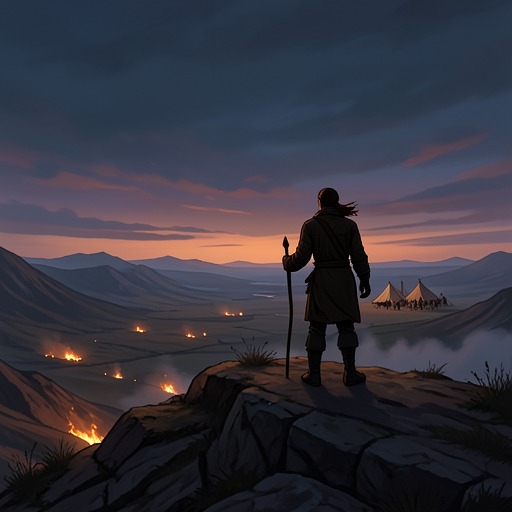
The rebels’ war is fought within a wider pattern of asymmetric conflict. Okatar Kang responds to the developing Shinarian-Terran defense by deciding to sack the planet, raiding every district and town and systematically taking whatever food, weapons, equipment, and ammunition he wants. Against this stands Vorgens’s concept of Shinarian self-defense, directed and supported by Terran forces. The ensuing six weeks of nearly uninterrupted battle do not consist chiefly of massive armies meeting in open combat. Skirmishes, maneuvers, feints, sudden attacks, and ambushes dominate, and few individual actions involve more than a battalion.
This method of war gives the movement a dual identity. It is a popular revolt rooted in farmers, cities, hills, and villages, but it is also a force being reorganized into a coordinated defense with access to imperial transport and weapons. Its strength comes from local participation and dispersed action; its vulnerability comes from uneven leadership, competing aims, and dependence on alliances whose political consequences cannot be controlled. The movement’s invitation to the Komani demonstrates its willingness to use any available force, while its later agreement with Vorgens demonstrates that survival may require cooperation with the very Empire it seeks to escape.
The Shinarian rebel movement therefore embodies the novel’s central political dilemma rather than offering a simple liberation narrative. Its members reject the Terran assumption that Shinar can be pacified into obedience, yet they must prove that resistance can protect civilians and territory rather than merely replace imperial authority with destruction. Their struggle gains legitimacy through collective action and the demand for self-government, but it remains exposed to the dangers of militarization, factionalism, foreign intervention, and imperial conditionality. Its movement from protest to alliance and from alliance to coordinated defense makes Shinar’s freedom a contested political project, not an automatic consequence of rebellion.