Komani
WatchmenKomani is a powerful warrior people organized through clans, with an entire clan appearing on Shinar under the leadership of Okatar Kang. Their arrival begins as a raid on Oran VI, but their ambitions rapidly expand: the Komani threaten to defeat the Terran forces on Shinar, inspire other clans to join them, and use the planet as a springboard for a wider galactic war. At the same time, the narrative refuses to treat the Komani as a simple mass of barbarians. Their society has its own political loyalties, ceremonial practices, religious figures, and internal judgments about whether Okatar’s campaign can succeed.
Identity and Social Structure
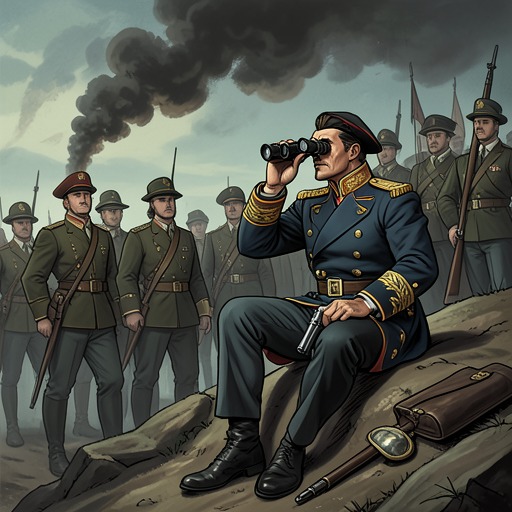
The Komani are divided into clans, and the authority of a clan chief is central to their military and political organization. When Emil Vorgens asks how many Komani warriors are on Shinar, Sittas cannot provide an exact figure but estimates that the single clan occupying the planet includes approximately fifteen thousand fighting men. The scale of that force explains why a local Terran garrison and the Mobile Force are unable to dismiss the invasion as an isolated raid. The clan is not merely a band of marauders; it is a substantial expeditionary society capable of landing, supplying, and coordinating a large army.
Komani identity is also expressed through visible family and clan symbols. Their camp contains thousands of brightly colored bubble-tents, each marked with a distinctive family insignia, alongside pennants, ceremonial fires, weapons, equipment, and dozens of landing ships. This combination of domestic markings and military display makes the camp resemble both a community and an army. The Komani arrive with a social order intact rather than dissolving into the population of Shinar.
Their physical appearance reinforces the distance between Komani and Terran norms without making them wholly alien. The warriors are enormous, humanoid figures in gleaming battle armor, with arms covered in greenish hair and faces shaped more like cats than humans. They have wide-set catlike eyes, flat noses, broad mouths, tiny cup-shaped ears, and wiry green fuzz covering the head and face. The description presents them as intimidating opponents, but their human bodily structure and organized behavior also establish them as a people rather than monsters.
Military Power and Methods
The Komani possess extraordinary battlefield mobility through one-man flyers: saddlelike machines that allow individual warriors to swarm rapidly across the terrain. During an attack, Komani fighters charge on these vehicles while carrying ceremonial broadswords, even as Terran guns and ultrasonic weapons cut down the first wave. Their willingness to continue advancing under heavy fire gives the fighting a brutal momentum and demonstrates the combination of personal courage, numbers, and mobility that makes them dangerous.
The Komani invasion catches the Terran authorities in a strategically vulnerable position. They have landed on Oran VI after the Imperial Governor has been murdered and the planet has fallen into turmoil, exploiting the disorder for battle and looting. Terran orders therefore offer them safe conduct home if they immediately leave the planet, while reminding their leader that Komani clans have sworn allegiance to the Empire and should receive no support from the wider Komani nation. The proposed settlement assumes that clan loyalty can be invoked against the ambitions of one leader, but Okatar treats that assumption as a weakness in the imperial position rather than as a binding restraint.
Okatar argues that one Komani clan has already humbled the Mobile Force and the planetary garrison. He points out that the Mobile Force is trapped and living on borrowed time, while the Star Watch fleets are too distant to arrive for at least a month. His strategy depends on speed and spectacle: a decisive victory on Shinar would spread the word that the Komani are marching, encouraging other clans to join. He even raises the possibility that the warriors on Shinar may not all belong to his own clan, suggesting that the apparent limits of his force may conceal a broader movement.
Relations with Shinar and the Terran Empire
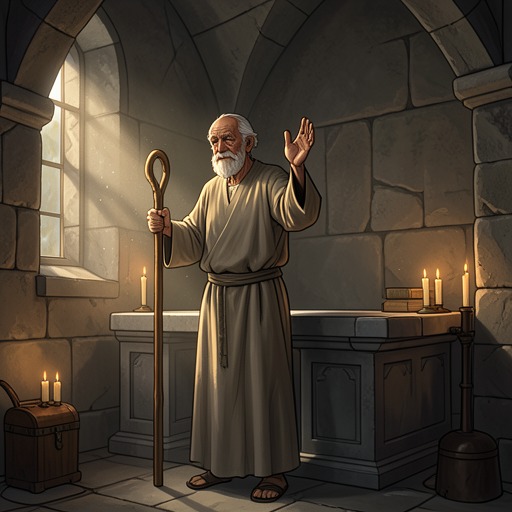
The relationship between the Komani and the people of Shinar is sharply contradictory. The Komani raid and loot the planet, turning it into a battlefield, yet a Shinarian priest, Sittas, travels with them and insists that the warriors possess souls. The Komani camp contains almost as many Shinarian natives as Komani, indicating that the invasion has drawn local people into its orbit, whether through cooperation, dependence, coercion, or the disruption of ordinary life. The presence of Sittas gives the Komani connection to the invaded population a religious and moral dimension that military language alone cannot explain.
The Komani also recognize forms of sanctuary and obligation that compete with imperial authority. When a Komani officer claims, in the name of Okatar Kang, that Terrans sheltering with Sittas are prisoners, Sittas rejects the claim with emphatic refusal. His response establishes a direct conflict between Okatar’s right to seize captives and the priest’s authority to protect those under his care. Later, Sittas acknowledges that he acted with authority whose legality may be judged by a future Star Watch court, showing that the Komani crisis brings clan custom, religious protection, emergency military action, and imperial law into collision.
The Empire’s historical relationship with the Komani is another source of tension. Vorgens is instructed to remind Okatar that the Komani were allies of the Terrans during the Galactic War and that the attack on Imperial territory violates an old friendship. The Komani therefore are not presented as permanent outsiders who have never shared a political order with the Empire. Their clans have sworn allegiance to the Terran Council, but Okatar’s campaign tests whether that allegiance is genuine, enforceable, or merely a diplomatic convenience. The threat is dangerous precisely because the Komani can claim a place within the imperial system while acting against it.
Leadership, Conflict, and Political Choice
Okatar Kang embodies the Komani campaign’s expansionist logic. He regards retreat as submission and interprets the imperial offer of safe conduct as a challenge to his honor and credibility. His confidence rests on the immediate military facts: Terran forces are isolated, reinforcements are delayed, and the Komani have already demonstrated that a single clan can dominate the local balance of power. He also understands the psychological value of victory. If the Komani win quickly, other clans may believe that the Empire is vulnerable and join the advance.
Yet Okatar’s nobles do not always share his certainty. After the native leaders begin speaking with the Terrans, Okatar paces through his tent like a caged jungle beast while his council sits passively at the long table. He dismisses the Shinarians as people who shift with circumstances, but one noble redirects attention toward the Terrans as the immediate threat. The scene reveals a leadership structure in which the chief may command, but must still contend with advisers who assess risks differently. Komani unity is therefore powerful but not absolute.
Vorgens and the Shinarian leaders exploit that vulnerability by framing the war as a choice between defending their own world and allowing the Komani to take it over. Vorgens warns that the Komani need a rapid, decisive victory: if they are held at bay, frustrated, and kept off balance, Okatar’s dream of glory may fade, the other clans may refuse to join him, and even his own warriors may tire of a fruitless war. This strategy treats Komani participation as conditional rather than automatic. It seeks to defeat the invasion not only through firepower but by changing the calculation of the clans and their prospective allies.
Reversal and Narrative Significance
The Komani initially appear to be an overwhelming external force, but their campaign helps produce an unexpected alliance between Terran officers and Shinarian resistance leaders. When Clanthas and the other local leaders finally agree to work against the Komani, they convert political hesitation into organized action. The alliance remains uncertain because the Shinarians want self-government and Vorgens cannot guarantee that imperial cooperation will secure it, but the Komani threat makes neutrality increasingly untenable.
The Komani also force Vorgens to confront the limits of imperial command. His mission begins with orders to negotiate with their chief and remind him of imperial allegiance; later, survival requires cooperation with the very people the Empire has subjugated. Sittas saves Vorgens and the Mobile Force, while Merdon eventually recognizes that Vorgens is willing to act with the Shinarians rather than simply command them. The Komani invasion thus becomes the pressure that rearranges relationships among conquerors, rebels, priests, and local leaders.
Their importance lies in this double function. Militarily, the Komani are fast, numerous, heavily armed, and capable of turning a planetary disturbance into a strategic disaster. Politically, they expose the fragility of an empire that depends on inherited oaths while ruling a population that still remembers freedom. Their presence makes the question of Shinarian self-government urgent, because the people must choose whether to resist the Komani alongside the Terrans or risk becoming the base from which a larger war begins.