Kansas City
WomenKansas City is the destination of Henry Chinaski’s chaotic poetry-reading trip, a setting where public recognition briefly enlarges his literary persona before giving way to intoxication, disorientation, and dependence on Lydia Vance. The city’s winter cold and the episode’s abrupt shift from an auditorium to a women’s dormitory and then an unidentified motel room make the trip a compact portrait of the instability behind Chinaski’s performance as a famous writer.
Arrival and Setting
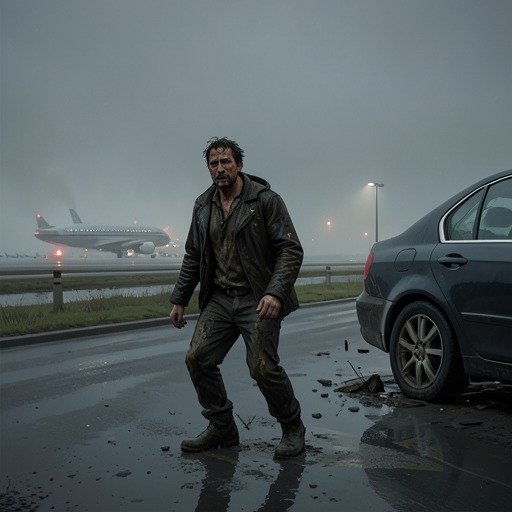
The arrival establishes Kansas City through the contrast between its freezing weather and Chinaski’s unprepared clothing. The pilot reports a temperature of 20 degrees; Chinaski steps off the plane in a thin California sports coat and shirt, lightweight pants, summer stockings, and shoes with holes. He has no baggage, only a portfolio of poems. Frenchy, a drama teacher and collector of Chinaski’s books, is waiting and greets him with tequila, which they share in a warm car as they leave the airport.
The trip’s immediate conditions are inhospitable: the roadways are iced over, and Frenchy notes that driving on them requires skill. Kansas City is thus introduced not as a settled destination but as a cold, unfamiliar place Chinaski enters already underdressed and drinking. The portfolio, rather than luggage, gives the visit its professional purpose; the bottle begins the pattern that will undermine his ability to manage the engagement.
The Reading and Its Reversal
At the college, the visit becomes a public event shaped by alcohol and improvised performance. A liquor salesman transports Chinaski, with cases of beer packed into the back seat. Before reaching the auditorium, they stop for vodka. Chinaski vomits after getting out of the car, then joins the others and enters only fifteen minutes late.
He reads for about twenty minutes before putting the poems down and inviting the audience to talk instead. The encounter then becomes a shouting exchange: Chinaski screams at the audience, and the audience screams back. A couple of professors eventually remove him from the event. The response is neither simple acclaim nor straightforward failure; the audience participates in the disruption, while the professors intervene to end it and offer him a room in the women’s dormitory.
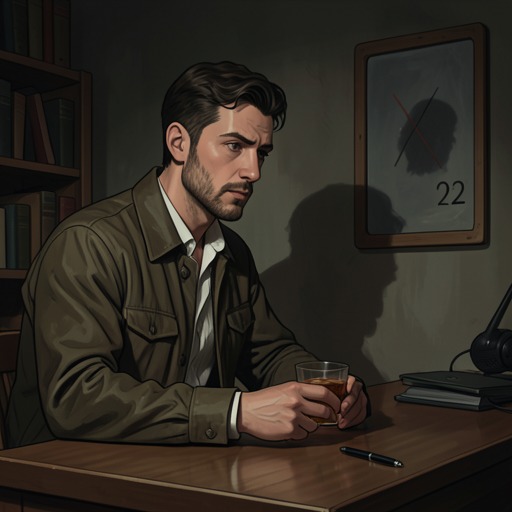
The dormitory arrangement seems to Chinaski to confirm the legend he has built around himself. On the third floor, one professor has brought whiskey and another gives him a check for the reading and airfare. After drinking with them, Chinaski blacks out. When he wakes, the others have left and half a bottle remains. He drinks alone, thinking of himself as “Chinaski the legend” and focusing on the hundreds of women in the building. The gap between the paid reading and the solitary, intoxicated aftermath turns professional recognition into a stage for self-mythologizing.
The Dormitory and Lost Bearings
Chinaski walks into the dormitory hallway wearing only shorts and stockings and knocks on a nearby door, announcing himself as an immortal writer and saying he wants to show someone something. The scene converts the public persona into a failed attempt at contact: the attention he imagines the building might offer does not restore his judgment or orientation. He eventually forgets which floor his room is on and tries doors again, this time silently and conscious of his clothing.
Back on the third floor, he finds the room by recognizing his own things: his portfolio, clothes, empty glasses, and ashtrays. The familiar objects briefly settle the scene, but he finishes the whiskey he has been carrying. By morning, the narrative has jumped to a clean motel room with two beds, curtains, a television, and a bath. Snow and ice are visible outside, yet Chinaski has no explanation for where he is or how he got there. The change of location is not presented as a resolved itinerary; it is the next sign that the night has erased his grasp of place and sequence.
Aftermath and Significance
Hung over and depressed in the motel, Chinaski reaches for the telephone and makes a long-distance call to Lydia Vance in Los Angeles. He tells her, “Baby, I don't know where I am!” Her reply—“I thought you went to Kansas City?”—confirms the trip’s destination but does not explain the intervening movement. The call closes the episode on a practical dependence: after the performance, the dormitory, and the unexplained motel, Lydia is the person he contacts when he can no longer locate himself.
Kansas City therefore marks the collision of Chinaski’s public literary identity with the consequences of his drinking. He arrives with poems and receives a fee and airfare, but the reading’s disorder, the dormitory episode, and the motel-room confusion dominate the memory of the visit. The city’s role is less that of a fully explored place than that of a temporary setting in which performance, material need, and loss of control become difficult to separate.