Hollywood Park
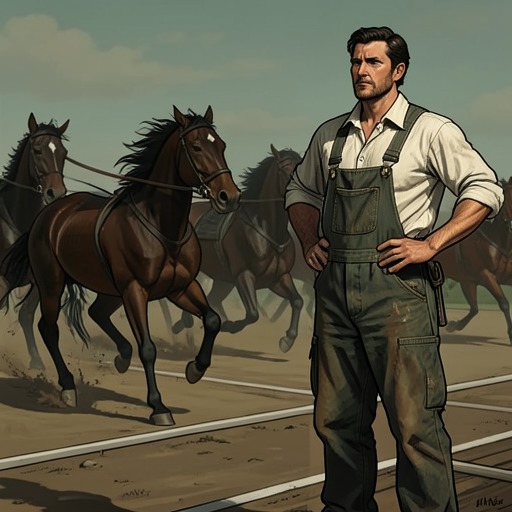
WomenHollywood Park is a recurring setting in Henry Chinaski’s life, less a refuge from disorder than one of its most revealing stages. At the racetrack, drinking accompanies calculation, wins briefly become proof of personal triumph, and losses expose the limits of the systems he trusts. The track also brings his companions into contact with a world organized around bets, odds, and the possibility of coming out ahead.
Setting and Uses
The novel associates Hollywood Park with Chinaski’s regular interest in horse racing. He studies figures, bets on races, and treats each new wagering system as a possible route to wealth. The track is not merely scenery for occasional outings: it provides a recurring structure of anticipation, decision, result, and renewed hope. That cycle resembles the broader pattern of his conduct, in which a short-lived success does not end the behavior that produced it.
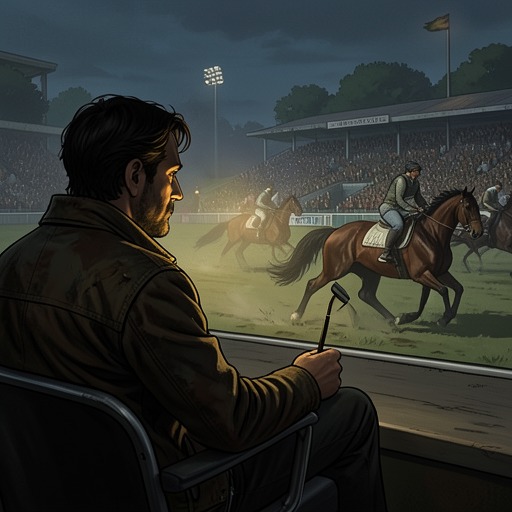
The setting also connects gambling to drinking. During a night harness-racing meet, Chinaski arrives with a pint and mixes it with hot coffee. The first race has already consumed more than half the bottle, but he continues to drink as he bets. The episode places financial risk and alcohol use alongside one another: each is folded into the ordinary procedure of the evening, rather than treated as a separate interruption.
A Night of Winning
At the harness meet, Chinaski wins three of the first four races, then lands an exacta. By the end of the fifth race he is nearly $200 ahead. He goes to the bar and plays off the toteboard, describing the night’s favorable results as a good toteboard. His run continues: by the ninth race he is $950 ahead and very drunk.
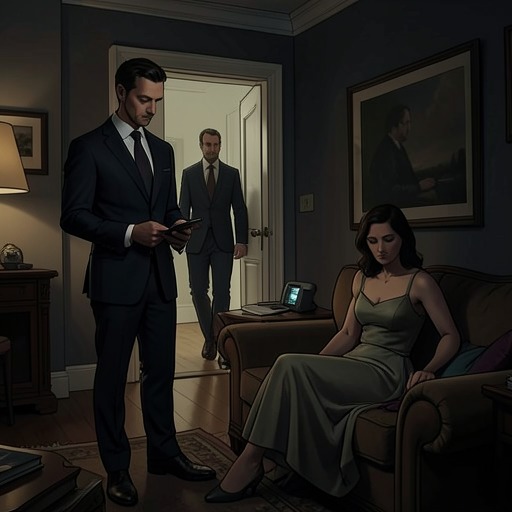
The amount matters to him beyond its immediate monetary value. He puts his wallet in a side pocket, waits in his car while other patrons leave, and then drives to a supermarket parking lot to telephone Lydia Vance. He announces his winnings as evidence that he is a winner and declares the relationship over, accusing Lydia of having played games with him. The call converts a gambling result into a personal argument: the money becomes rhetorical ammunition in a quarrel that is not resolved by the night’s success.
His reaction also shows how quickly a temporary advantage becomes a larger claim about his identity. A profitable evening does not remain a piece of luck or skill limited to the track; Chinaski turns it into a declaration that he will always win. That boast is immediately entangled with his anger at Lydia and his desire to end their relationship, so the track’s apparent certainty—the race has finished, the money has been counted—does not carry over into his private life.
Loss, Departure, and Return
On another occasion, Chinaski tells Lydia that he is going to Hollywood Park. She warns that she will not be there when he returns if he goes. He drives away in his car, waves goodbye, and follows his belief that a new system is bringing him closer to wealth and that success is only a matter of time. The outcome reverses the confidence of the earlier winning night: he loses $40.
When Chinaski gets home, Mr. O’Keefe meets him in the driveway and tells him that Lydia has gone. The sequence places a modest track loss beside a consequential change at home. Chinaski had left after Lydia’s warning, and her departure has taken place while he was away. The scene does not present the wager as the sole cause of the separation; rather, it makes the racetrack outing part of the conflict between his repeated departures for his own pursuits and the relationship he leaves behind.
The contrast between the two visits is central to Hollywood Park’s meaning. A winning night encourages Chinaski to proclaim himself invulnerable and to break with Lydia; a later visit ends in a loss and coincides with her absence. Neither result settles anything. The racetrack offers sharp, countable outcomes, while the emotions and consequences that surround his visits remain unresolved.
Companionship and Self-Presentation
Chinaski also takes Katherine to Hollywood Park in a rental car covered by his insurance. They sit on the sundeck near the stretch turn. Katherine initially says that she does not want to bet, but he takes her inside and shows her the toteboard and betting windows. He wagers five dollars to win on a horse at odds of seven to two, favoring a horse with early speed. The horse leads throughout and pulls away at the finish; the payout puts Chinaski $17.50 ahead.
The outing makes the track a place where Chinaski introduces another person to his habits. Katherine’s reluctance does not prevent him from showing her how the betting operation works, and his own attention remains on the race and the wager. Later, when she points out a man seated below them, the shared outing shifts from betting toward observation of the people around them. The scene thus includes both the racetrack’s public activity and the private experience of bringing a companion into a familiar routine.
Chinaski’s account of himself elsewhere helps explain the tension behind such outings. He describes himself as a loner who is content to live, eat, sleep, and walk with a woman, but who wants little conversation and prefers the racetrack or boxing matches to social activities. Hollywood Park fits the limited set of places he is willing to enter with a companion: it permits proximity without requiring the kind of social engagement he resists.
Recurrence and Significance
Across these episodes, Hollywood Park gives form to Chinaski’s pursuit of control. He gathers figures, invents systems, chooses bets, and watches for results; at the same time, his fortunes vary, his drinking continues, and his declarations of victory fail to secure stability in his relationships. The track’s measurable gains and losses sharpen the contrast between what can be settled by a race and what cannot be settled by money or bravado.
The place is also part of the novel’s portrait of gambling as a repeated practice rather than a single dramatic wager. Chinaski returns to the track after fights, takes companions there, and imagines each new method bringing him nearer to wealth. That recurrence makes Hollywood Park a practical destination and a stage for self-invention: there, a win can be made to sound like proof of lasting triumph, even as the next visit may produce a loss or leave a relationship changed.