Vance Pastures
WomenVance Pastures is a large, family-owned tract in the mountains of Utah where a visit with Lydia Vance becomes a turning point in Henry Chinaski’s sense of security. Its camping ground, spring, lake, and surrounding wilderness offer a sharp contrast to his familiar Los Angeles: beyond the city, he cannot assume that a problem has an easy practical solution.
Ownership and Setting
Lydia and her sisters own much of Vance Pastures, land inherited from their father. Henry agrees to travel there to pacify Lydia while her sister Glendoline is camping in the mountains. Glendoline has pitched a tent in the woods, and Henry and Lydia arrive before the other sisters, bringing a pup tent of their own. Their first night is uncomfortable, with mosquitoes crowding into the small shelter.
The property’s wilderness is not merely a backdrop to the visit. The sisters’ camp sits amid woods and mountain terrain, while a spring and lake offer landmarks that Henry initially explores at his own pace. The distance from city conveniences becomes increasingly important as he moves away from camp: the same openness that permits solitude eventually makes it difficult to tell where he is.
The Camp and the Lake
The morning after their arrival, Henry sits by the campfire while Glendoline and Lydia prepare breakfast. He has bought $40 worth of groceries, including several six-packs of beer, and has left the drinks cooling in a mountain spring. After breakfast, Glendoline reads aloud from her novel, The Wild Woman of the Mountains. Henry judges the work as needing considerable polishing and is skeptical of the assumption that listeners will be fascinated by an author’s life. The others decline his offer of beer, and the group discusses the novel.
Later, Henry takes another beer from the spring and walks away from the camp. He writes in a red notebook before heading to the lake, which is also called Vance Pastures. There, he enters the cold water and wades in until he is submerged; mud clouds the water around him. After getting dressed, he follows the lake’s edge and hears what proves to be a waterfall, which he finds after making his way through the forest and around rocks. Several streams appear to run from the waterfall toward the lake, linking the landscape’s features even as Henry experiences them alone.
Getting Lost
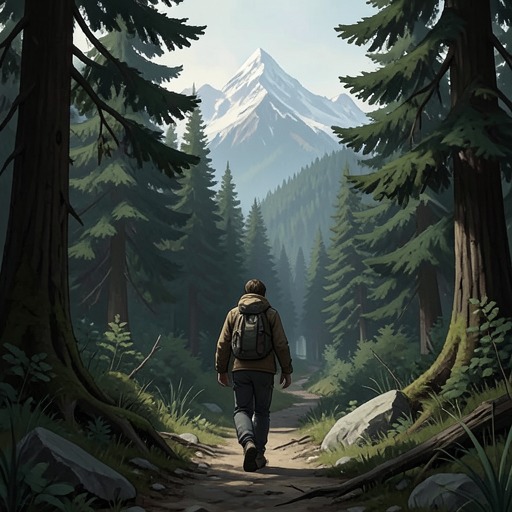
Henry eventually decides to return by a different route, choosing what he believes will be a shortcut. He writes another poem in the red notebook, then continues walking without finding the camp or the lake. Only after searching unsuccessfully for the familiar landmarks does he recognize that he is lost. The account marks a sudden change from purposeful wandering to real fear: the surrounding mountains, trees, and brush no longer provide a usable sense of direction or connection.
The contrast with Los Angeles sharpens the predicament. Henry imagines the city as a place where he could call a cab or use a telephone, and resents having let himself be taken away from those practical options. At Vance Pastures, the property stretches for miles, and the wilderness has no clear center or starting point to orient him.
Narrative Significance
The episode makes the landscape an active force in the narrative. Henry arrives at Vance Pastures amid domestic tension and irritation, but his attempt to withdraw into solitary exploration carries him beyond the limits of his own confidence. The lake and waterfall first reward his wandering; the same terrain then defeats his chosen shortcut and leaves him unable to locate the camp.
As he confronts the scale of the property, Henry throws away his red notebook and imagines a newspaper notice identifying him as a minor poet found dead. That grim, self-dramatizing image joins the episode’s comic edge to its genuine vulnerability: the writer who has been recording poems is suddenly afraid that the wilderness may end his story before he can return.