Hollywood Hills
WomenHollywood Hills is a setting where Henry Chinaski seeks company after Lydia Vance leaves and where his loneliness becomes entangled with literary ambition and social comparison. Dee Dee’s home offers temporary shelter from brooding, while nearby restaurants and a writers’ bar place Henry among people whose money and cultural standing sharpen his sense of being an outsider.
Dee Dee’s Home as Refuge
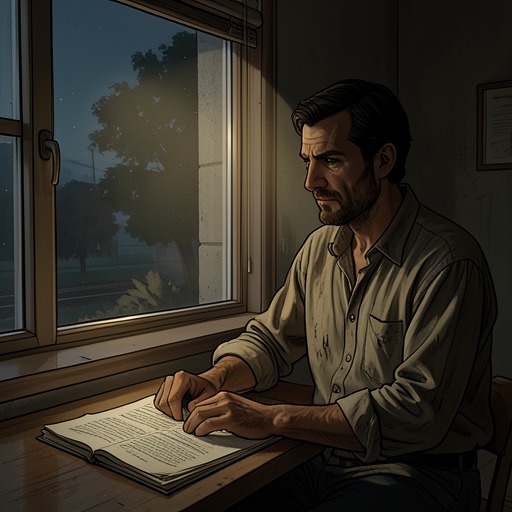
Dee Dee lives in a Hollywood Hills house shared with Bianca, an executive who occupies the top floor while Dee Dee lives below. When Henry arrives at 8:30 in the evening, Dee Dee welcomes him in. She is well connected to New York’s literary and artistic circles, but her former prominence belongs to an earlier period of her life, and a succession of unhappy affairs has left her discouraged. Her house becomes a place where Henry can talk about Lydia’s departure rather than sit alone in his apartment.
Henry supposes that he is not good with women; Dee Dee contradicts him and praises his writing. Their exchange links emotional reassurance to literary self-image. After they spend the night together, Dee Dee drives him to breakfast on the Sunset Strip. The drive does not free him from thoughts of Lydia: memories of earlier hardship in Atlanta and El Paso briefly place his present troubles in perspective, but the good parts of his relationship with Lydia continue to trouble him.
Restaurants and Social Distance
At a crowded, fashionable restaurant, Henry and Dee Dee move through a young, polished clientele who do not pay them much attention. The scene gives the neighborhood a public face distinct from Dee Dee’s private home: it is a place of visible style and quiet social confidence, while Henry remains withdrawn and preoccupied. The contrast is not simply between comfort and poverty; it also makes him conscious of the kinds of people and spaces associated with success.
Henry later asks Dee Dee to stop at one of her bars, where scriptwriters and small-theater people gather. He dislikes their manner, judging them clever and superior, and describes writers in one another’s company as canceling one another out. Yet he sits among them, earning $65 a week while imagining the recognition and income of writers who make $1,000 a week. His fantasy of a future special table near a restaurant kitchen turns resentment into ambition: he imagines becoming successful enough to be recognized, even as he mocks the literary company in which that success might place him.
A Setting for Contrasts
The hills are not presented only as an affluent backdrop. They contain Dee Dee’s shared home, which offers Henry temporary company, and connect to the Sunset Strip’s restaurants and bars, where money, youth, and professional identity become visible. The settings bring his desire for solitude into contact with his need for intimacy and recognition. His self-description as content with a hazy, undemanding existence sits uneasily beside his ambition to rise from low-paid writing to public status.
The Hollywood Hills scenes also place comfort beside instability. Henry recalls having once been penniless and without shelter, yet his present circumstances do not resolve his attachment to Lydia or his dissatisfaction with his place among other writers. The location therefore functions less as a secure destination than as a temporary vantage point: from Dee Dee’s home and the surrounding social venues, Henry can measure what he has escaped, what he still wants, and how far he feels from attaining it.
Beyond the Hills
The novel’s other episodes widen this contrast without making the hills a self-contained world. In New York City, Henry encounters traffic that seems to him relentless and resigned, while a visit to an antique store near the water exposes prices far beyond his means. He withdraws from the store, spends time in a bar, and waits in a parked car with beer as he watches people waiting in traffic. These scenes extend the book’s recurring attention to money, social position, and the uneasy passage of time beyond Los Angeles.
Within that broader pattern, Hollywood Hills remains associated with Henry’s search for companionship and standing. It offers access to homes and professional social spaces, but neither Dee Dee’s hospitality nor his imagined future recognition settles his emotional uncertainty. The setting’s significance lies in that unresolved contrast: Henry can enter rooms where writers and affluent diners gather, yet he continues to experience himself as apart from them and preoccupied with a relationship left behind.