Rustic Court
WomenRustic Court is the apartment complex around which Henry and Tammie’s relationship repeatedly gathers and breaks apart. Its small, closely connected spaces—an open doorway, a mailbox, and apartments stacked one above another—make it both a domestic setting and a stage for uncertainty, reunion, and danger.
Setting and Everyday Life
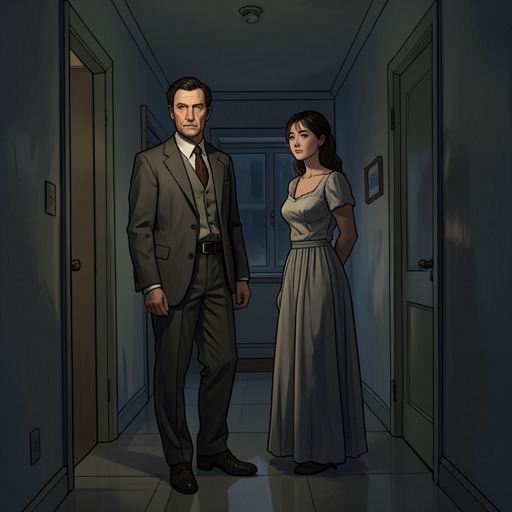
Rustic Court is where Henry lives near the rear of the complex, with his door sometimes left open to the court walk. The narrative locates everyday intimacy within this modest layout: residents can hear one another approaching, and Tammie’s eventual apartment sits directly above Henry’s. From there, she can look down into his kitchen, where he types at the breakfast-nook table. The arrangement brings their routines into close proximity without erasing the separateness of their homes.
The complex is also situated in a poor neighborhood. When pistol shots sound nearby, the account identifies prostitution, drugs, and occasional murder as part of the surrounding conditions. Rustic Court is therefore not insulated domestic refuge: ordinary apartment life exists alongside a threat that can suddenly become immediate.
Absence and Search
Rustic Court first becomes significant as a place where Tammie cannot be found. Henry visits her apartment two nights after a phone call ends abruptly. The lights are off and the place appears empty, but letters remain in the mailbox. He leaves a note at the door asking whether she is all right and requesting that she call him.
The next morning, he returns at 11 a.m. Her car is still gone, his note remains stuck in the door, and the letters have not been collected. He leaves another message, this time in the mailbox, asking her to contact him. He then drives around the neighborhood looking for her smashed red Camaro. The repeated checks turn the mailbox and doorway into measures of her absence: the unanswered note and untouched mail offer no explanation, only more uncertainty.
Reunion and Domestic Proximity
After returning to his own place at Rustic Court and writing love poems, Henry is sitting with Ben Solvnag when he hears Tammie approaching along the court walk. He recognizes her footsteps; she runs into his open doorway, and the two embrace and kiss. Ben says goodbye and leaves. The reunion reverses the earlier scene of empty rooms and unanswered messages, bringing Tammie back into the space where Henry lives.
The next morning, they discuss her finances. Tammie has child support and unemployment checks coming in, and Henry tells her there is a vacancy in the apartment behind his, directly above him. The rent is $105, with half the utilities paid. Tammie asks whether the managers will accept a child; Henry says they will, noting that he knows the managers. By Sunday, she has moved in with her child. The move transforms the court from a place Henry visits while searching for her into a shared residential environment, close enough for Tammie to see his typing routine from above.
Violence at the Court
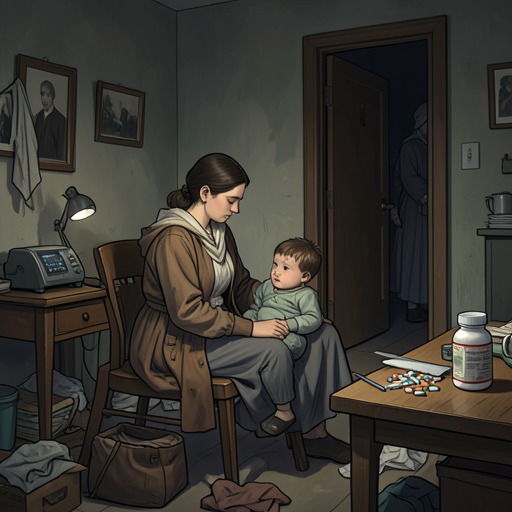
Rustic Court’s proximity to neighborhood danger becomes explicit when several pistol shots sound nearby, possibly in the street, behind the court, or behind the neighboring apartment. The uncertainty about their precise source emphasizes how close the threat is without establishing exactly where it occurred. Dancy calls urgently for Henry to come upstairs, and he runs to Tammie’s apartment, where she is stretched out on the bed. The interruption places the relationship’s private space within earshot of public violence: the same compact setting that enables reunion and daily closeness can also make danger impossible to keep at a distance.
Narrative Significance
Rustic Court works as more than a fixed backdrop. Its repeated thresholds—the door Henry leaves open, the apartment door bearing his note, and the mailbox holding uncollected letters—give physical form to the alternation between contact and absence. The upstairs vacancy then converts uncertain pursuit into a concrete arrangement of neighboring homes, while the nearby gunshots puncture that domestic closeness with the insecurity of the neighborhood. Through these linked episodes, the court holds together the relationship’s changing conditions: separation, return, shared proximity, and sudden alarm.