Everything Is Coming Back
Everything Is Coming Back is a phrase that crystallizes the cyclical worldview at the heart of Hermann Hesse's Siddhartha. First uttered by the ferryman Vasudeva as a parting gift to the young Samana, it later becomes a truth the river teaches Siddhartha through direct experience, shaping his final understanding that time is an illusion and that all life moves in an eternal return. The expression functions not as a casual observation but as a compressed statement of the novel's deepest insight: that nothing is ever truly lost, that every separation contains the seed of reunion, and that wisdom consists of learning to see the pattern of recurrence rather than chasing after novelty or finality.
Origin and First Utterance
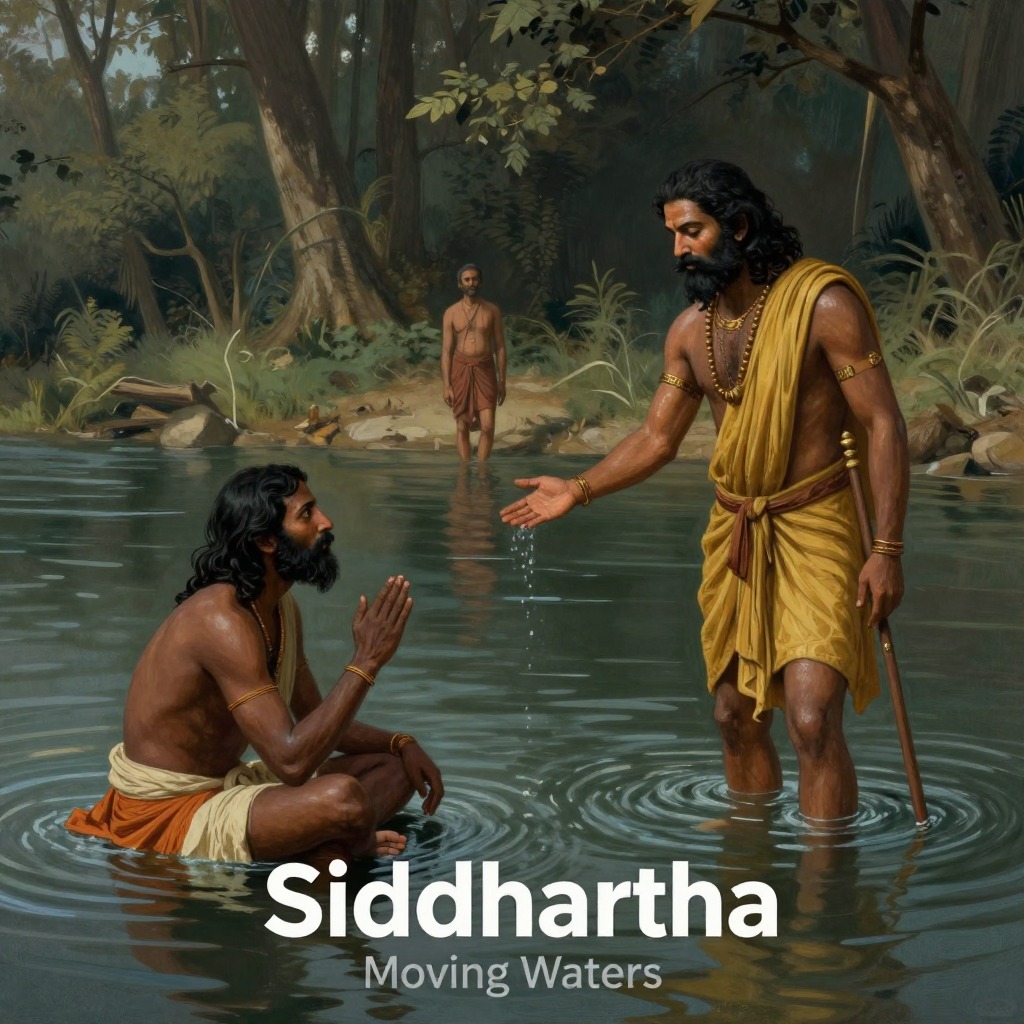
The phrase enters the story when Siddhartha, having just left the grove of Gotama the Buddha and crossed the river as a young man, thanks the ferryman Vasudeva for his hospitality. Siddhartha, who has no gift or payment to offer, apologizes for his poverty. Vasudeva responds with a serene certainty: "Surely. This too, I have learned from the river: everything is coming back! You too, Samana, will come back." The ferryman speaks not from abstract philosophy but from a lifetime of listening to the water. He has learned that the river, which flows constantly yet is always present, teaches that all things return in their own time. The words are offered as a blessing and a prediction, and Siddhartha, still a seeker, receives them with amusement rather than full comprehension. Vasudeva's quiet authority—his love for the river above all else, his habit of listening to it and learning from it—gives the expression its first weight.
The River as Teacher of Recurrence
Years later, when Siddhartha returns to the river in despair after abandoning his life as a merchant and gambler, he begins to understand what Vasudeva meant. The river becomes his primary teacher, and the lesson of recurrence is the first and most profound one it imparts. Siddhartha learns that the river is "everywhere at once, at the source and at the mouth, at the waterfall, at the ferry, at the rapids, in the sea, in the mountains, everywhere at once," and that for it "there is only the present time, not the shadow of the past, not the shadow of the future." This realization leads him to see his own life as a river: the boy Siddhartha, the man Siddhartha, and the old man Siddhartha are separated only by a shadow, not by anything real. The river's voice, which he learns to hear as the holy Om, contains all voices—of kings, warriors, bulls, night birds, women giving birth, sighing men, and a thousand others—and when heard together they speak the single word of perfection. The river teaches that everything is always present, always returning, and that the apparent passage of time is a deception.
Confirmation Through Suffering: The Son's Departure
The most painful confirmation of the expression comes when Siddhartha's own son runs away. Siddhartha, who had once left his own father standing in silent vigil all night to win permission to become a Samana, now finds himself on the other side of that same door. He chases after the boy, driven by a love that has made him as foolish and blind as any childlike person. At the river, he hears it laugh at him. Looking into the water, he sees his own face reflected, and it reminds him of his father's face. He remembers how he had forced his father to let him go, how he had left and never returned, and he realizes that his father must have suffered the same pain he now feels. The river laughs because it is showing him the pattern: everything comes back, the same suffering, the same separation, the same love, the same loss. Siddhartha understands that he cannot protect his son from this cycle any more than his father could protect him. The wound of this knowledge burns, but it also begins to blossom into wisdom.
The Stone and the Eternal Present
In his final conversation with Govinda, Siddhartha extends the logic of "everything is coming back" to the smallest objects. He picks up a stone and explains that it is not merely a stone that might one day become soil, then a plant, then an animal, then a human being. Rather, the stone is already everything: it is animal, god, Buddha, and stone simultaneously. He loves it not for what it might become but for what it already is, because in the eternal present all transformations are already contained. This is the same insight the river taught him: that time is not real, that the gap between the world and eternity, between suffering and bliss, between evil and good, is a deception. The stone, like the river, like every person, contains the whole cycle within itself. Everything is coming back not as a future event but as a present reality.
Vasudeva's Legacy and the River's Laugh
Vasudeva, who first spoke the words, embodies the truth of them more fully than anyone. He has spent his life by the river, listening, and has learned that the river is not an obstacle but a teacher. He tells Siddhartha that for most people the river is merely something to cross on the way to money, business, weddings, or pilgrimages, but for a few—four or five among thousands—it becomes sacred. Vasudeva himself is one of those few, and his entire existence is a demonstration that everything comes back: the same water flows past day after day, the same ferry carries travelers, the same lessons repeat. When he finally leaves, walking into the forest to join the oneness, he does so with a bright smile, having waited for the hour when Siddhartha would understand what he had been taught all along. The river's laugh, which Siddhartha hears at his most desperate moment, is the same laugh that confirms the truth of Vasudeva's parting words: everything is coming back, and that is not a cause for despair but for joy.
Significance: The Cycle as Liberation
The expression "Everything Is Coming Back" ultimately redefines what it means to find peace. Siddhartha's early quest was for escape—from the self, from suffering, from the cycle of rebirth. He sought a final liberation, a Nirvana that would end the turning wheel. But the river teaches him that the wheel itself is the point. There is no escape from recurrence because recurrence is the nature of existence. The goal is not to stop the cycle but to hear it fully, to love it, to consent to it. When Siddhartha finally hears the thousand voices of the river as a single Om, he stops fighting his fate. His wound blossoms, his suffering shines, and his self flows into the oneness. Everything is coming back, and that is the perfection. The expression thus becomes the novel's answer to the problem of suffering: not transcendence but acceptance, not escape but embrace, not a final destination but an eternal return that is itself the goal.