Maya
In Hermann Hesse's Siddhartha, the concept of Maya—the cosmic illusion that veils the true, unified nature of reality—functions as a central philosophical obstacle and, ultimately, a key to enlightenment. For much of his journey, Siddhartha regards the visible world as Maya, a worthless deception to be penetrated and discarded in his search for the eternal Atman. Yet his final realization is not the rejection of Maya but its integration: he learns to love the world of appearances as a perfect, simultaneous expression of the divine, a truth that the river's thousand voices teach him to hear as the single word Om.
The Veil of Deception
In his youth as a Brahman and a Samana, Siddhartha sees the world through the lens of Maya as a contemptible illusion. He views the colorful diversity of the world—the blue sky, the yellow fields, the flowing river—as "the veil of Maya," a pointless and coincidental diversity of mere appearances that the deeply thinking Brahman scorns in his quest for unity. This perspective leads him to distrust his own senses, calling his eyes and tongue "coincidental and worthless forms without substance." He believes that the true essence of things lies beyond the visible, on "the other side of" the world, and that the world itself is a deception to be overcome. This attitude is reinforced during his ascetic years, when he sees merchants trading, princes hunting, and lovers loving, and concludes that "it all lied, it all stank of lies, it all pretended to be meaningful and joyful and beautiful, and it all was just concealed putrefaction." For the young Siddhartha, the world is a trap, and Maya is its name.
The Awakening to the Visible
A profound shift occurs after Siddhartha leaves Gotama the Buddha. In a moment of awakening, he opens his eyes and sees the world as if for the first time. The blue, the yellow, the green, the river, and the forest are no longer a "spell of Mara" or a "veil of Maya" but are beautiful, mysterious, and magical in their own right. He realizes that the purpose and essential properties of things are not hidden behind them but are in them, in everything. This marks a decisive break from his earlier worldview: he no longer scorns the visible world as a deception but instead seeks to be at home in it, to look at it "without searching, thus simply, thus childlike." The world of appearances, once a despised illusion, becomes a source of joy and learning.
The River's Teaching: Beyond Illusion and Reality
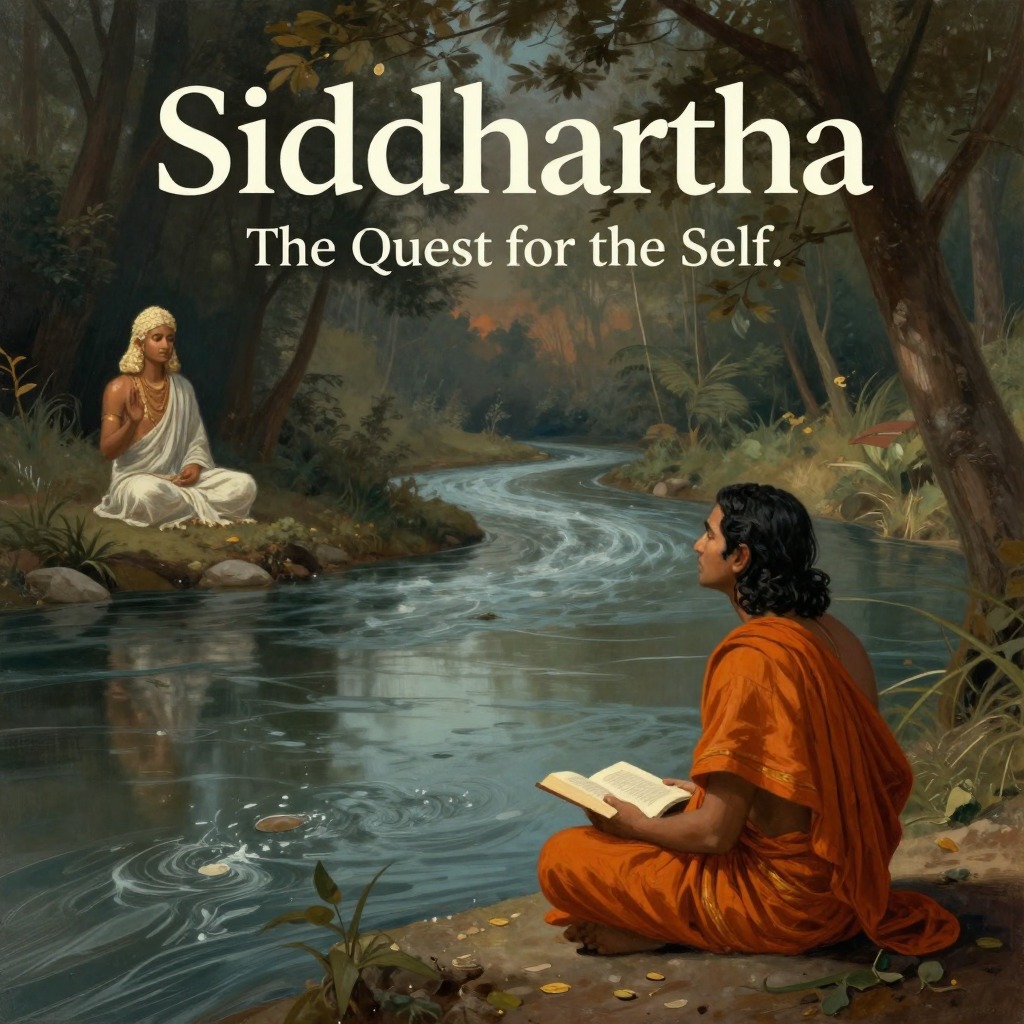
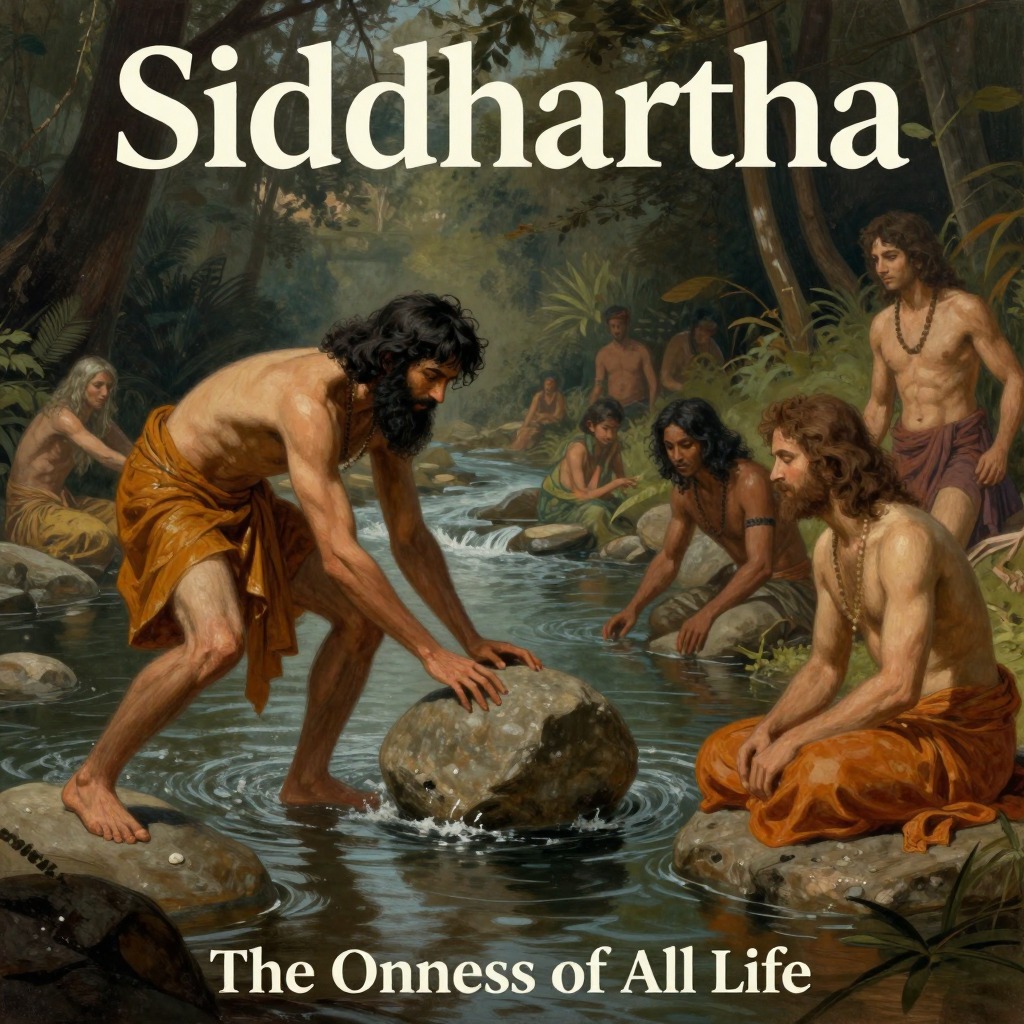
Siddhartha's final understanding of Maya is shaped by his years by the river with the ferryman Vasudeva. The river teaches him that the world is not a mere illusion to be escaped but a perfect, simultaneous whole. When Govinda, in their final meeting, questions whether the stone, the tree, and the river are real or just a "deception of the Maja," Siddhartha responds that he does not care whether things are illusions or not, because he himself would then also be an illusion, and thus they are always like him. This is the heart of his mature philosophy: the world of appearances is not to be despised or explained away but loved. He learns to love the stone not for what it might become but for what it already is—a stone that is also animal, god, and Buddha, each one praying the Om in its own way. The river's laugh, which he hears when he considers returning to the city to find his son, is the laugh of Maya itself—the recognition that all suffering, all desire, and all separation are part of a single, perfect, and eternal game. In the end, Siddhartha does not transcend Maya; he embraces it, finding in its thousand forms the single, indivisible reality of Om.