Nirvana
Nirvana, in the world of Hermann Hesse's Siddhartha, represents the highest spiritual goal: a state of complete liberation from suffering and the endless cycle of rebirth, known as Sansara. It is the promise held out by every teacher the protagonist encounters, from the Samanas to the Buddha himself, yet Siddhartha's journey ultimately reveals that Nirvana is not a destination to be reached through doctrine but a state of being that must be realized within the self, in the fullness of the present moment.
Nirvana as a Teachable Goal
From his earliest days as a Brahman's son, Siddhartha is surrounded by the promise of a final release. The Samanas, with whom he spends three years, practice extreme self-denial—fasting for fifteen or twenty-eight days, standing in the sun until pain ceases, cowering in thorn bushes until blood no longer flows—all in the hope of achieving a state where "the end of the causes, where an eternity without suffering began" . Yet Siddhartha comes to see this as a mere "short numbing of the senses," no different in essence from the drunkard's escape . When the myth of Gotama, the Buddha, spreads through the land, it carries the promise that he "had overcome the suffering of the world in himself and had halted the cycle of rebirths" and "had reached the nirvana and never returned into the cycle" . For Govinda, this is the definitive path. He takes refuge in Gotama's teachings, believing that by following the rules he will attain the same liberation. But Siddhartha, even after hearing the Buddha's sermon on the Four Noble Truths and the Eightfold Path, remains unconvinced. He tells the Buddha that no one can obtain salvation "by means of teachings" , because the teachings, however clear, cannot convey the mystery of what the Buddha himself experienced in the hour of enlightenment. Nirvana, for Siddhartha, is not a concept to be learned but a reality to be lived.
The Worldly Life and the Loss of the Goal
After leaving Gotama, Siddhartha plunges into the world of the senses, becoming a merchant under Kamaswami and a lover to Kamala. For many years, he lives a life of wealth, lust, and power, and the bright state of awakening he once knew becomes a distant memory. The holy source within him grows quiet. He becomes a gambler, losing and winning fortunes with a rage that masks a deep self-hatred, and he feels the "disease of the soul, which rich people have" . In this period of Sansara, the very concept of Nirvana seems to recede. The wheel of asceticism and thinking in his soul turns slowly, close to coming to a standstill . It is only when he reaches the depths of disgust, standing by the river and contemplating suicide, that the word "Om" rises unbidden to his lips, and he realizes the foolishness of his despair. This moment of crisis, this "great vomiting" of his old life, is the necessary prelude to a new understanding.
The River's Teaching: Nirvana as the Oneness of All Things
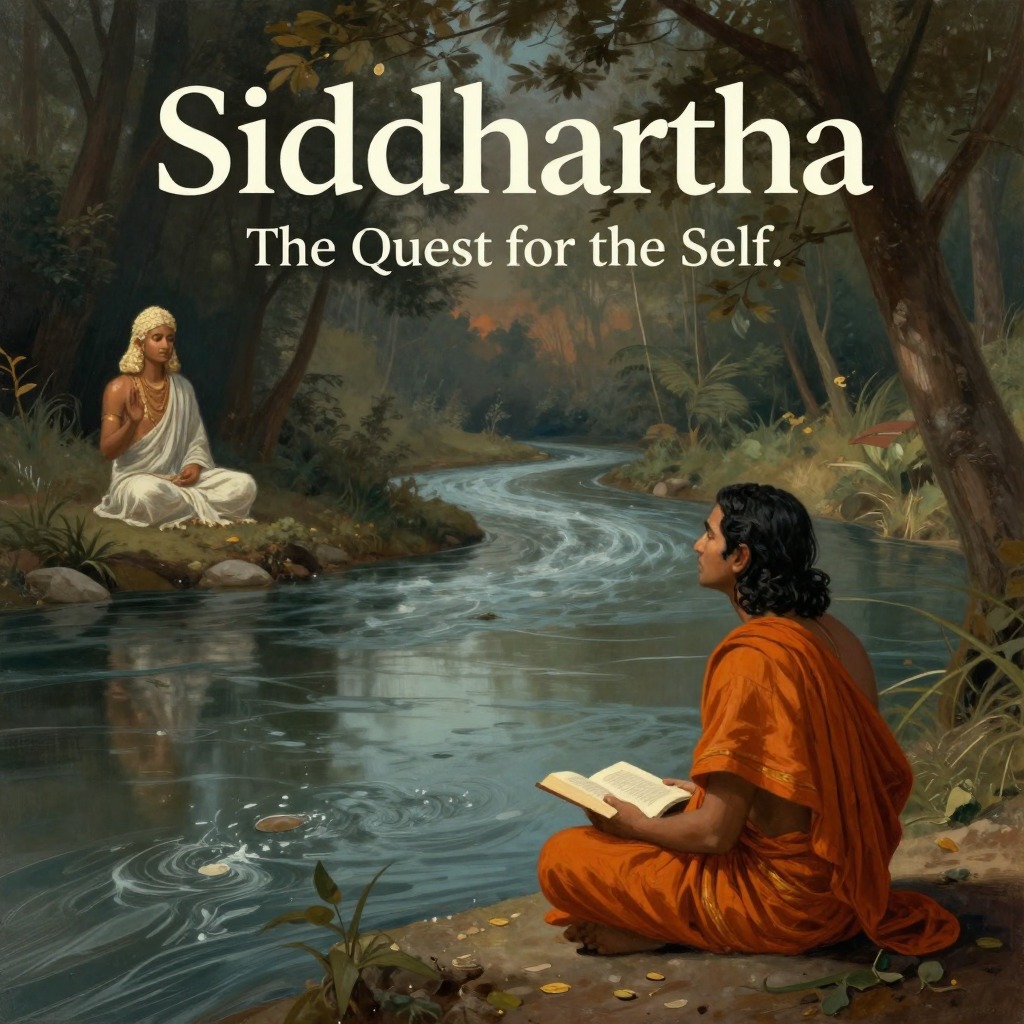
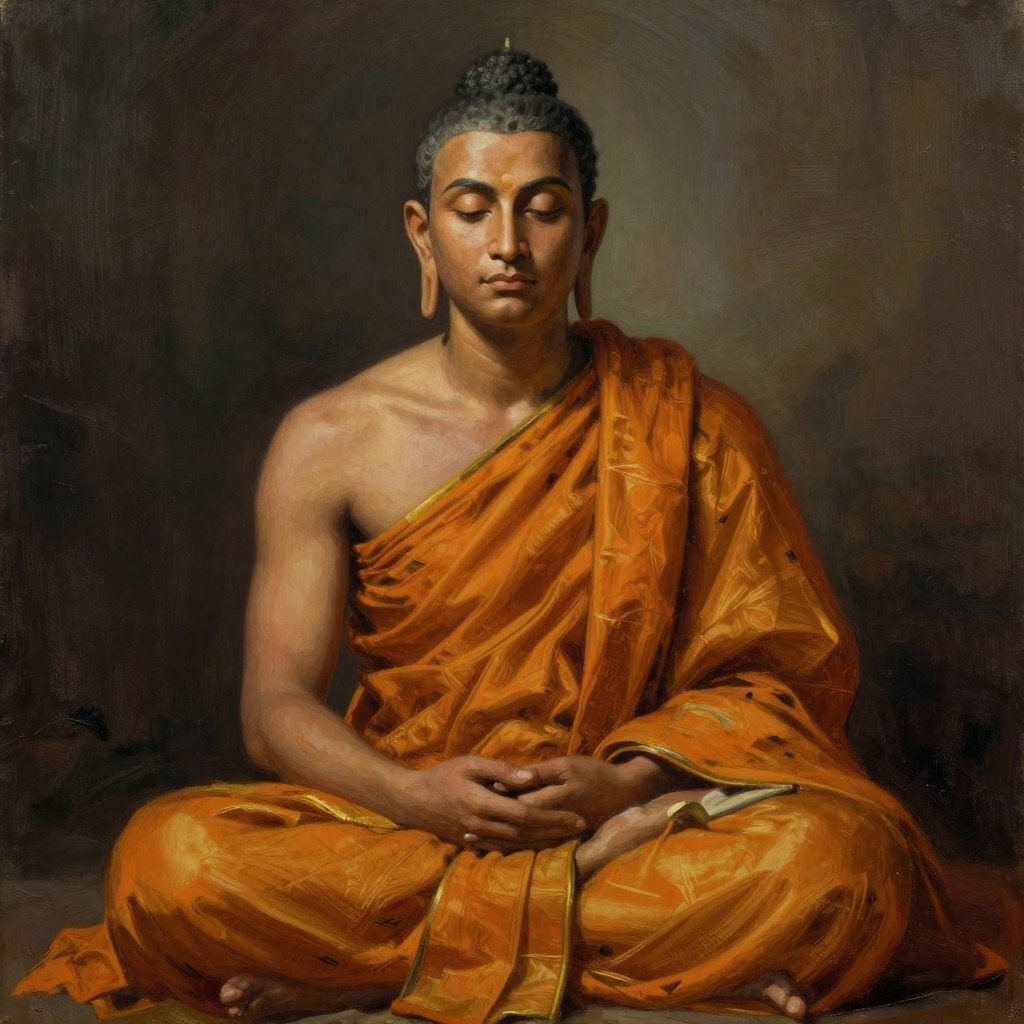
Living as a ferryman with Vasudeva, Siddhartha learns to listen to the river. The river teaches him that time is not real, that the boy Siddhartha, the man Siddhartha, and the old man Siddhartha are not separate but one . This insight transforms his understanding of Nirvana. He later explains to Govinda that "the opposite of every truth is just as true" . The world cannot be divided into Sansara and Nirvana, deception and truth, suffering and salvation, because these are one-sided concepts. "The sinner," he says, "is not on his way to become a Buddha, he is not in the process of developing... within the sinner is now and today already the future Buddha" . The world is perfect in every moment; all sin already carries divine forgiveness, all infants already have death, all dying people the eternal life . For Siddhartha, Nirvana is no longer a future state to be attained but a present reality to be recognized. It is the oneness of all life, the smile of simultaneousness above the thousand births and deaths. When Govinda, in their final meeting, kisses Siddhartha's forehead, he sees a vision of all forms—fish, child, murderer, god—flowing into one another, and above them all, the same smile he had seen on the face of Gotama, the smile of the perfected ones .
The Limits of Words
Siddhartha's final teaching is that wisdom cannot be passed on. He tells Govinda that "salvation and virtue as well, Sansara and Nirvana as well, are mere words" . There is no thing which is Nirvana; there is only the word. The true Nirvana is not a concept to be grasped but a state of being that is lived, a readiness of the soul to feel the oneness of all existence. It is the love of a stone, the listening to the river's thousand voices, the smile that shines from a face that has stopped fighting fate. In this sense, Siddhartha does not reject the goal of Nirvana; he redefines it as the full, loving acceptance of the world as it is, in every moment, which is the very essence of the perfected one's smile.