The Yellow Robe
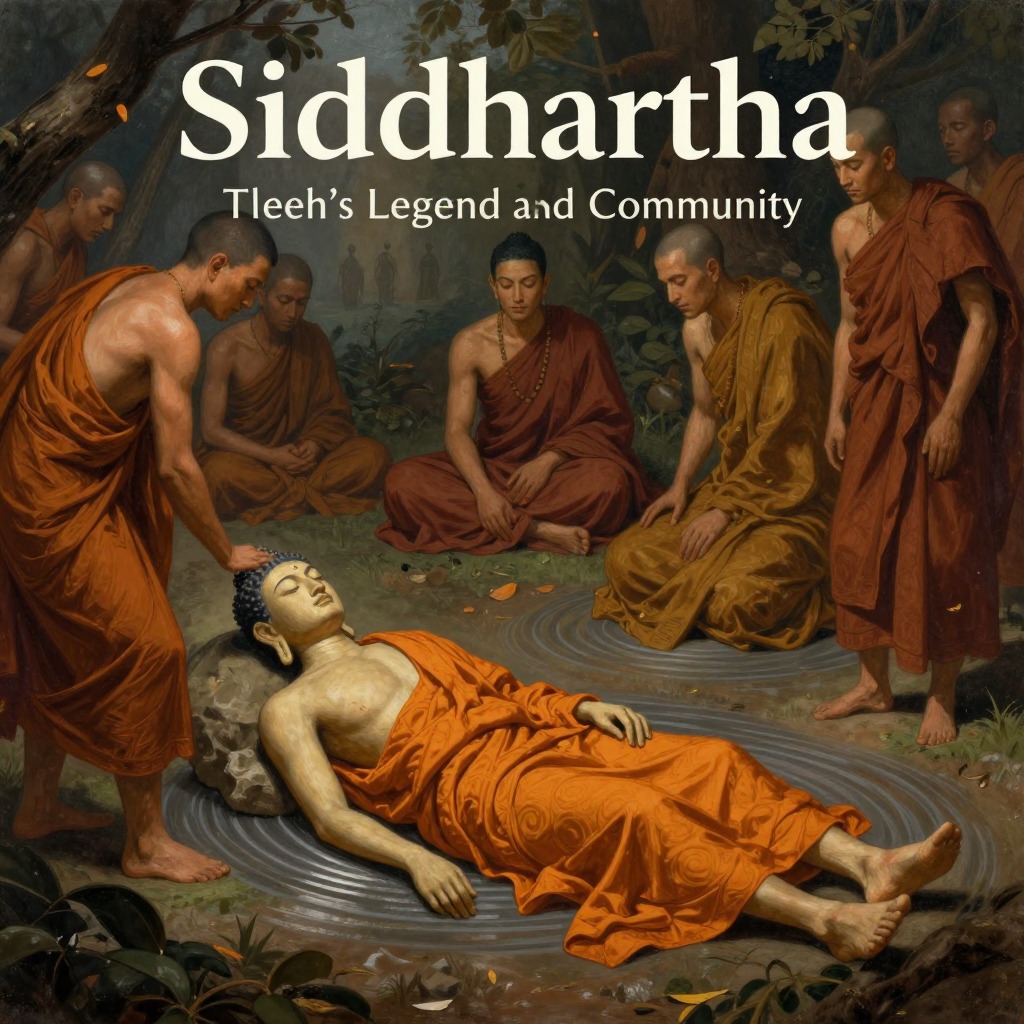
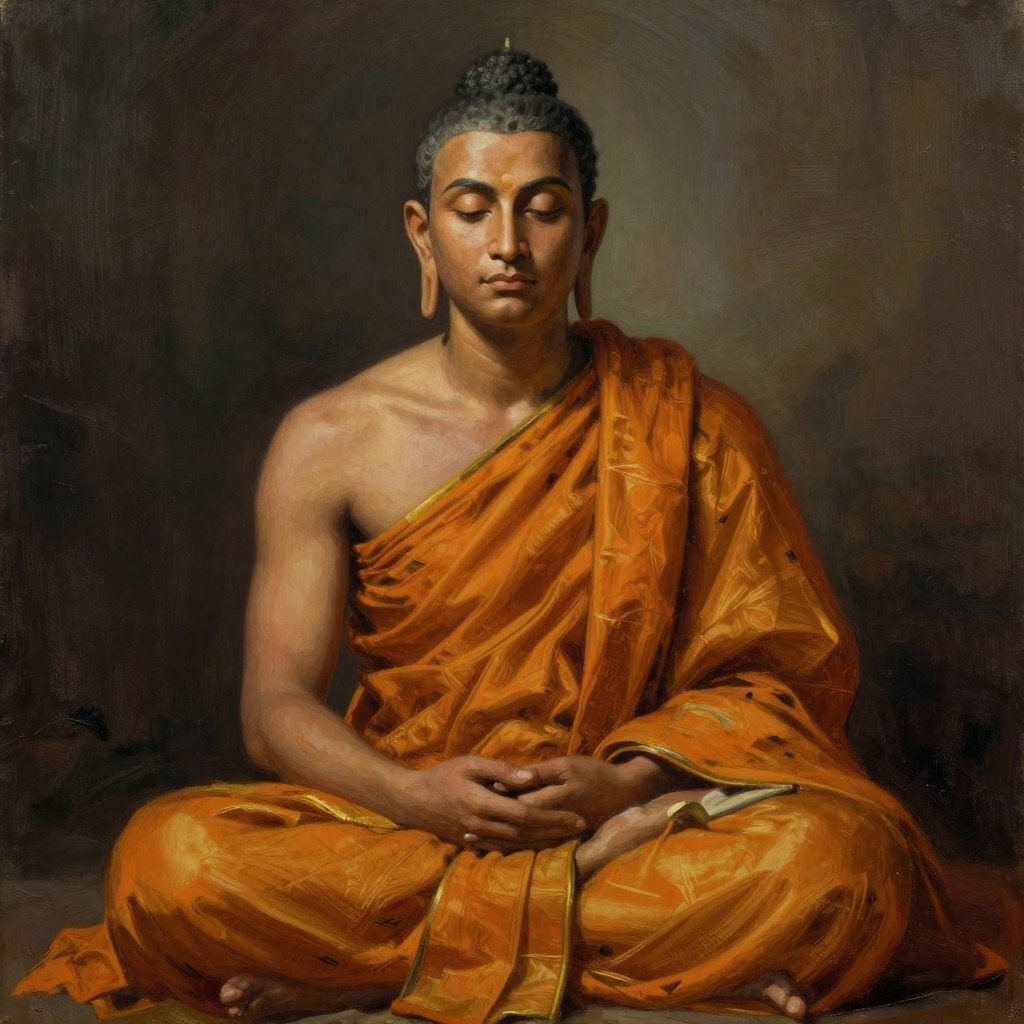
The Yellow Robe is the distinctive garment of the Buddhist monastic community, worn by Gotama the Buddha and his disciples. It first appears in the narrative when Siddhartha and Govinda arrive at the grove of Jetavana, where they see monks walking in yellow robes under the trees, sitting in deep contemplation or engaged in spiritual conversation. The robe is a uniform of renunciation: it signifies that its wearer has left behind home, family, possessions, and social status to follow the path of the Buddha. When Govinda takes refuge in the teachings, he is dressed in the yellow robe by one of Gotama's oldest monks, marking his formal entry into the community. The robe thus becomes a visible boundary between the life of the ascetic seeker and the life of the world.
The Robe as a Symbol of the Teachings
The Yellow Robe is inseparable from the teachings of Gotama. When Siddhartha first sees the Buddha walking silently to collect alms, he recognizes him not by any outward distinction from the hundreds of other monks in yellow robes, but by the perfection of his calm, the quietness of his appearance, and the absence of searching or desire. The robe itself does not confer holiness; it is the inner state of the wearer that matters. Yet the robe remains the external sign of a commitment to the Eightfold Path and the Four Noble Truths. When Govinda later appears to Siddhartha by the river, he is still wearing the yellow robe, now aged, and Siddhartha immediately identifies him as a follower of Gotama. The robe endures as a marker of a lifelong dedication, even as the wearer ages and the search continues.
Contrast with Worldly Attire
The Yellow Robe stands in sharp contrast to the fine clothes Siddhartha wears during his years as a merchant and lover. When he meets Govinda after his awakening by the river, Govinda does not recognize him because he is wearing a rich man's garments and shoes, and his hair is perfumed. Siddhartha explains that he has been a rich man, and that the world of appearances is not eternal. He later offers his fine clothes to the ferryman Vasudeva in exchange for passage, and Vasudeva gives him an old loincloth instead. The exchange of worldly clothes for the simple garb of a ferryman mirrors Siddhartha's inner transformation: he sheds the identity of the wealthy merchant and returns to a life of simplicity, though he never dons the yellow robe. The robe thus represents a path he considered but ultimately did not take, remaining a symbol of the teachings he respected but could not follow.
The Robe in the Context of Pilgrimage and Death
During the final days of Gotama's life, monks in yellow robes flock to the dying Buddha, and the news of his impending death spreads through the land. Kamala, who has given her pleasure-garden to the monks and taken refuge in the teachings, sets out on a pilgrimage to see the Buddha, wearing simple clothes and walking on foot. She is bitten by a snake and dies at the ferry, never reaching her goal. The yellow robe of the monks she had joined in spirit is absent from her own death scene, yet her devotion to the teachings is clear. The robe thus marks not only the living community of monks but also the broader circle of lay followers who have taken refuge in the Buddha's path. When Siddhartha later sees monks walking in Kamala's former garden, he reflects on his own life and the choices that led him away from that path.
The Robe and the Final Vision
In the final scene of the novel, Govinda, still wearing the yellow robe, comes to the ferry seeking wisdom. He is old, and his search has not ended. Siddhartha, now a ferryman in simple clothes, speaks to him of wisdom that cannot be taught. When Govinda kisses Siddhartha's forehead, he has a vision of the thousand faces of existence, culminating in the smile of the perfected ones—the same smile he had seen on Gotama's face. The yellow robe Govinda wears is the garment of a lifelong seeker, but the vision he receives comes not from the robe or the teachings it represents, but from the living presence of Siddhartha, who has found peace outside the monastic path. The robe remains a symbol of the search, while the smile of the perfected ones transcends all external forms.