The Wound
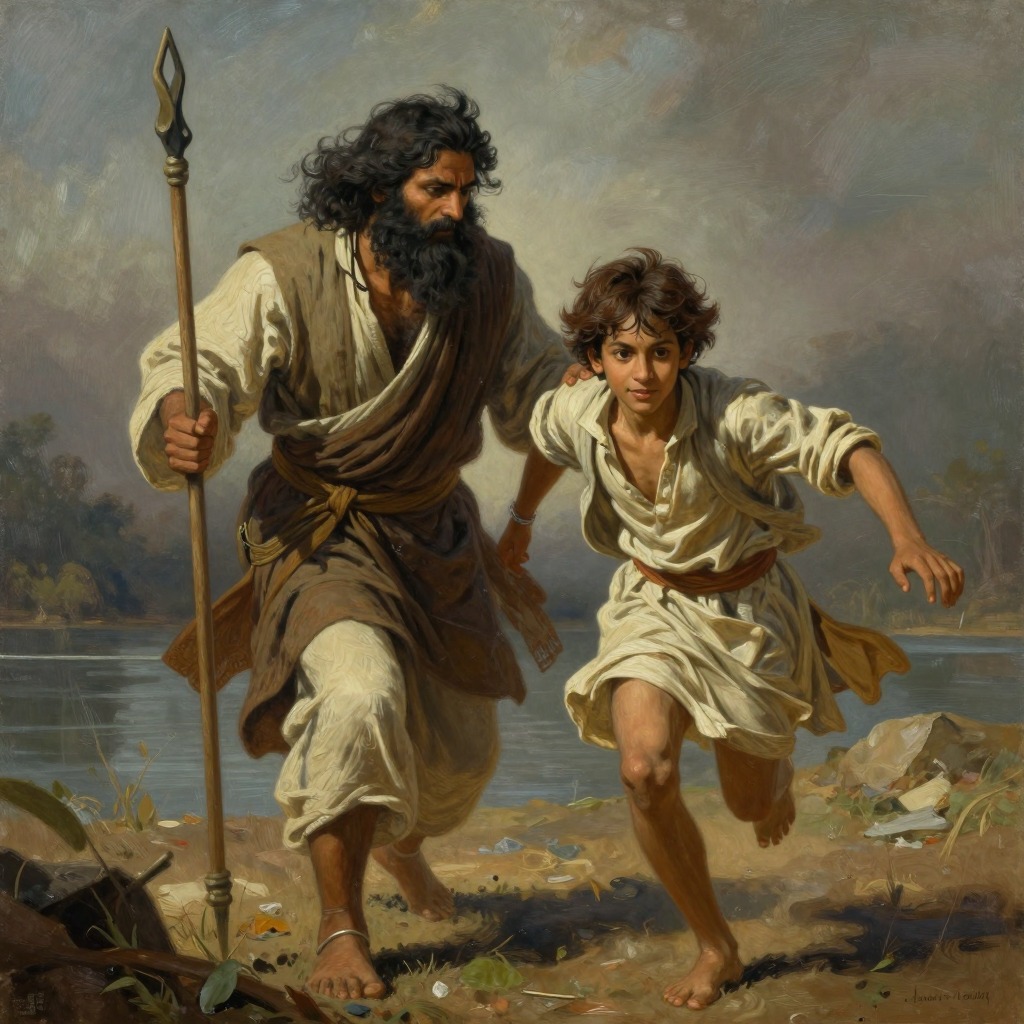
The Wound is the central metaphor for Siddhartha's final and most profound transformation, a painful love for his son that he must learn to let blossom rather than heal. It represents the culmination of his journey from a detached, self-sufficient seeker to a man fully immersed in the human condition, suffering the blind, passionate love he once scorned in the childlike people. This wound, born from the departure of his son, becomes the crucible in which his final wisdom is forged, teaching him that true peace comes not from escaping pain but from embracing it as part of the oneness of all life.
Origin and Nature of the Wound
The wound is inflicted not by a physical blow but by the departure of Siddhartha's son, who runs away after a bitter outburst, stealing the ferrymen's boat and coins. Siddhartha, who had once boasted of his ability to think, wait, and fast, finds himself utterly powerless against this new pain. He realizes that his love for the boy is a passion, something very human, a part of Sansara, a murky source and dark waters. Yet he also feels it is necessary, coming from the essence of his own being, and that this pleasure must be atoned for and this pain endured. The wound is not a flaw to be excised but a condition of his newfound humanity; he has become a childlike person, suffering for the sake of another, lost to a love, having become a fool on account of love. This marks a radical departure from his earlier life, where he had felt different from and superior to others, watching them with mocking disdain.
The Wound's Persistence and the Struggle to Let Go
For a long time, the wound continues to burn. Siddhartha envies every traveller he ferries who is accompanied by a son or daughter, thinking bitterly that even thieves and robbers possess this sweetest of good fortunes while he does not. He nurtures his love and tenderness in his heart, allowing the pain to gnaw at him, committing all the foolish acts of love. The wound does not go out by itself. In a moment of intense yearning, he decides to cross the river and go to the city to find his son, but the river itself laughs at him, its voice sounding strange and clear. Looking into the water, he sees his own face reflected, and it reminds him of his father's face, the Brahman. He remembers how he had forced his father to let him go and had never returned, and he realizes that his father must have suffered the same pain. The river's laugh reveals the comedy of this repetition, this running around in a fateful circle. The wound is not yet blossoming; his heart is still fighting his fate, and cheerfulness and victory are not yet shining from his suffering.
Confession and the Transformation of the Wound
Siddhartha finally opens his heart to Vasudeva, the master of listening, telling him everything about the burning wound, his envy, and his futile fight against it. As he speaks, he feels his pain and fears flowing over to his listener, and his secret hope flowing back. Showing his wound to Vasudeva is like bathing it in the river, until it has cooled and become one with the water. In this act of confession, Siddhartha feels that Vasudeva is no longer a human being but the river itself, God himself, the eternal. He realizes that he himself has almost reached the same state. Together, they listen to the river, and Siddhartha hears a thousand voices—of joy and suffering, good and bad, laughing and sad—all intertwined and connected. He no longer ties his soul to any particular voice but hears them all, perceiving the whole, the oneness. The great song of the thousand voices consists of a single word: Om, the perfection. In this hour, his wound blossoms, his suffering shines, and his self flows into the oneness. He stops fighting his fate and stops suffering, his face flourishing with the cheerfulness of a knowledge that is in agreement with the flow of events.
The Wound as a Path to Wisdom
The wound ultimately becomes the vehicle for Siddhartha's final realization. It teaches him that wisdom cannot be passed on and that the opposite of every truth is just as true. Through the pain of the wound, he learns to love the world, not to despise it, and to look upon it and himself with admiration and great respect. The wound is the final, necessary suffering that allows him to see the perfection in every moment, to understand that the sinner is already the future Buddha, and that all sin already carries divine forgiveness. In his final meeting with Govinda, the wisdom born from this wound is visible in Siddhartha's smile, a smile of oneness above the flowing forms, a smile of simultaneousness above the thousand births and deaths, precisely the same as the smile of Gotama, the Buddha. This smile, which Govinda sees and kisses, is the ultimate testament to the wound that has blossomed.