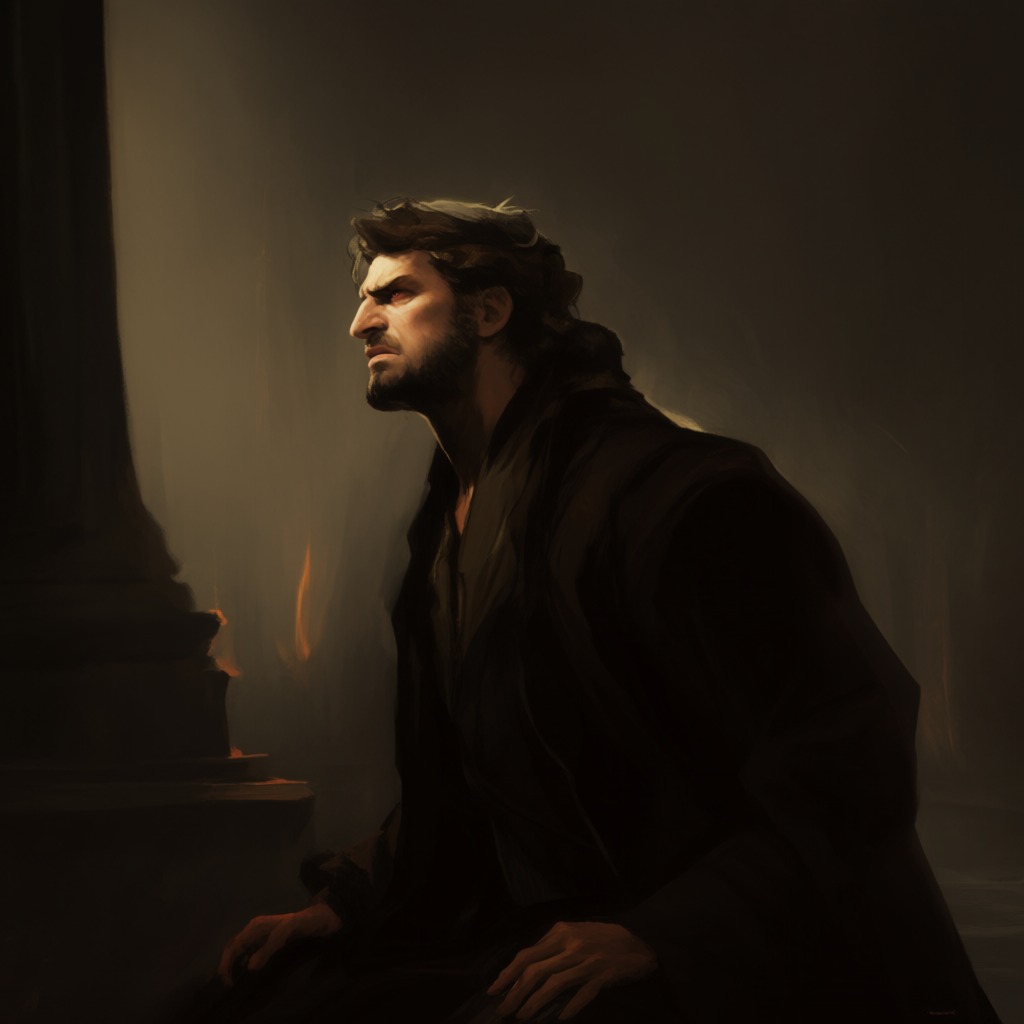
Birth of Zalmai
Zalmai, the son of Laila and Rasheed, is born in the spring of 1993, a year after the Mujahideen factions turned Kabul into a battlefield. His arrival transforms the already strained dynamics of the household, marking a new phase of Rasheed's cruelty and Laila's suffering. Where Aziza, Laila's daughter by Tariq, was met with Rasheed's cold indifference, Zalmai is immediately celebrated. Rasheed, who had long pressured Laila for a son, sees the boy as a validation of his own manhood and a vessel for his ambitions. The birth does not bring unity but instead sharpens the lines of favor and neglect, driving a wedge between the family members and accelerating the tragedy that will consume them all.
Zalmai's Birth and Rasheed's Response
Zalmai is born at home, delivered by Mariam and Laila without medical assistance, in a city under siege by its own defenders. The labor is difficult, and Laila endures it in the same bed where she has suffered Rasheed's beatings. When the baby is placed in her arms, she feels a surge of love that surprises her, but the moment is quickly overshadowed by Rasheed's reaction. He enters the room, takes the infant, and holds him up as if presenting a trophy. From that day forward, Zalmai becomes the center of Rasheed's world. He buys the boy a new crib, new clothes, and a battery-operated mobile with bumblebees, while Aziza's needs are ignored. He takes Zalmai to his shoe shop every day, letting the boy crawl under the workbench and play with scraps of leather, and he speaks to him with a patience and tenderness he has never shown anyone else. Laila watches as her son is gradually absorbed into Rasheed's orbit, becoming a tool of the man's pride and a weapon of his control.
The Transformation of Zalmai
As Zalmai grows, he becomes a mirror of his father's worst traits. When Rasheed is present, Zalmai is defiant, mischievous, and quick to mock his mother and sister. He learns that his father's approval is conditional on his own displays of dominance, and he performs this role with increasing skill. He throws tantrums when he does not get his way, lights matches, and chews on cigarettes, all of which Rasheed praises as signs of intelligence. When Rasheed is away, however, Zalmai is sweet and affectionate, climbing into Laila's lap and singing songs. This split personality confuses and wounds Laila, who sees her son being corrupted by the very man she has come to hate. The boy's loyalty to his father becomes a barrier between mother and child, and Laila finds herself mourning the son she might have raised in a different world.
The Erosion of Laila's Position
With Zalmai's birth, Laila's status in the house plummets. Rasheed, who once treated her as a prized possession, now regards her as a failed vessel. He mocks her appearance, her intelligence, and her parenting. He refuses to let her hold Zalmai when he is present, and he glares at her if the boy reaches for her. The nightly arguments grow more violent, and Rasheed's beatings become more frequent and more severe. Laila's body bears the marks of his belt and fists, and she learns to move quietly, to avoid his gaze, to anticipate his rages. The only solace she finds is in her secret bond with Mariam, who has also been pushed to the margins. Together, they care for Aziza and Zalmai, sharing the work of survival in a house that has become a prison.
Thematic Significance
Zalmai's birth is not a moment of joy but a turning point that crystallizes the novel's central themes of patriarchal power, maternal sacrifice, and the cyclical nature of abuse. Rasheed's love for his son is not genuine affection but a form of ownership, a way to extend his control over the household and to punish Laila for her failure to produce a male heir earlier. Zalmai, in turn, becomes a casualty of this toxic dynamic, his innocence eroded by his father's influence. The birth also deepens the bond between Laila and Mariam, who recognize in each other a shared experience of suffering and a shared determination to protect the children. In the end, Zalmai's existence is both a source of love and a reminder of the violence that surrounds it, a child caught between the warring forces of his parents' marriage.