Murder of Rasheed
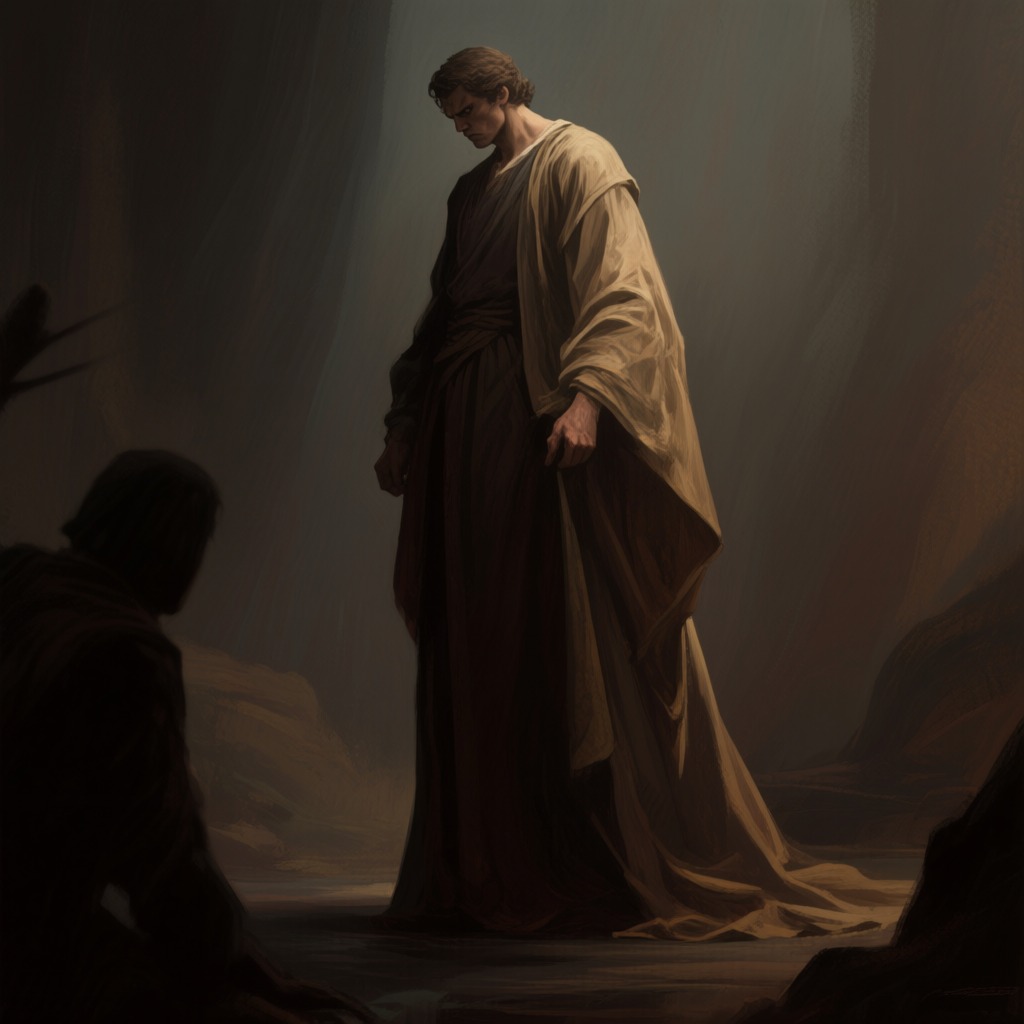
Mariam had endured Rasheed's violence for twenty-seven years, but the moment she saw him on top of Laila, his hands clamped around her windpipe and her face turning blue, she knew he meant to carry through. He had taken so much from her already; she would not watch him take Laila too. She backed away, left the room, ran down the hallway, burst through the front door, and crossed the yard to the toolshed. There she grabbed the shovel. When she returned, Rasheed did not notice her. He was still on top of Laila, his eyes wide and crazy, his hands wrapped around her neck. Laila was no longer struggling. Mariam steadied her feet, tightened her grip around the shovel's handle, raised it, and said his name. She wanted him to see. He looked up. She swung. The blow knocked him off Laila. He touched his head with the palm of his hand, looked at the blood on his fingertips, then at Mariam. For a moment she thought she saw his face soften, something like respect or regret passing between them. But then his upper lip curled back into a spiteful sneer, and Mariam knew the futility of not finishing this. If she let him walk now, how long before he fetched the key from his pocket and went for the gun upstairs in the room where he had locked Zalmai? In his eyes she saw murder for them both. So she raised the shovel as high as she could, arching it so it touched the small of her back, turned it so the sharp edge was vertical, and brought it down with everything she had. It occurred to her that this was the first time she was deciding the course of her own life. Afterward, Rasheed lay on his back, staring at nothing with an unblinking, fish-mouthed expression, a bit of pink foam dribbling from his mouth. Laila saw the shovel and groaned. Mariam sat near him, calm and motionless, her hands in her lap. She did not appear agitated or frightened, merely preoccupied, thoughtful. She told Laila they had to move him, that Zalmai could not see this. They wrapped him in a bedsheet and dragged him to the toolshed, leaving him behind the workbench. Then Mariam washed her hands, ran them through her hair, and said she needed the night to think things over. She told Laila there was a way, and she just had to find it. She spoke of leaving together—Laila, the children, and Tariq too—going someplace remote and safe where they could make new lives. But in the morning, Mariam revealed that the plan was only for Laila. She would not run. She had killed their husband, deprived Zalmai of his father, and could not escape her son's grief. She said that for her it ended there, that everything she had ever wished for as a little girl Laila and her children had already given her. She made Laila promise to take the bus to visit Aziza, to keep her head low. When Laila turned the corner, she saw Mariam at the door, wearing a white scarf and a dark blue sweater, a crest of gray hair fallen loose over her brow. Mariam waved amiably. Laila never saw her again. At the trial, Mariam admitted to the killing. The middle judge, a dying Talib, said he believed she was not a wicked woman but that she had done a wicked thing and must pay. She signed her name beneath the sentence, remembering the last time she had signed a document, twenty-seven years before, at Jalil's table. On the way to Ghazi Stadium, a young Talib guard asked if she was afraid. She told him the truth: she was very afraid. He told her his mother had said his father was the bravest man she knew, but that he had cried like a child the morning the communists took him. He said it was normal to be scared, nothing to be ashamed of. For the first time that day, Mariam cried a little. When she was made to descend from the truck, her legs did not buckle. She did not have to be dragged. When she felt herself faltering, she thought of Zalmai, from whom she had taken the love of his life, and her stride steadied. Near the goalpost, she was told to kneel and look down. She did as she was told. Her final thoughts were a few words from the Koran. She thought of her entry into this world as a harami, an unintended thing, a weed. Yet she was leaving it as a woman who had loved and been loved back, a friend, a companion, a guardian, a mother. A person of consequence at last. It was not so bad, she thought, to die this way. This was a legitimate end to a life of illegitimate beginnings.