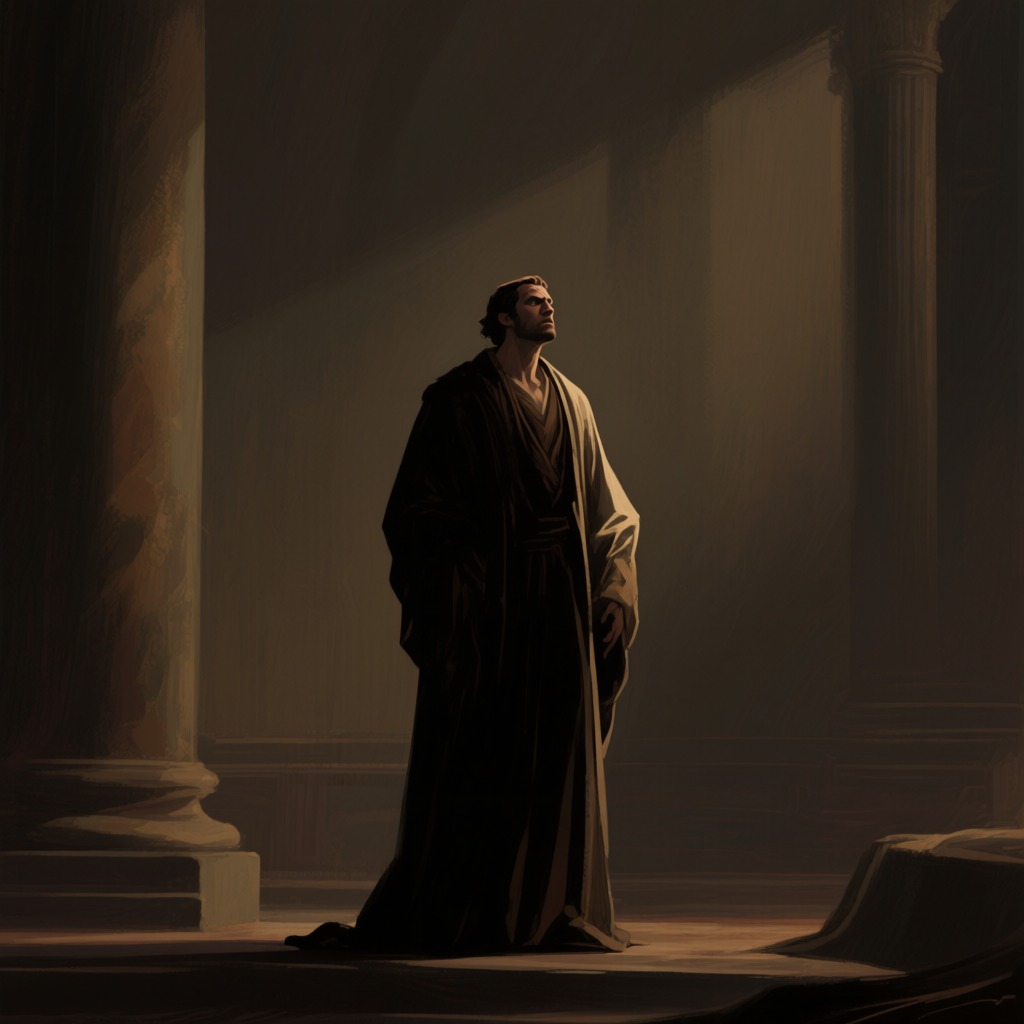
Hamza
Hamza is the son of Mullah Faizullah, the elderly village Koran tutor and akhund who taught Mariam to read and recite the Koran during her childhood in the kolba outside Gul Daman. Though Hamza appears only fleetingly in Mariam's early life, he later becomes the crucial link between Mariam's past and Laila's future, safeguarding a sealed tin box left by Jalil for decades and finally delivering it to Laila after Mariam's execution.
Identity and Background
Hamza is introduced as Mullah Faizullah's russet-haired son, a few years older than Mariam. When his father visited the kolba to tutor Mariam, Hamza sometimes accompanied him, though he remains a peripheral figure in those early scenes. His father, Mullah Faizullah, was the one who had taught Nana when she was a girl and who patiently guided Mariam's hand as she learned to write the letters of the alphabet. Hamza grew up in the shadow of this gentle, scholarly man, who twirled his tasbeh rosary and told Mariam stories of a two-headed snake in Isfahan and a watermelon that bore the word "Allah" in its seeds.
Custodian of Jalil's Legacy
Decades later, after Mariam has been executed by the Taliban and Laila has returned to Afghanistan, Laila travels to Herat and seeks out Mullah Faizullah's house in Gul Daman. The middle-aged man who opens the door is Hamza, now short, thin, and russet-haired, with a beard streaked with gray. He wears a chapan over his pirhan-tumban. When Laila tells him she has come about an old friend of his father's—Mariam, Jalil Khan's daughter—Hamza's face lights up with a smile that reveals missing and rotting teeth. He twists his neck, looking behind her eagerly, searching, and asks if Mariam is there. Laila tells him she has passed on, and the smile fades from his face.
Hamza reveals that Jalil Khan had given his father a sealed tin box a month or so before Jalil died, asking Mullah Faizullah to safeguard it for Mariam until she came to claim it. Mullah Faizullah kept the box for two years, and just before he passed away, he gave it to Hamza and asked him to save it for Mariam. But Mariam never came. Hamza kept the box unopened, never unlocking it, for all those years. He gives the olive-green tin box with fading gilt scrolls to Laila, along with a key, saying, "My father never unlocked it. Neither did I. I suppose it was God's will that it be you."
Role in the Narrative
Hamza also serves as Laila's guide to Mariam's origins. He leads her from the village down the road that connects Gul Daman to Herat, then points to a narrow gap in the tall grass where a rough, winding path leads to the clearing. He waits on a rock beneath a poplar while Laila crosses the dry streambed and walks toward the weeping willows to find the kolba where Mariam lived her first fifteen years. When Laila returns, he is still sitting there, and he stands up to accompany her back. Through Hamza, Laila is able to physically enter the space of Mariam's childhood, to sit in the ruined kolba and summon Mariam's face behind her eyelids, and to receive the letter and inheritance that Jalil had tried to send to his daughter too late.