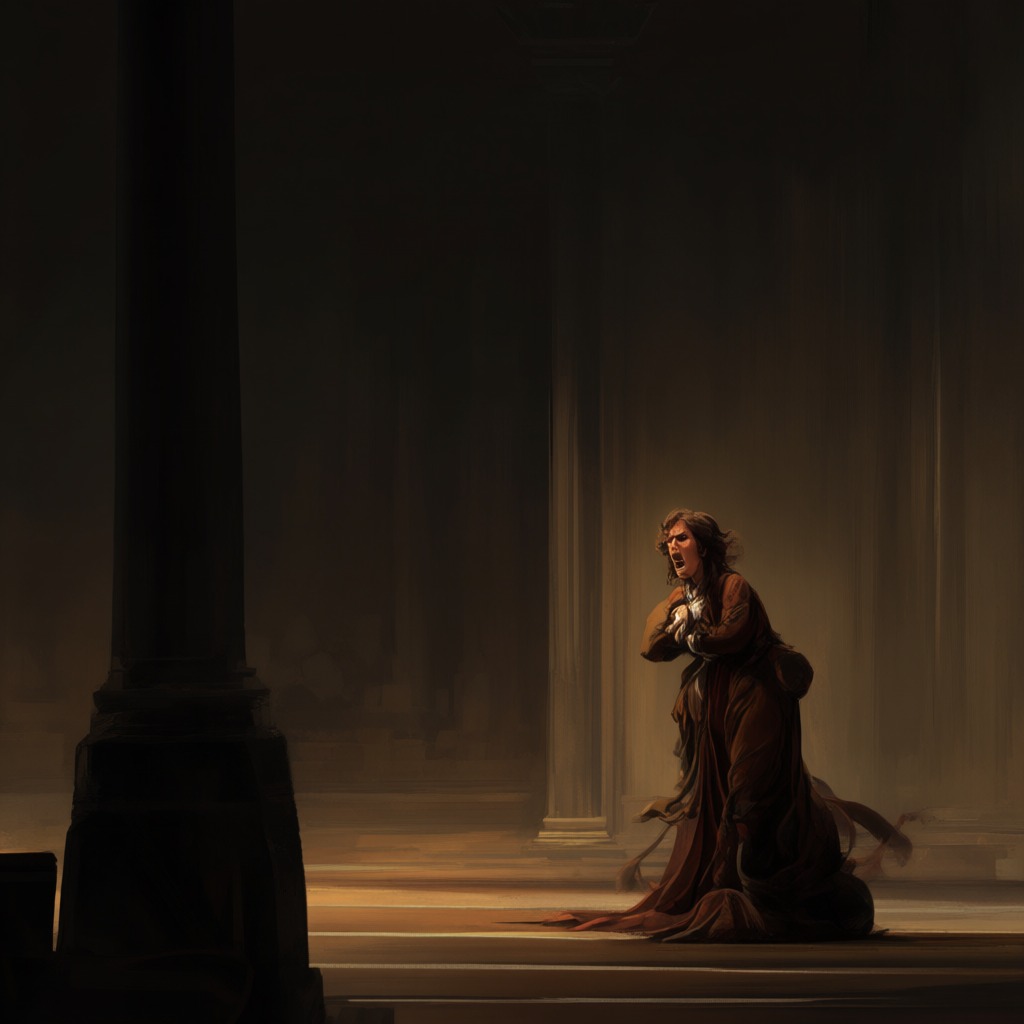
Mariam and Rasheed's marriage
Mariam and Rasheed's marriage begins as a transaction arranged by Mariam's father, Jalil, and his wives, who see it as a way to rid themselves of the shame of Mariam's illegitimate birth. At fifteen, Mariam is married to Rasheed, a shoemaker from Kabul who is at least forty years old and has already lost his first wife and son. The marriage is formalized in a hasty nikka ceremony, after which Mariam is immediately put on a bus to Kabul, severing her from the only life she has known.
Identity and Introduction
Mariam enters the marriage as a harami, an illegitimate child, a status that Rasheed and his world will never let her forget. Rasheed, a Pashtun from Kandahar, presents himself as a different breed of man, one who believes a woman's face is her husband's business only. He immediately imposes his will, forcing Mariam to wear a burqa and forbidding her from leaving the house without his company. He tells her, "Where I come from, one wrong look, one improper word, and blood is spilled." This initial assertion of control establishes the fundamental power imbalance of their union.
Arc Through the Plot: From Paternalism to Violence
In the early years, there are moments of relative peace. Rasheed takes Mariam around Kabul, buys her ice cream and a silk shawl, and she feels a flicker of kinship with him, especially after learning of his tragic past. However, this period is short-lived. Mariam's repeated miscarriages and stillbirths become the catalyst for Rasheed's escalating cruelty. He blames her for failing to give him a son, and his affection curdles into resentment and contempt. He mocks her, insults her, and begins to beat her. The violence becomes a regular feature of their life, with Rasheed using punches, slaps, kicks, and even forcing pebbles into her mouth as punishment for poorly cooked rice. Mariam lives in constant fear of his shifting moods, dreading the sound of his key in the lock.
Relationships and Conflict
The marriage is a closed system of domination and submission. Mariam's role is to endure, a lesson her mother Nana taught her: "Like a compass needle that points north, a man's accusing finger always finds a woman. Always." Rasheed's control is absolute; he is her sole provider and her primary tormentor. The arrival of Laila, a young neighbor whom Rasheed takes as a second wife after a rocket kills her parents, fundamentally alters the dynamic. Rasheed's attention shifts to Laila, whom he treats as a prized possession, while Mariam is relegated to the role of a servant. This creates a bitter rivalry between the two women, but they eventually form a powerful alliance against their shared oppressor.
Change and Ending
The marriage reaches its violent climax when Rasheed discovers that Tariq, Laila's childhood love, has returned. In a jealous rage, he beats Laila and attempts to strangle her to death. Mariam, who has come to love Laila and her daughter Aziza as her own family, cannot allow this to happen. She grabs a shovel and strikes Rasheed, killing him. This act of murder is the culmination of twenty-seven years of abuse. It is the first time Mariam has ever decided the course of her own life. She chooses to sacrifice herself to save Laila, confessing to the crime and accepting execution. In her final moments, she reflects that she is leaving the world as a woman who has loved and been loved back, a person of consequence at last.
Thematic Significance
The marriage of Mariam and Rasheed is a microcosm of the patriarchal oppression that pervades Afghan society. It illustrates how women are treated as property, their worth tied to their ability to bear sons and their obedience to their husbands. The marriage is a site of profound suffering, but it also becomes the crucible in which Mariam's strength and capacity for love are forged. Her final, violent act of defiance is not just a personal rebellion but a symbolic rejection of the entire system of male dominance that has defined her life. The relationship ultimately demonstrates that even the most oppressive bonds can be broken, though at a terrible cost.