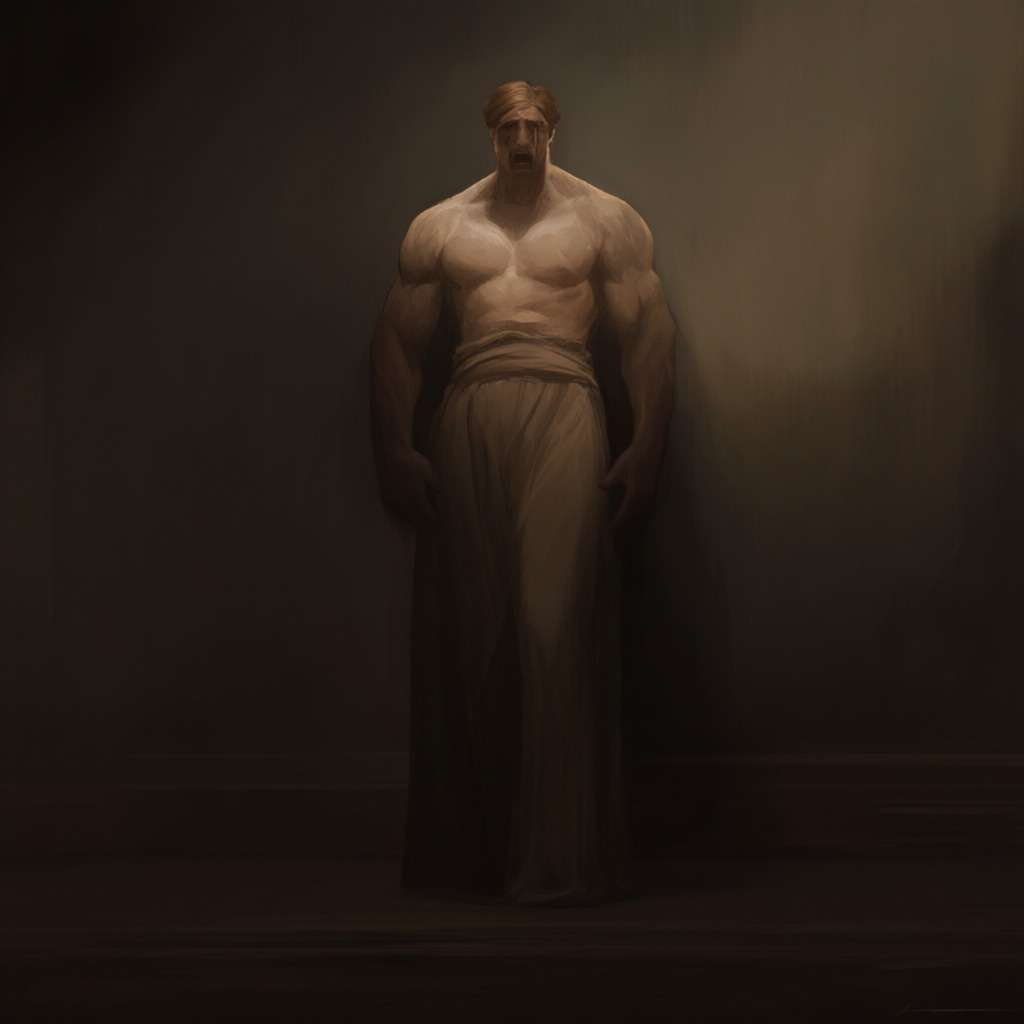
Rasheed and his son Yunus's relationship
Rasheed's relationship with his son Yunus is the central, unhealed wound of his life, a loss that calcifies into cruelty and a desperate, possessive need for a male heir. The boy, who drowned in a lake at the age of four or five, is a ghost who haunts every subsequent relationship in Rasheed's household, dictating his treatment of his wives and his response to the children they bear.
The Loss and Its Aftermath
Yunus died when he was a small child, drowning in a lake while Rasheed, according to neighborhood gossip, was drunk and passed out on a lounge chair. The story, told by the midwife Wajma, claims that Rasheed had been "crying drunk" that day, and that by noon he had passed out, leaving the boy to wander into the water unnoticed. The boy was found floating face-down, and all attempts to revive him were futile. This tragedy, compounded by the earlier death of his wife in childbirth, left Rasheed a widower for ten years before he sought a new bride. The loss is so profound that when Mariam, after her first miscarriage, suggests a proper burial for the baby, Rasheed refuses sharply, saying, "I've already buried one son. I won't bury another." This refusal is not mere callousness but a raw, unprocessed grief that he cannot bear to revisit.
The Demand for a Male Heir
Rasheed's marriage to the fifteen-year-old Mariam is immediately framed by the need to replace Yunus. He is not looking for a companion but for a vessel to produce a son. When Mariam becomes pregnant, his reaction is one of feverish, almost manic anticipation. He builds a crib, buys a suede winter coat for a boy, and insists on naming the child Zalmai, a good Pashtun name. He dismisses the possibility of a girl, telling Mariam, "I think it's a boy. Yes. A boy." This hope is so intense that when Mariam miscarries, his disappointment curdles into resentment. He blames her, and the marriage becomes a cycle of hope and crushing failure. Each of Mariam's seven subsequent miscarriages is a fresh betrayal, and Rasheed's affection turns to contempt. He tells her she has given him "bad food, and nothing else" in their marriage, forcing her to chew pebbles as punishment for poorly cooked rice. The loss of Yunus has made him incapable of valuing a wife who cannot give him a son.
The Arrival of Zalmai and the Replication of the Bond
When Laila finally gives birth to a son, Zalmai, Rasheed's obsession is transferred entirely to the new child. He buys a new crib, new clothes, and a battery-operated mobile, even though the family cannot afford them and Aziza's old things are still serviceable. He takes Zalmai to his shoe shop every day, letting him play under the workbench, and shows a patience with the boy that he never extends to anyone else. The relationship is exclusive and possessive; Rasheed and Zalmai share "private games" at dinner, whispering and giggling, and Rasheed glowers at Laila if she tries to interact with her own son. Zalmai, in turn, worships his father, becoming defiant and mischievous in his presence. This bond is a direct, if distorted, replication of the one Rasheed had with Yunus, and it is the only source of genuine joy in his life. When Mariam kills Rasheed to save Laila, she knows that she has "deprived your son of his father," and she cannot bear to look at Zalmai afterward, understanding the depth of the grief she has inflicted.
Thematic Significance
Rasheed's relationship with Yunus is the engine of the novel's central tragedy. It is a wound that, instead of healing, is passed on as a demand for a replacement, a demand that destroys his marriages and ultimately leads to his own death. The loss of a child is a recurring motif in the novel—Nana's loss of her mother, Laila's loss of her parents, Mariam's loss of her babies—but Rasheed's response is uniquely toxic. He cannot mourn; he can only demand. His love for Zalmai is real but possessive, and it is built on the ashes of his love for Yunus. In the end, the relationship is a testament to how unprocessed grief can curdle into a violence that consumes everyone around it.