Crimea’s disputed political status
AfterburnCrimea’s disputed political status is a conflict over more than a line on a map: it joins Ukraine’s geographic and national claims, preferences within the peninsula that point in different directions, and military calculations sharpened by Russia’s civil war. The novel makes that uncertainty consequential. Ukraine appears ready to press its claim by force, while an international peacekeeping mission must operate in a region whose political future has not been resolved.
Geography and Historical Claims
The peninsula is described as having long been considered part of Ukraine, whose mainland extends to the north; Russia borders it to the east across the water. That geography underlies the dispute but does not settle it. The account distinguishes Ukraine’s claim from the adjacent Russian Federation and treats Crimea as the hinge between them, rather than as a peripheral issue that the wider crisis will simply erase.
The claim is also bound to national identity. Ukraine had not been wholly comfortable with its place as one of the Union’s largest and most productive republics, and the narrative stresses that ethnic Ukrainians were not Russians, despite outsiders’ tendency to conflate them. As Russia’s civil war weakened the center, Ukrainians used the instability to strengthen their position, especially in Crimea. The conflict over the peninsula therefore develops within a broader contest over political independence and influence, not as an isolated border quarrel.
Competing Preferences and Political Legitimacy
The novel does not give the peninsula a single, uncontested political preference. A briefing states that most of its population favors Russian control. Yet the last free elections held there had produced a slight majority for remaining with Ukraine rather than being readmitted to Russia. The two accounts resist being reduced to a simple verdict: one describes reported sentiment, while the other records an electoral result. Together they show why claims made in the name of the population remain politically vulnerable.
The territory’s status is described as autonomous, but autonomy has not ended the argument over sovereignty or settled which neighboring state should prevail. Its political future remains in doubt even as its population is represented as divided in its loyalties. That uncertainty gives the dispute its particular instability: neither a geographic claim, an account of majority preference, nor a narrow electoral result can stand alone as an uncontested resolution.
Military Pressure and the Risk of Escalation
Russia’s civil war changes the balance of opportunity. Intelligence available to the Jefferson battle group reports that the Ukrainian Fifth and Seventh National Armies are positioned at Odessa and Melitopol, ready to move in and seize the peninsula. This is presented as a military possibility, not an accomplished invasion. The distinction matters: Ukraine has not yet attacked, but the force posture makes the sovereignty dispute an immediate security concern rather than a distant constitutional question.
A senior official identifies the conquest of Crimea as high among Ukrainian priorities. In the same policy discussion, Admiral Scott challenges the language of maintaining peace by asking what peace can mean when the whole area is tearing itself apart; the response is that Ukraine has not attacked yet. The exchange exposes the dilemma at the heart of intervention. A move intended to prevent a seizure may be understood by the parties as choosing sides, while waiting for an attack risks allowing the military balance to change first. The text thus links the peninsula’s unsettled status to the danger that defensive positioning and perceived expansion can reinforce one another.
International Authority and the Unresolved Status
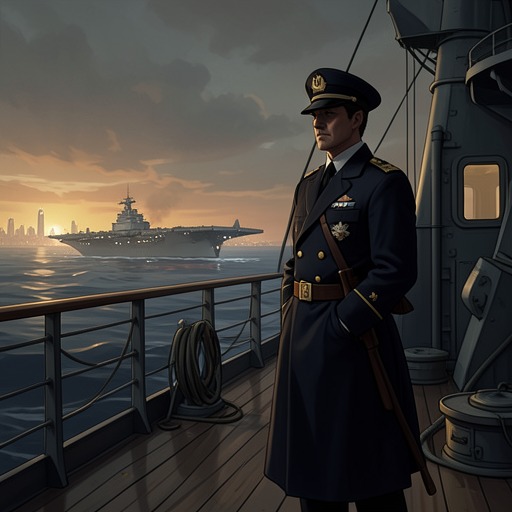
The dispute also reaches into the command structure of the peacekeeping mission. The question of placing American forces under United Nations commanders has been debated for years. In the Crimean Peacekeeping Operational Zone, the United Nations peacekeeping and takeover authority asks for operational authority over those forces, and Washington grants it. The commander tells his officers that they will operate under United Nations command until the President says otherwise, while affirming that they must obey the commander in chief’s orders.
That arrangement does not resolve who owns Crimea. Instead, it establishes who directs the outside forces operating amid the competing claims. The commander’s visible discomfort as he announces the decision underscores the institutional strain: national command and international operational authority now meet in a mission whose political object is itself contested. Crimea’s status consequently shapes not only the local contest between Ukraine and Russia, but also the terms, limits, and accountability of intervention. The novel leaves the peninsula’s political future uncertain, making that uncertainty an active source of military and diplomatic pressure rather than a background detail.