Max Raphael
AsylumMax Raphael is a forensic psychiatrist and deputy superintendent whose restrained manner makes him seem an observer of the crises around him, but he is also caught in their consequences. His marriage to Stella Raphael is already painfully unsatisfactory before her affair with Edgar Stark begins; later, the escape, the death of Charlie Raphael, and Stella’s imprisonment leave Max bereaved and increasingly withdrawn. His final uncertainty about Stella’s part in Edgar’s escape keeps suspicion alive even after the family has been shattered.
Identity and arrival
Max is a reserved, melancholy man whom Peter Cleave regards as a competent administrator but a weak figure, lacking imagination and unlikely to satisfy Stella. That judgment belongs to Cleave’s perspective, not to an independent account of Max’s inner life. Max had married Stella when she was barely out of her teens; their son, Charlie Raphael, was ten when the central events began. The family came from London after Max applied for the deputy superintendent’s position at the hospital.
In the summer of 1959, Max impressed both the appointment board and Jack Straffen, the superintendent, who offered him the post despite Cleave’s advice against it. Their arrival coincided with the recent passage of the Mental Health Act. The deputy superintendent’s residence, close to the Main Gate, was a large gray-stone house that had stood empty for several years. Its size and neglected garden suggested an earlier institutional world of doctors with large families and servants, but Max set about making it livable.
The house, the garden, and Edgar Stark
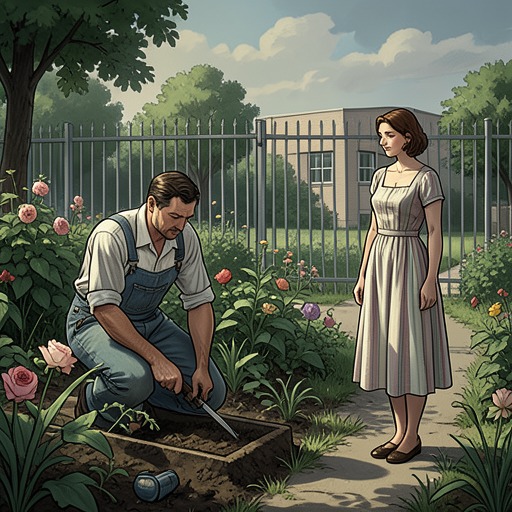
Max took immediate interest in restoring the property. He had the goldfish pond cleaned and restocked, and the rhododendrons around the lawn cut back so they could flower. His most absorbing project was the old conservatory at the far end of the vegetable garden: an ornate Victorian glasshouse, once intended for orchids, lilies, and other delicate tropical plants, now damaged, dirty, and close to demolition. Max’s affection for Victorian things made the building’s elaborate glazing, joinery, and Romanesque arches especially appealing to him.
The hospital assigned Edgar Stark, a parole patient and sculptor, to restore the conservatory. That work brought Edgar into the Raphael garden regularly. Stella often went out to pick vegetables or flowers and saw him there; when the attendant John Archer was absent, she sometimes sat and talked with him. The restoration thus placed Edgar close to the deputy superintendent’s home and gave Stella repeated opportunities to meet him. Max’s effort to repair the house and garden became part of the circumstances in which his marriage was destabilized, though the evidence does not show that he anticipated this consequence.
Marriage and the escape
The marriage’s sexual strain predated the affair. A year before the events surrounding Edgar’s escape, Stella had told Max she would not accept being buried alive in a cold, sexless marriage. She connected their distance to his weak sexual drive and to what she saw as his lack of moral or physical imagination, while acknowledging that he might explain it differently. After Edgar’s escape, Max and Stella moved around the large house in near silence. Cleave understood Max’s avoidance as a form of denial: Max would not discuss the possibility that Stella had carried out her ultimatum with a hospital patient, and might thereby have contributed to the failure of the marriage.
The escape made Max’s position at the hospital personally compromising. Edgar absconded wearing Max’s clothes, which he had retrieved from a hiding place in the woods at the end of the Raphael garden. The account of the escape indicates that Max did not immediately establish Edgar’s whereabouts or alert Jack Straffen; almost three hours passed between the discovery of the missing clothes and the discovery that Edgar was gone. Max returned to the hospital, checked with staff, went to his office, and waited before contacting the superintendent. By then John Archer had found Edgar missing. The delay gave Edgar more time to get away and left Max having to explain that the fugitive was wearing his clothes.
At home, Max asked Stella what dealings she had with Edgar. She said that she saw him in the vegetable garden most days. The exchange took place after she had served lunch to the family while anxiously trying to maintain an appearance of normal domestic life. Later, Max remained convinced that the clothes had not been taken on impulse: he suspected Stella had given them to Edgar and knew he intended to escape. The narrative leaves that suspicion unresolved. Stella maintained that she was not actively working against the hospital, while Max continued to doubt her account.
Charlie’s death and the family’s rupture
After Charlie Raphael drowned at Cledwyn Heath, Max returned home to find Stella. Mair had already called the event terrible; Max stared at his wife and asked why she had not shouted. He was baffled by her silence, emphasizing that she had not made a sound or opened her mouth. The question marks a change in how others understood Stella’s conduct: Hugh Griffin reported seeing her stand by smoking while Charlie struggled in the water, and the community’s sympathy gave way to horror and condemnation. Stella was remanded, questioned, and returned to the hospital.
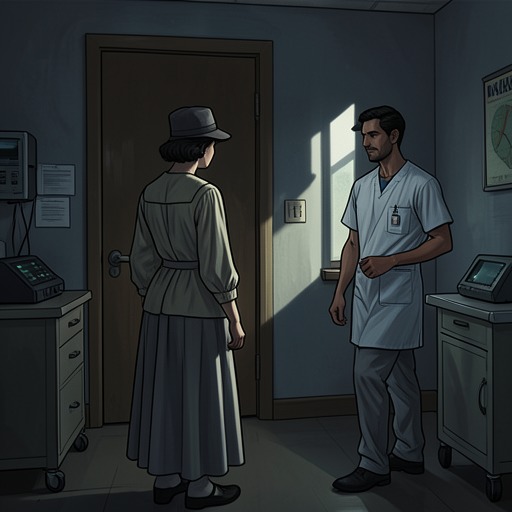
Max’s grief and anger also surfaced in his assessment of Stella. At their hospital meeting, held in a bare room with a wooden table and a high window, he had lost weight and seemed fragile and markedly older. He offered her a cigarette; she accepted it while imagining how he might now see her—as the woman who had ruined his life and drowned their son. Later, speaking with Cleave, Max said that Stella should be in prison. When Cleave acknowledged his anger, Max resisted being patronized, but also conceded that the family would have to look after its own. The statement holds condemnation and obligation together: he did not excuse Stella, yet he did not treat her as someone wholly outside the family.
Withdrawal, release, and death
Max did not leave his job in Cledwyn or move out of Trevor Williams’s house after the family’s relocation to Plas Mold in North Wales. By the time Cleave visited, Max seemed to have become a recluse. He was thin, dressed informally, and led Cleave through a spotless kitchen to a sitting room that had become his study. The room was spare, with books, an armchair, and a desk overlooking the valley. Its most personal contents were photographs of Charlie, most of them showing the boy alone and a couple showing him with his father. There were no photographs of Stella. Max’s attention to the images made his bereavement tangible without making it easy to read his feelings about his wife.
Although Max remained angry, he eventually agreed to let Stella go, as Cleave told her during the discussion of her future. The terms of that permission are not elaborated in the account, but it is consequential: Max did not insist that the marriage permanently prevent her from leaving the hospital. After Stella died by an overdose, Max attended her burial in the hospital cemetery, outside the Wall and behind the female wing. He had changed further in the few weeks since Cleave’s visit, appearing stooped and so frail that he leaned on his mother, Brenda. His presence at the funeral brought him back to the institution where he had once held authority, now as one of Stella’s few family mourners.
Narrative role
Max is characterized less by declarations than by domestic tasks, silences, and objects. The restored garden and conservatory record his practical engagement with the house; the missing clothes make that same home part of Edgar’s escape; the photographs of Charlie register a grief that Max seldom articulates. His subdued manner can look like weakness to Cleave, but his responses to Stella’s betrayal and their son’s death reveal a more complicated mixture of anger, hurt, and family responsibility.
The novel does not settle whether Stella helped Edgar escape, nor does Max’s suspicion become proof. That unresolved doubt binds the earlier marriage crisis to the later catastrophe: even after Charlie’s death and Stella’s return to the hospital, Max remains unable to know fully what she did or what she intended. His final appearance at her burial offers no reconciliation scene, only the image of a diminished survivor beside the grave of a wife he had condemned and nevertheless came to mourn.