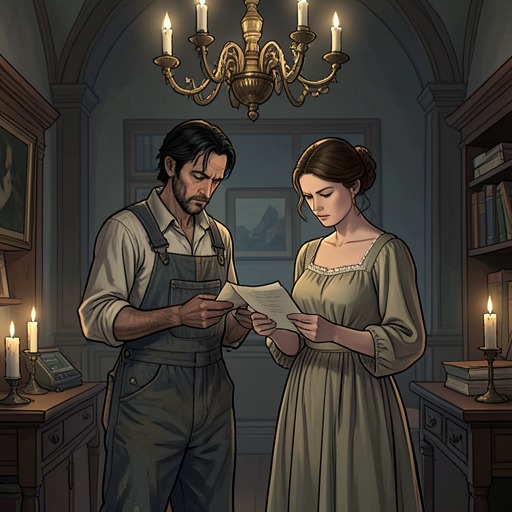
Marco Polo’s unresolved marital situation
ChowringheeMarco Polo’s unresolved marital situation is shaped by a divorce plan that appears to reach the filing stage, yet leaves no trace in court when he later seeks its outcome. His marriage to Susan Munro is not simply a private bond he wishes to leave behind: its legal and professional consequences, the procedural demands of divorce, and his wartime separation from Calcutta make its status impossible to settle with confidence.
Identity and Circumstances
Although Marco Polo had married Susan Munro in an Indian church, he had not familiarized himself with the country’s laws. His visa was nearing expiration, and he wanted to take whatever action he could and leave Calcutta permanently. Divorce therefore became an urgent practical problem as well as a personal one: he needed to end the marriage while time, money, and his ability to remain in the city were all constrained.
Legal advice made clear that divorce would require more than an agreement between the spouses. The case could demand years of effort and expense; the petitioner would have to appear in court, and witnesses would have to be found. The lawyer could not say how long the process would take, allowing that it might stretch to two years. That timetable sat uneasily beside Marco Polo’s expiring visa and desire to depart, and helped determine the unusual arrangement the couple devised.
The Planned Petition
The plan was for Susan Munro, rather than Marco Polo, to bring the divorce case. She would accuse her husband of flirting with other women. The charge was designed to protect her reputation while securing the divorce Marco Polo wanted; because he would be away at his distant workplace and unable to participate in the proceedings, the lawyer believed a favorable decision would be easier to obtain. The allegation was part of the agreed legal strategy, not evidence that the narrative establishes actual adultery.
Susan Munro was reluctant. Her marriage certificate gave her an advantage in her profession, so ending the marriage threatened something she valued even if Marco Polo wanted out. Before leaving, he spoke with her and appealed to their former love. The proposal thus depended on her willingness to give up that professional benefit for his sake, not merely on the lawyer’s ability to prepare papers.
Money and distance quickly became part of the arrangement. Marco Polo gave Susan Munro one thousand rupees for the lawyer, explaining that little remained after the payment and promising to send more when he returned. The lawyer was paid, and Susan Munro’s adultery petition was presented to the court. On the day the application was to be signed, however, the lawyer warned them that it had to state there had been no collusion between the parties. Any suspicion of an arrangement could endanger the case. He insisted that no one could know Marco Polo had paid for the divorce, declared Susan Munro the lawyer’s sole client, and instructed Marco Polo not to contact the office.
Distance, War, and Disappearing Records
After settling some matters in Calcutta, Marco Polo returned to his job. He managed to raise about five hundred rupees and sent them to Lisa, promising the balance later. He had no way to write to Lisa or discover what was happening, and no friend who could keep him informed. This gap in communication made the divorce plan part of a wider separation: money could be sent, but news and reassurance could not reliably travel back to him.
Susan Munro wrote once to say that she had bought a new car. Meanwhile, the worry that had been pressing on Marco Polo continued, and the lawyer asked for more money. Marco Polo borrowed it and sent it to Susan Munro’s address. The sequence shows that he continued to fund the legal effort despite his limited resources, but it does not establish that he received any dependable report about the case’s progress.
Then the police arrested him. His connection to Italy had again drawn their attention, in the context of wartime relations between Italy and the Allies. The arrest interrupted the life from which he had been trying to manage the divorce at a distance. The account does not show what happened to the petition while he was detained, or whether anyone could communicate with him about it.
Return and Unresolved Outcome
Afterward, Marco Polo found work first at a hotel in Rangoon and eventually returned to Calcutta, where the manager’s position at the Hotel Shahjahan was vacant. Back in the city, he asked the question that the intervening years had left unanswered: where was Susan Munro, and what had become of the divorce? The woman who had set events in motion in wartime Calcutta had disappeared into the city’s human maze.
The lawyer’s office would provide no information. The elderly lawyer had sold his share to his partner and died; Marco Polo then went to the court himself. There he learned that no divorce petition had been filed in Susan Munro’s name. This finding sits in direct tension with the earlier account that her petition had been presented. The narrative supplies no explanation for the discrepancy and does not reveal whether the papers were lost, withdrawn, or never entered into the court’s record as expected.
The result is not a confirmed divorce but a legal uncertainty that survives Marco Polo’s return. The plan had moved from private negotiation to payment and an apparent court filing, only to be followed by silence, arrest, vanished personal contacts, and an empty record. Susan Munro’s whereabouts and the marriage’s legal ending remain unknown; the evidence supports neither a completed divorce nor a clear account of why the proceeding failed to appear in court.